
For a long time, everything has been something else. It started with the arrival of “Stranger Things,” which was so indebted to 80s horror and Steven Spielberg/Amblin movies that it teetered on the precipice of pastiche from the very beginning of its run. Now, everything — from music to books to movies — is just an impression of something that has come before. No more is that obvious than in the sphere of superhero movie and TV adaptations.
Ever since Christopher Nolan did the Batman version of “Heat” with 2008’s “The Dark Knight,” studios, networks, and, worse still, creatives have been unable to conceive of adapting a superhero comic book without anchoring it to some existing popular analog. “The Batman” was just “Seven” in Gotham City. “Joker” was just Taxi Driver with Joaquin Phoenix. “Captain America: The Winter Soldier” was just “Three Days of the Condor,” and in that instance the Russo brothers proudly said as much. The list goes on and on.
Now, we have “Lanterns,” which from the moment it was announced looked set to continue this infuriating trend. A Vanity Fair piece from February 2025 promised a show that would reveal what happens “When Green Lanterns Become True Detectives.” In the piece, co-creator and showrunner Chris Mundy spoke about Nic Pizzolatto’s crime anthology series as being a big inspiration while also citing another significant influence: “Slow Horses.” When “Lanterns” finally arrived in August 2026, Mundy and co. had even wrangled the director of “Slow Horses” Season 1, James Hawes, to oversee the first two episodes.
Here it was, then — another superhero adaptation that was actually something else. But, something amazing happened halfway through “Lanterns.” The show actually became its own thing.
Lanterns spends its first half doing a bad impression of other shows
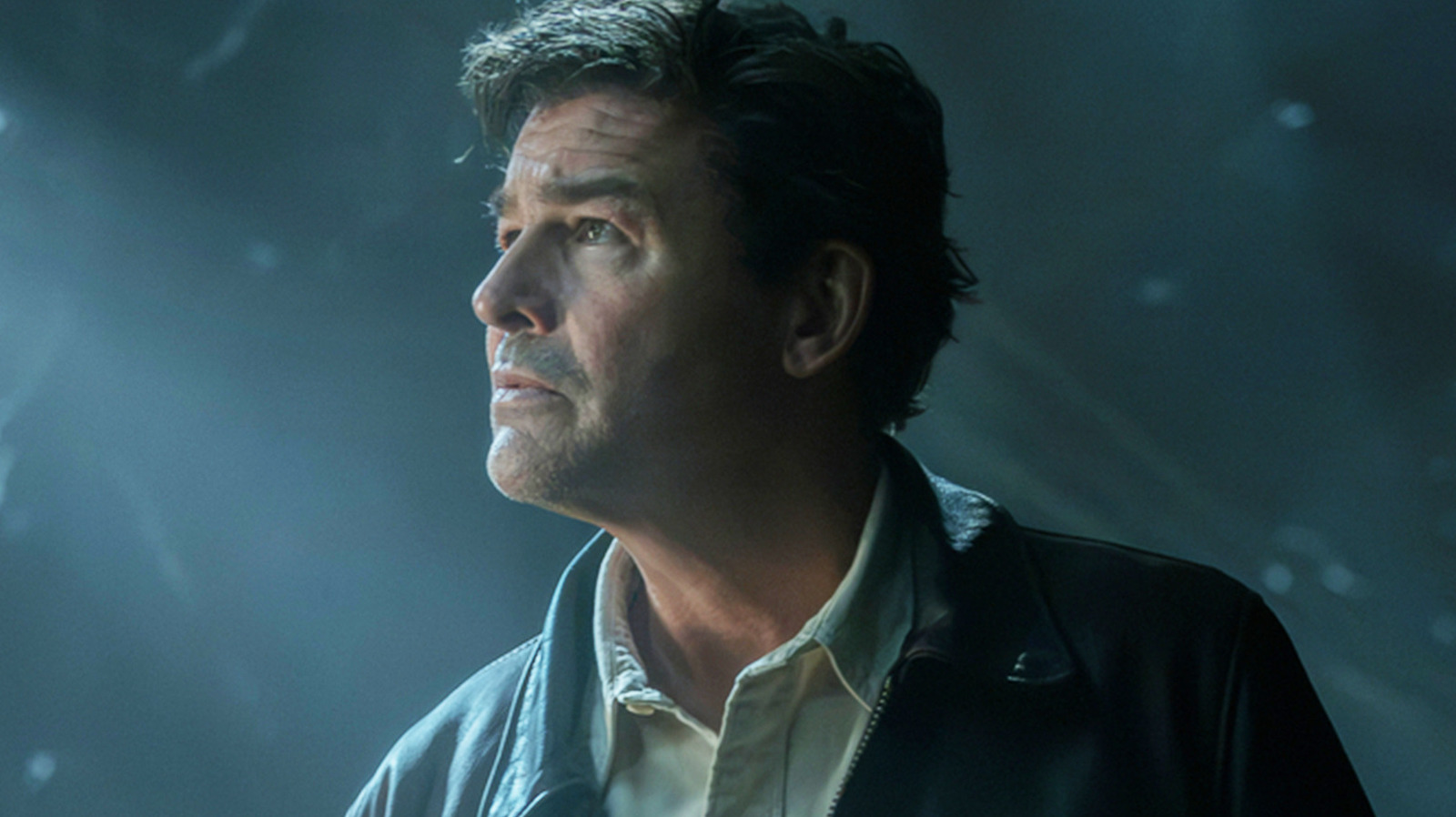
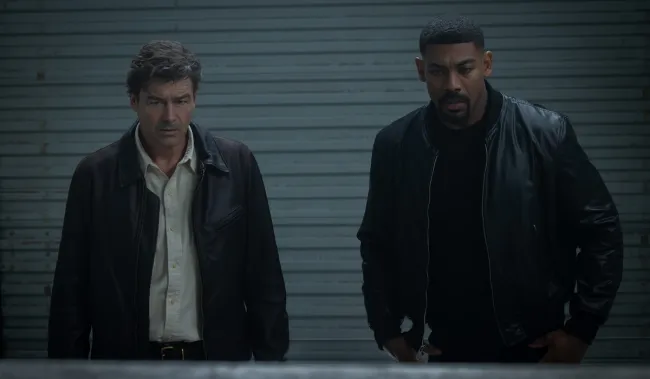
For its first four episodes, “Lanterns” is “True Detective” and “Slow Horses” but not as good. Like Matthew McConaughey’s Rustin Cohle and Woody Harrelson’s Marty Hart, Hal Jordan and John Stewart arrive in a forgotten town to investigate a mystery. But there are no brilliant lines to match Rust’s observation that the area is “like somebody’s memory of a town, and the memory is fading.” What’s more, the mystery is nowhere near as intriguing as the murder case in “True Detective.” In fact, I’m not convinced anyone was ever really invested in who the Manhunter was. As such, the “shocking” reveal in “Lanterns” Episode 4 that it was the oddly attractive grandma all along didn’t quite hit.
In these early episodes, Hal and John also bicker like Gary Oldman’s Jackson Lamb and Jack Lowden’s River Cartwright. But none of it is as good. “Jesus Christ almighty, unclench” is about as witty as Hal gets with John. It’s hardly on the level of Lamb’s legendary “Bringing you up to speed is like trying to explain Norway to a dog” line, is it?
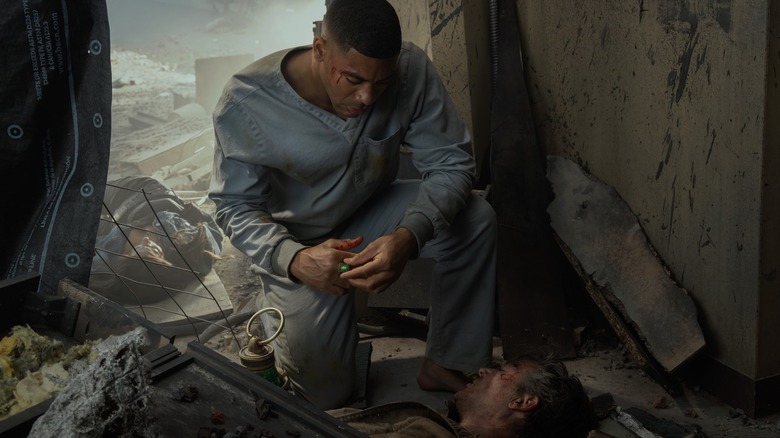
But Episode 5 is where everything changes. Once chaos arrives in Rushville, Nebraska and John and Hal finally come to blows, the series transforms. Every installment thereafter is charged with an emotional energy that isn’t there in the first half of the season. Without having to investigate a dull mystery or emulate the dynamic of other odd couple pairings, Hal and John’s relationship feels much more meaningful. The writers begin to trust the characters to carry the story and it makes for a much more engaging and ultimately moving experience that transcends the regrettable trend of comic book adaptations mimicking established successful films and TV shows.
Lanterns undergoes an evolution that every superhero adaptation should follow
Making comic book movies and shows that are just the superhero versions of existing hits is pandering to audiences’ worst instincts. It’s a tacit endorsement of the idea that novelty and originality is secondary to familiarity, which in an age where an AI garbage future built on artists’ stolen and repurposed work looms, simply isn’t what we need. Luckily, “Lanterns” has the good sense to grow out of this dismal trend halfway through.
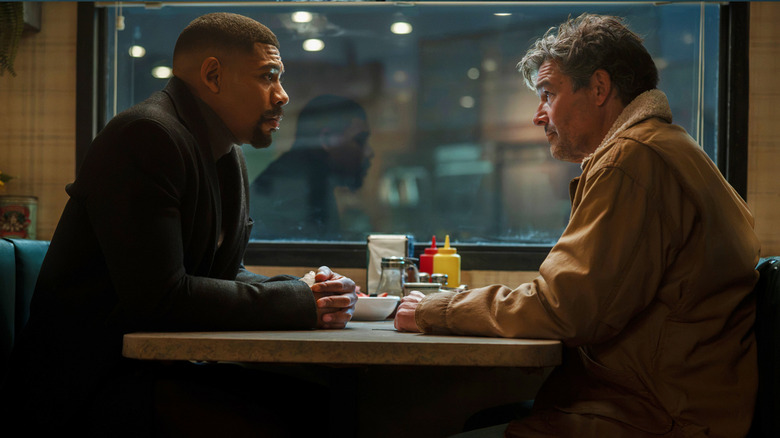
After the Manhunter mystery is over, the focus narrows to John and Hal’s relationship and things start to click. “Lanterns” Episode 7 might be the most poignant and emotionally resonant of the entire series. It sees John Stewart investigate Hal Jordan’s death alongside the Halogram — a backup of a younger Hal’s consciousness stored inside his Power Ring. While John and this younger, less cynical Hal still clash, they also forge the kind of bond that John and the older Hal never could. This ultimately leads to the most poignant moment in the entire series when, in the “Lanterns” finale, the Halogram misunderstands John’s words and tells him he loves him.
In that way, the Halogram is such an interesting way of exploring the idea that we literally become different people as we age, especially in the context of his interactions with other people — most obviously, John. If we could re-constitute a younger version of the people in our lives, how would our relationship to them change? It’s an example of the show using the fundaments of Green Lantern lore — in this case the Power Ring — to explore compelling ideas that take it beyond “When Green Lanterns Become True Detectives.” It’s just a shame it took the show seven episodes to get there.



Leave a Reply