
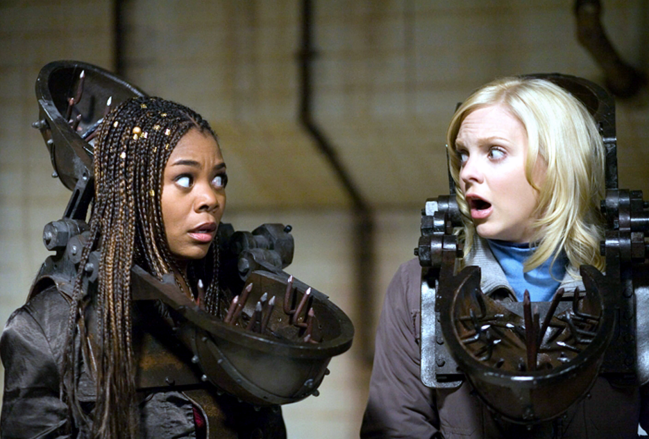
“Pace yourself” is terrible advice when you’re being chased by a masked killer. But for horror fans trying to keep up with everything coming out right now, it can be an essential strategy.
October’s release calendar is once again packed with new movies and series competing for horror audiences’ attention this Halloween — all running alongside the countless repertory picks many genre fans watch every year. Sure, a big backlog of your spooky favorites can be a joy, but keeping up with this slate can feel like a chore.
Are there simply too many scary movies, or just more than any one fan can reasonably follow?
Horror lovers have more options for wide releases today, but the genre isn’t dramatically outpacing other kinds of theatrical films. Cinema United, a movie theater trade group, counted 24 wide-release horror movies in 2024. They recorded 26 films in the same category for 2025 and projected 29 for 2026, suggesting a modest increase.


Those figures exclude limited releases and titles sent directly to VOD or streaming. But horror does seem to be claiming a slightly larger slice of at-home viewing, too. Nielsen analysis released last fall found that, in October 2024, horror accounted for 15.8 percent of movie-watching time across traditional TV and streaming, up from 14.9 percent the year before.
So, the genre does appear to be growing… a bit. However, neither small upward trend tells us how horror movies fare when they compete for industry attention and money — and, more specifically, how they stack up against unreleased films on the festival circuit.
In a recent opinion piece for The Hollywood Reporter, filmmaker Joseph Kahn accused festival programmers of allowing horror’s commercial appeal to distort their artistic priorities.
“There is nothing wrong with playing horror or lowbrow genre films at prestigious film festivals,” he wrote. “I certainly love them.” Instead, Kahn said his objection concerned what other creative work gets overlooked when an event can screen only a limited number of films.
“Every one of these sales is a commendable victory for independent filmmaking,” Kahn wrote. “But at Sundance, at least, it’s a far cry from the institution Robert Redford set out to build.”
The article drew some pushback online — including from Beyond Fest, which pointed out on X that Kahn’s latest feature, the 2024 horror film “Ick,” had premiered at TIFF. “Obsession,” so far the highest-grossing horror movie of 2026 worldwide, found its buyer after debuting in TIFF’s Midnight Madness section, with Focus Features reportedly paying approximately $15 million for the film.
The “Obsession” deal, Netflix’s reported $17 million purchase of “It’s What’s Inside,” and Neon’s comparable price tag for “Together” — all cited in Kahn’s column — absolutely demonstrate buyers’ investment in horror. But those acquisitions alone don’t show that horror is crowding out other film categories at festivals. That would require a much broader picture of festival purchases, including what distributors passed on, why they passed, and whether horror spending specifically impacted the funds available for acquiring different work.
Buyers’ business priorities and a filmmaker’s need for distribution are separate from viewers’ capacity to keep up with what’s actually being offered. Overall, audience appetite for horror remains strong. This seems particularly true among U.S. viewers ages 18 to 24, who, in research published this June, were most likely to call horror their “favorite” genre.
A recent post on r/HorrorMovies celebrated October’s scary film lineup as “stacked,” shouting out “Other Mommy,” “V/H/S Mixtape,” “Whalefall,” and “Clayface,” as well as series like “Carrie” and “Crystal Lake.” Replies mixed excitement with skepticism, and fans picked titles rather than committing to everything. Suffice to say, a crowded theatrical calendar doesn’t necessarily become a dense to-do list.
Likewise, the box office can help measure horror’s consistent commercial appeal. In Q3, “Resident Evil” opened big for a studio while “Buddy” gradually built a major indie hit. Those films found success at different scales, with different budgets and expectations: a strong reminder to buyers that another $500-million phenomenon like “Obsession” is an unrealistic benchmark for every release.
As a genre that sustains narrative variety and experimentation through cutting-edge style, horror almost certainly produces more than any one fan has time to find, let alone watch. Keeping that audience engaged may mean remembering that enthusiasm is a precious resource.
“It does seem like I’m getting a little burned out from watching just horror though,” one viewer wrote in a May thread on r/horror, describing their attempts to juggle new releases with older franchises. That kind of anecdotal genre fatigue doesn’t establish an industry surplus — but the sentiment does suggest that even devoted horror fans sometimes need help pacing themselves.
As another Redditor wrote, “There is no achievement for seeing them all.” Of course, there’s nothing saying you can’t either.




Leave a Reply