
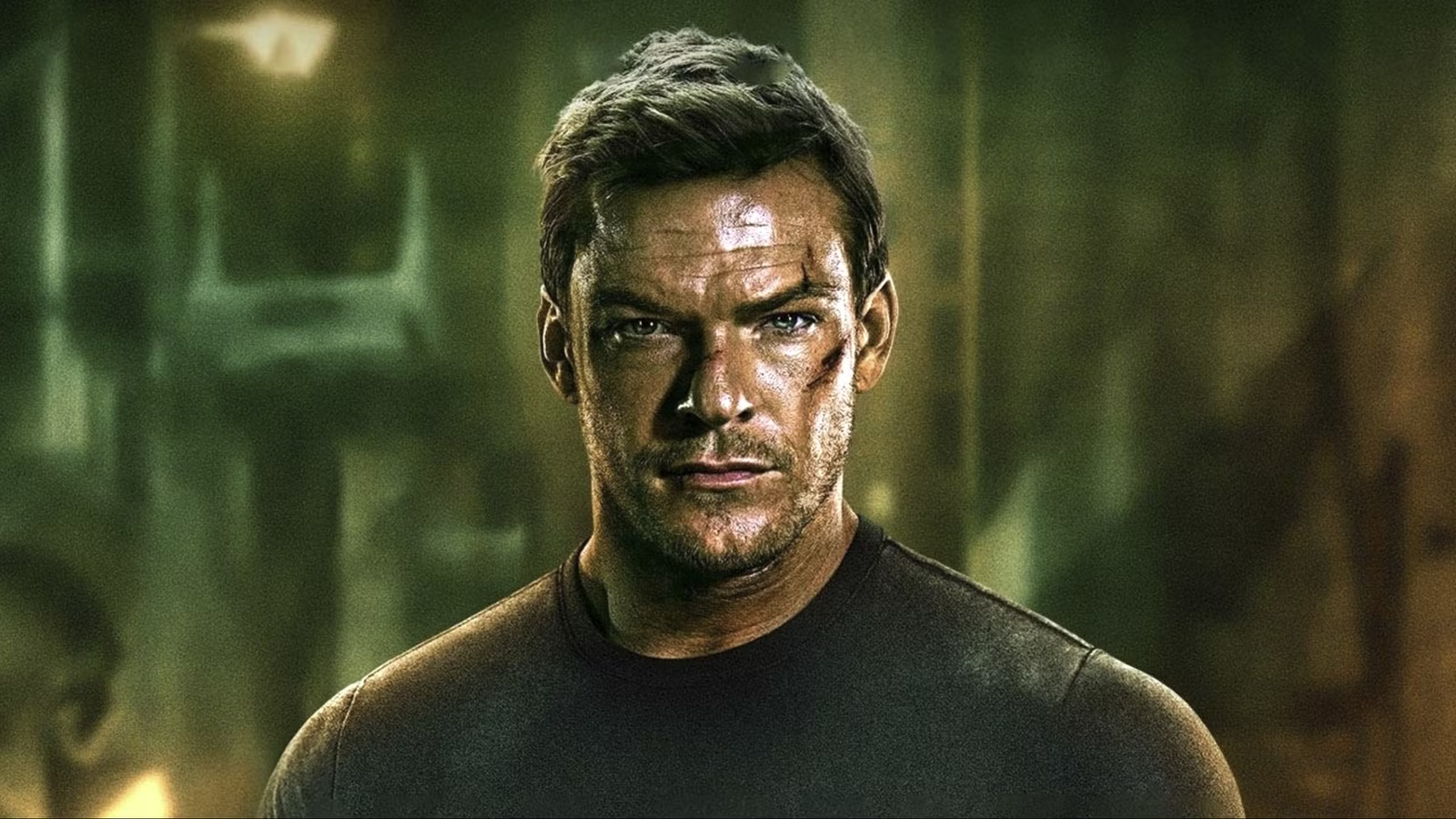
For nearly three decades, Jack Reacher has been wandering across America just trying to mind his own business, and inevitably stumbling into trouble like a rampaging elephant with the brains of Sherlock Holmes, dispensing his fist-heavy brand of justice whenever the situation demands. But the world is a different place than it was when Lee Child first introduced the former military policeman in Killing Floor, and keeping an old-fashioned wanderer relevant in an increasingly digital society presents an interesting challenge.
In Chain Reaction, the 31st installment in the bestselling thriller series, Andrew Child takes sole control of Reacher’s adventures for the first time, bringing back a familiar face while plunging his protagonist into a conspiracy involving artificial intelligence, corporate espionage, and modern surveillance. So with a new author fully at the wheel this time, and Reacher’s analogue lifestyle under threat from technology on all sides, is there still a place in the modern world for Jack Reacher? Can he keep doing what he’s always done best without losing that Jack Reacher appeal?
‘Chain Reaction’ Remembers That Reacher Is a Detective

The story brings Susan Turner back into Reacher’s life, now promoted to general and running the highly secretive G-99 Section. One of Turner’s investigators has been murdered while pursuing a case in Colorado, and there are enough inconsistencies surrounding his death to convince her it wasn’t the random crime it appears to be. What’s more, she doesn’t know who within her organization she can trust.
Not many people can find Reacher, by his own design, but Turner is one of the few that knows exactly what buttons to press and sure enough, soon he’s travelling cross-country on the government’s dime — a rare bit of luxury for a man more accustomed to Greyhound buses and whatever motel happens to have a vacancy — as a murder investigation expands into something much larger.
What follows is classic “Sherlock Homeless” Reacher, because it’s easy to reduce the character to his enormous frame and the fact he’s built to turn somebody’s knee into a collection of loosely associated parts, particularly after the television adaptation made Reacher’s physical presence impossible to miss thanks to Alan Ritchson, but the best Reacher novels have always understood that his brain is just as important as anything else. He’s a prodigious detective, who just happens to be the size of a rhinoceros. Thankfully, Chain Reaction gets that.
Reacher notices things other people don’t, like how the position of a car seat doesn’t make sense for the height of the man supposedly driving it, or how an ordinary-looking object isn’t quite as ordinary as it should be. Something about the landscape doesn’t add up. None of these observations immediately solves the case, but Reacher keeps filing them away until apparently unrelated details begin connecting.
It highlights how satisfying it is to see Reacher use brainpower to solve a problem when he’s confronted with the sheer scale of artificial intelligence. In fact, there’s a glorious moment where Reacher bamboozles AI with the simplest of questions. He knows he can’t compete with a computer on raw data, and he doesn’t try, but rather he keeps asking the question machines aren’t necessarily equipped to answer: What am I actually looking at?
The eventual importance of finding physical solutions to apparently digital problems is one of the book’s smartest ideas. Artificial intelligence can only know what it has access to, but it can’t see everything, and possessing an extraordinary amount of information isn’t necessarily the same thing as understanding what’s happening directly in front of you. Thankfully, Reacher is very good at looking.
Susan Turner Is the Perfect Mirror for Jack Reacher

Bringing Turner back also gives Chain Reaction considerably more emotional weight than another temporary Reacher partnership might have provided, because she’s not just a nostalgic old glame but rather a mirror of Reacher, the General he would have become had he stayed the course in the military system. There’s a mutual respect between the two because of that, and she understands that he’s on her level, even if not on paper. But it does go both ways, because she’s accumulated promotions, responsibilities and an understanding of modern military protocols that Reacher no longer possesses. Importantly, Reacher recognizes that.
One of Reacher’s most appealing qualities has always been his complete lack of embarrassment about things he doesn’t know. If someone else is more qualified, he’ll listen, and Turner understands the world he’s temporarily stepping back into better than he does, so he has no problem leaning on her expertise. Their romantic relationship works for the same reason. Both understand that any time together could be the last time. Turner has enough emotional intelligence not to pretend she’s going to convince Reacher to settle down, while Reacher doesn’t insult her by pretending he might, and readers wouldn’t want him to betray that side of his personality either. Because the entire appeal of Jack Reacher is built on knowing that, at the end, he walks away.
Give him a mortgage, Wi-Fi password, and Costco membership, then you’ve killed him more effectively than any of the hundreds of people who’ve tried over the years. Turner can get closer than most, but even she knows that loving Reacher and keeping Reacher are two entirely different propositions. None of this means that Reacher is emotionally empty, though, and in fact, some of Chain Reaction‘s best moments involve Reacher displaying a surprisingly gentle side, particularly around a baby caught up in the consequences of the investigation.
Reacher would never choose fatherhood, but that doesn’t mean he doesn’t know the basics of holding a baby or understand his responsibility toward a child who needs protecting. It’s the most human he feels at times because, while Reacher might be a lone wanderer, but he’s still someone who likes a warm body in bed, cares deeply about the people who’ve earned his loyalty, and will fight for what he considers honorable. His definition of honor just doesn’t require fighting fairly.
Andrew Child Lets Reacher Talk Again

Reacher feeling more human is another aspect of the book that shows Andrew Child bringing some of his own personality into the prose, because the character is more loquacious here than the increasingly terse version seen in some later novels, something Child has spoken about wanting to restore from the earlier books. Indeed, Lee Child has also spoken about how grunty Reacher had become. Reacher likes disarming his opponents with his words too, he’ll provoke them because an angry man is easier to predict and, other times, he’ll simply make a joke because Reacher, despite everything, has always had a sense of humor.
Reacher fights dirty, cheats whenever an opportunity presents itself and has absolutely no interest in giving an opponent a sporting chance, but Chain Reaction retains the hilarious biomechanics that make his fights so satisfying. Weight, momentum, angles, and anatomy matter. Details matter, as he says in the series. A knee isn’t simply injured because Reacher kicks it, but we’re given enough information to understand exactly why the joint is about to stop functioning. It’s absurd, obviously, but that’s part of the fun. In fact, it’s always been the fun of Reacher. We’ll get every minute detail about what he eats for breakfast — that doesn’t change here — but he can still have a night with Turner that’s summed up in one sentence. Priorities.
Importantly, though, Reacher’s morality remains remarkably consistent. He isn’t interested in playing by rules established by people he considers worse than himself, and what matters is why violence is being used and who ultimately benefits from the outcome. That distinction has always allowed the series to have an extraordinarily violent protagonist without turning him into a bully.
‘Chain Reaction’s Climax Is Over a Little Too Quickly

If there’s one area where Chain Reaction falls short of the series at its very best, it’s the speed with which part of its climax resolves. The investigation builds methodically, continually expanding while moving Reacher through different locations. The travel helps enormously. The story never feels stuck in place, and its relatively lean length prevents the investigative sections from sagging, so that’s why one of the final confrontations feels slightly compressed rather than outright rushed. A considerable threat has been established, pieces have been moved into position, and then the situation is dealt with more quickly than the buildup suggests it might be.
On the plus side, the resolution works a lot better because, without spoilers, once the hired muscle is dealt with, Reacher and Turner can enjoy themselves. The big bads are ultimately greedy people who have convinced themselves they’re smarter than everyone else, and that’s exactly how it should be. Not every Reacher villain needs an underground lair and a plan for world domination.
Sometimes people do awful things because they want an enormous amount of money and don’t want anyone interfering with their ability to get it, and once their protection disappears, there’s no reason they should suddenly transform into physical threats capable of standing toe-to-toe with Reacher and Turner. Thankfully, the consequences doled out are just as brutal and clinical as we’d hope for, because Reacher doesn’t like when the scales aren’t balanced.
Andrew Child Has Jack Reacher Figured Out

Chain Reaction sits somewhere in the middle of the Reacher pack. It doesn’t quite reach the heights of Tripwire, One Shot, Echo Burning or Worth Dying For, but that’s an unusually high bar. And of course, other readers will have other favorites. In fact, it’s difficult to find a Reacher novel that isn’t enjoyable in some way. An 8/10 Reacher novel is almost exactly what decades of consistency have taught readers to expect. More importantly, this is Andrew Child’s first solo outing with the character.
There was always going to be a question hanging over the transition: would a Reacher novel still feel like Reacher once Lee Child wasn’t actually writing it? We’ve got a very reassuring answer here, because it’s very clear that Andrew isn’t trying to reinvent the character to prove ownership of him. Instead, he recognizes which pieces can move and which can’t. The world can change, technology can change, threats can change, and Reacher can even become marginally more comfortable interacting with modern technology, but he’s still Reacher.
Reacher will always be funny and observant, compassionate and violent as all heck but he’s still willing to travel across the country at a moment’s notice because someone he trusts has told him something isn’t right, and he’s happy to look for the analogue solution in a digital world. This isn’t an Andrew Child version of Reacher, just as it isn’t an imitation of Lee Child’s Reacher. It’s just Jack Reacher. It’s Reacher. And if you’re going to put Reacher up against artificial intelligence, there was only ever going to be one winner.
Chain Reaction releases on October 20.
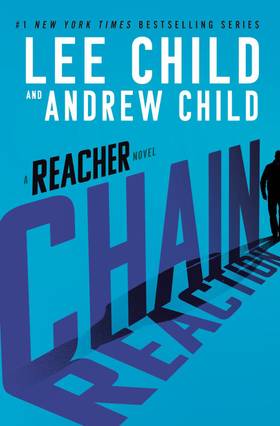
- Author
-
Lee Child and Andrew Child
- Genre
-
Thriller
- Publication Date
-
November 3, 2026
- Publisher
-
Penguin Random House
- Reacher gets to talk more.
- Reacher gets updated for a more modern sensibility.
- Turner’s return is welcome, and she’s a good foil.
- The finale feels a bit rushed.










Leave a Reply