
There are many descriptions for books, and although many have specifics that make the description a widely agreed-upon fact, there are others that are a bit more relative. The term classic, for example, can be extremely relative, because although a book like The Odyssey is a classic story to many, it doesn’t mean it’s a classic for everyone. This is true for specific groupings within genres, including horror.
However, there are a few markers used to quantify what a classic means. There are three factors to consider: time, acclaim, and accessibility. For acclaim, books that have long been praised and awarded by fans and critics help highlight the quality of the text. For time, books that are older have an easier time gaining a status as “classic” because they have a greater chance of having both historical and cultural impact. This is true of accessibility as well, because a book that isn’t read would have a hard time being a classic.
The Legend of Sleepy Hollow Is One of the Oldest American Published Stories

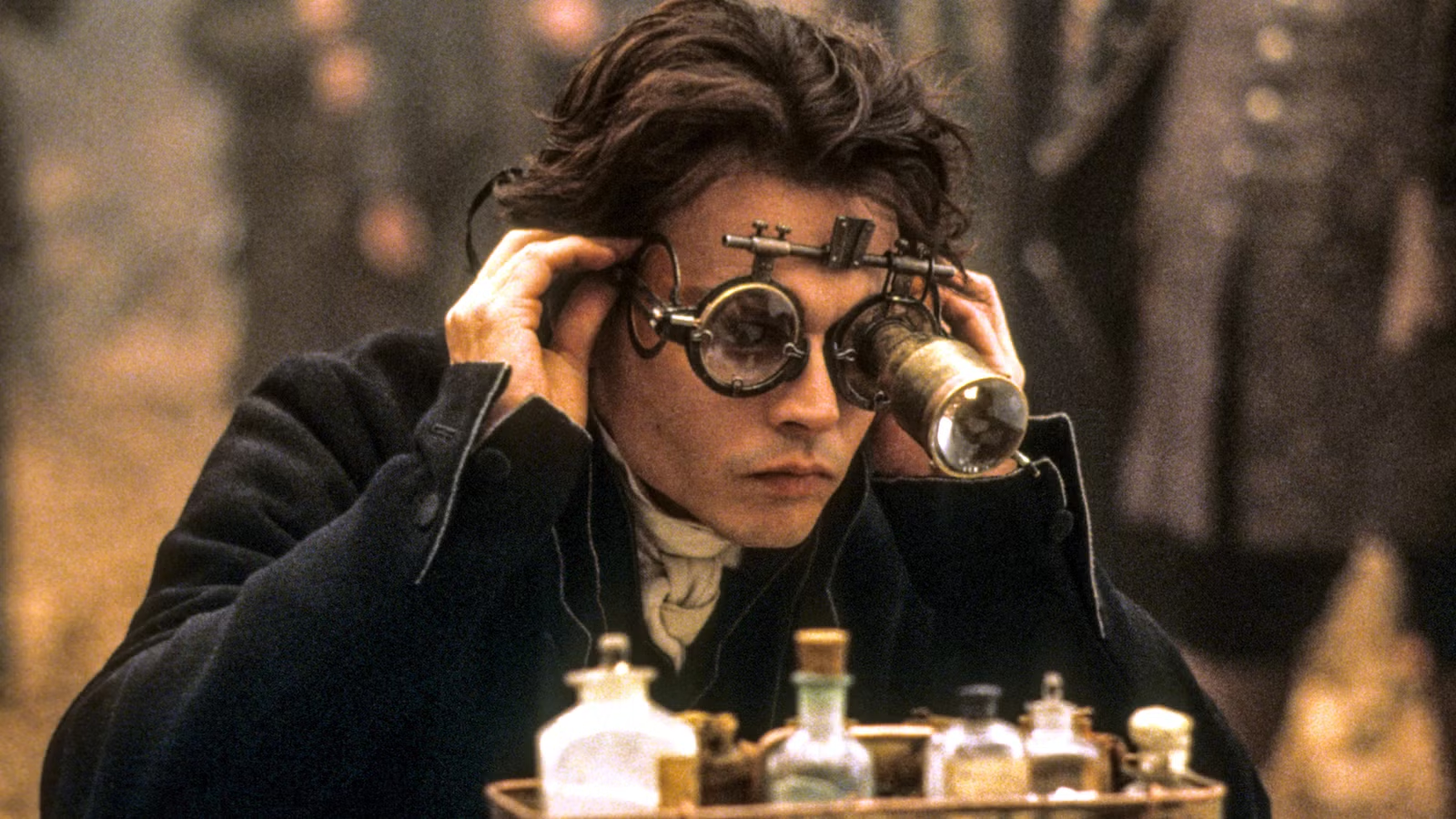
One of the first published short stories in the United States, as well as the first published ghost story, The Legend of Sleepy Hollow has many accolades attached to it. The 1820 tale, written by Washington Irving, has been adapted for movies, television shows, video games, spin-offs, and more, but is best known for the haunting figure at the center of the tale – the Headless Horseman.
Set in the early days of New York, when cities were settlements, a love triangle between a local village hero, a schoolmaster, and a beautiful heiress unfolds. That is, until the schoolmaster, Ichabod Crane, is chased by the Headless Horseman and can’t be found afterwards. Certainly a ghost story, but perhaps less of an outright horror story, it is undeniable that this well-written tale helped define many classic depictions of Halloween. Additionally, the Horseman himself remains a visually impressive and terrifying figure.
The Call of Cthulhu Had an Entire Mythos Built Around It

A short story from 1928, The Call of Cthulhu is the most famous story by H. P. Lovecraft for a few reasons, but mainly because of the exceptional writing and the creation of what became the foundation of the Cthulhu mythos. In the story, a man pieces together evidence that reveals the existence of a monstrous alien in the Pacific Ocean. His existence drives some people mad, and others worship him in a cult-like way, but most are unaware that he exists and that one day he could change everything (which is the most terrifying part of it all).
Lovecraft uses a fear found in realism. It is a reality that, in the scheme of things, humans are an insignificant speck in the universe. It is also a reality that most choose to forget this fact, or don’t think about it at all, because it doesn’t affect them. And yet, The Call of Cthulhu introduces a concept that humanity will likely be confronted with its insignificance at any time. This is terrifying for many, and for those who need more than the concept to be fearful, the writing is purposefully vague in many respects, allowing readers to assume the worst.
A Poe Masterpiece, The Tell-Tale Heart Uses Sound as a Harbinger Of Dread

A name like Poe’s attached to any piece of work is bound to have more than a few eyes on it, but many regard The Tell-Tale Heart to be Edgar Allan Poe’s best work. And yet, it is a fact that this tale is a short story, so although the work is incredibly influential and well-regarded, it cannot be much higher on this list.
In the story, a nervous man tries to convince himself and the readers of his sanity while also murdering a man and hiding his dismembered limbs under his floorboards. When the police come knocking, the stress of it all makes the narrator believe he can hear the dead man’s heart beating louder and louder, and he eventually confesses. Using exquisitely chosen words within only a few pages, Poe is able to use sound and mental illness revolving around obsession to create an eerie and horrifying atmosphere.
The Shining Takes Old Haunted House Tropes and Modernizes Them Slightly

Released in 1977, Stephen King’s The Shining is the newest book to make the list of horror classics, but its placement is well-deserved. Even outside the fact that King himself is called “The King of Horror,” the book is often considered the best of all of his numerous stories, and was popular even before the 1980 movie made it even more famous.
In this story, a writer takes his family to a hotel to be the caretakers for its off-season. While there, it becomes clear that not all is right with the hotel when spirits begin to make themselves known, and the writer turns homicidal. The Shining serves as a new look at the classic haunted house trope, firmly grounded in themes that are pervasive in modern literature. The slow descent into madness is a perfect example of how to write for psychological horror, especially where the setting can be almost a character in and of itself.
The Picture of Dorian Gray Shows the Rot Found Within Sin

In a way that feels deliciously simple but still powerful, the famous The Picture of Dorian Gray is straightforward both in story and in themes. Written by Oscar Wilde and published in 1890, the story reveals the consequences of vanity through a man named Dorian Gray, who has immense beauty but little brainpower or heart. He makes a wish to remain young forever, and this happens, while his portrait shows his true form and is hidden away in an attic.
The horror is found in the truth of humanity, as a few books on this list also dive into. Dorian is physically beautiful but, with his youth and beauty intact, finds himself able to indulge in his cruelest and darkest desires. The social commentary and satire is mirrored not with hauntings or monsters, but with body horror and the grime of sin.
Horror Fans Still Love To Argue About The Turn of the Screw

Although this is a story that many love to debate, the arguments are never actually about the story’s quality or its status as a classic. Many regard this 1898 novella as one of the best ghost stories out there, with prose that reads like thick lyric poetry at times due to the stylization and like the highest class of literature at others.
Through dense text and an atmosphere that is both terrifying and wonderfully morose, The Turn of the Screw follows a governess who is hired to take care of two orphans in the countryside. It’s a beautiful but lonely place, and soon it seems that the ghosts of past residents haunt her. But the question (and cause for debate) is: are they really there? The descriptions seem vivid enough to touch, but the setup feels like a puzzle that leads to an unreliable narrator on one side, and a haunted estate on the other.
The Strange Case of Dr. Jekyll and Mr. Hyde Is Exceptionally Well-Crafted

Strange Case of Dr. Jekyll and Mr. Hyde is a lot cleverer than many people realize. More than a story, it is a critique. With a release in 1886, this social criticism was not new to the horror genre at that time, but the way that author Robert Louis Stevenson unveils it is slightly different. Following a lawyer who is trying to figure out the relationship between his friend Dr. Jekyll and a monstrous man named Hyde, the story addresses what happens when a man unleashes his inner beast, literally.
Released during a time when psychology hadn’t yet addressed ego vs. id, or the concept of id at all (introduced years later by Freud), the book provided an early look at the concept put to paper through a fantasy, horror lens. Thus, the representation eventually became synonymous with split personalities. Beyond the significance of the story and what it represents for psychology, the tale itself is quite fascinating, with a well-made story structure and mysterious plot, especially regarding the shocking twist ending.
The Haunting of Hill House Is a Slightly Underrated Classic

Although it is one of the most classic horror stories and was called out for its influence by Stephen King, in addition to others, it is a bit surprising that more people haven’t read The Haunting of Hill House. Many now know it more for the Netflix miniseries than anything else. That show, although excellent, was not a faithful adaptation of the story in the slightest.
In Shirley Jackson’s 1959 tale, a mismatched group of people decides to stay at the infamous Hill House to study paranormal activities. However, the longer they stay, the more their minds seem to wander and slip away into the grasp of the House. The story shows that settings can be more than locations, able to interact with the plot in a similar way to characters. Through a subversion of expectations in the story, readers are never truly aware of what reality should be defined as within the bounds of the story and Hill House itself.
Dracula Is Famous for a Reason

With a title just as famous as the number one spot on this list, Dracula was not the first published book about vampires, but it certainly became and remains the most famous. Written by Bram Stoker and released in 1897, the book is an amalgamation of various different vampire tales and bits of lore found up to that time. To that end, it still serves as a jumping-off point for where most vampire stereotypes come from.
Although being adapted multiple times has led to the story being changed a few times, the original tale shows a vampiric noble from Transylvania who wishes to go to England and create more vampires. However, Count Dracula himself is rarely seen and is instead a looming presence that fills readers with terror with every new ship log, journal entry, and clipping. Indeed, the story is a masterclass in the art of creating a sense of dread, and, like other novels of the time, is meant to use fantasy to reflect societal issues and fears.
Beautifully Written and Thoughtful Novel, Frankenstein Is a Perfect Classic

The oldest and greatest tale on this list, Frankenstein is one of the most masterfully written horror stories of all time. Written by Mary Shelley in 1818, the story shows how the scientist Victor Frankenstein falls into fear and exile as he tries to escape the undead monster he created and abandoned.
Thematically brilliant and exceptionally well-conceived, the story became a blueprint for future horror stories where horror could be found from less typical means. For Frankenstein, the true monster wasn’t the undead creature; it was the scientist and what he represented about humanity and its arrogance. Slow dread and fear born of creation ring throughout, and for many, the story reflects uncomfortable truths about society even while using a fantastical framework.




Leave a Reply