
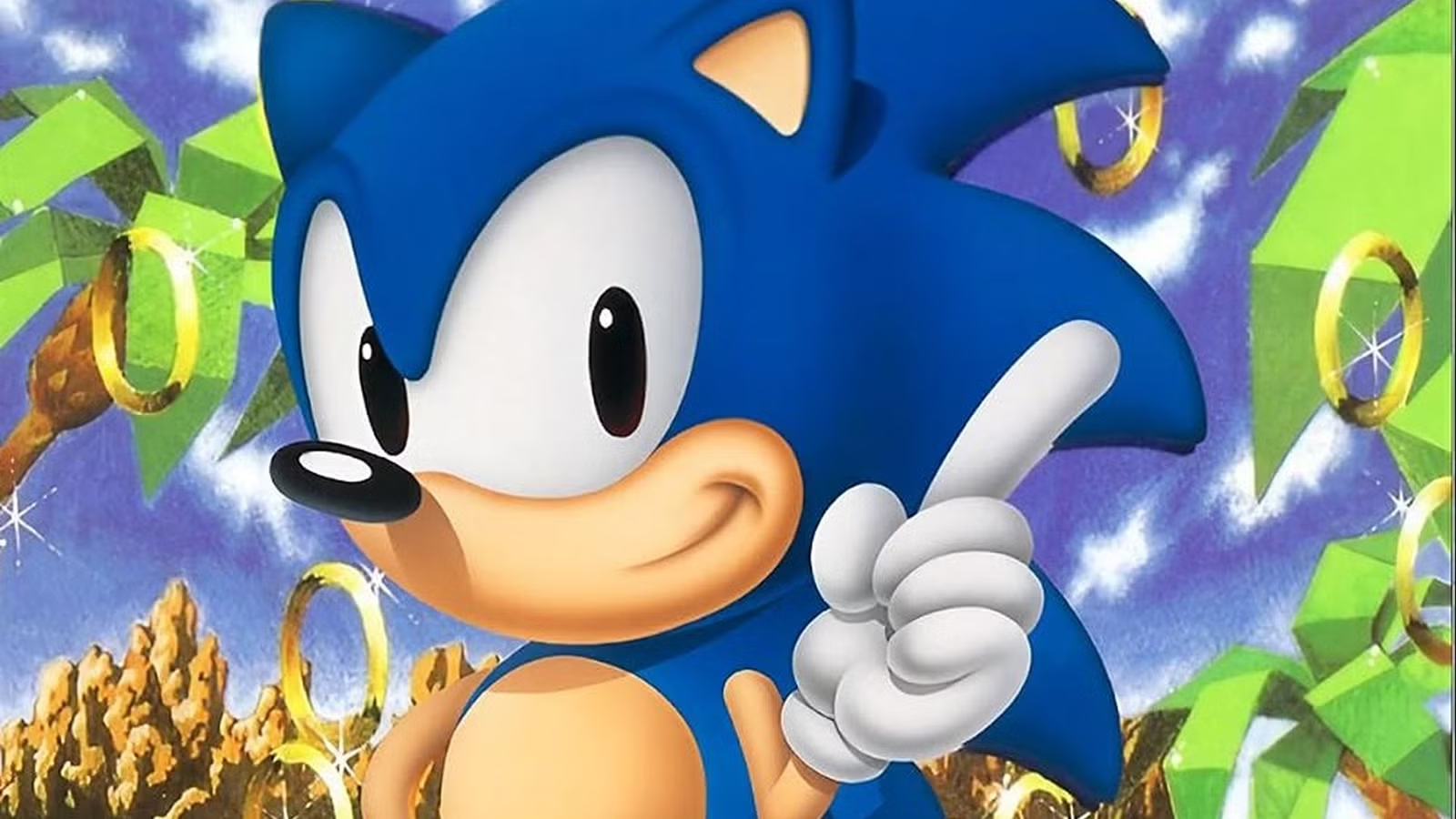
Sonic the Hedgehog is a contentious video game franchise today, but it was big back in the ’90s when it served as Sega’s definitive mascot. More importantly, the series had its start on the Genesis and helped define the console’s edgier mythos against Nintendo’s more wholesome image.
Of course, Sonic the Hedgehog is far from the only Genesis game,and many other titles are even better. These games, including Wonder Boy in Monster World and Phantasy Star IV: The End of the Millennium, provide unique gameplay experiences that are worth checking out. In some cases, they didn’t need to prove the console’s so-called blast processing.
Castlevania: Bloodlines Brings Anti-Vampire Action to Genesis

While that’s not the case today, the Sonic the Hedgehog franchise was historically the domain of Sega’s consoles, just as the Mario games are still under Nintendo’s purview. Once upon a time, the same could be said for certain third-party franchises, which were locked to either Sega or Nintendo’s consoles, among them the Castlevania series. However, Konami released Castlevania: Bloodlines in 1994 to introduce Genesis players to the Castlevania formula.
Castlevania: Bloodlines marks a noticeable departure from previous Castlevania games, with the main protagonist not being a Belmont but rather a Morris, specifically John Morris. He’s still a distant relative of the Belmonts, and with his pedigree as a vampire hunter, he is ready to take on Elizabeth Bartley and her forces in Europe. Bartley is looking to resurrect Dracula, and she will do anything, up to and including triggering the start of World War I, in order to do so.
As a game that introduced Castlevania to Sega—and non-Nintendo—players, Bloodlines returns to the series’ roots in a big way. The whip is a downgrade from Super Castlevania IV—players can whip in only four directions instead of eight—but axes and boomerangs help compensate. Castlevania: Bloodlines is truly more action-oriented than any installment before and after it, which is hardly a bad thing.
Wonder Boy in Monster World Is No Longer a Solo Adventure

Long before the Sonic the Hedgehog series, Sega already had a few franchises under its belt. The best-known of these was the Alex Kidd series, with the title character serving as Sega’s mascot before Sonic the Hedgehog dethroned the smaller hero. On the flip side, there was also the Wonder Boy series, which started out as a line of arcade games before becoming exclusive to Sega’s systems. Of all the games in the series, Wonder Boy in Monster World is the best of the bunch.
While still a single-player game, Wonder Boy in Monster World transitions away from just being a platformer into an Action RPG romp. This means the game, unlike its predecessors, is no longer the title character’s solo adventure, but rather one where he is accompanied by a team that will come to his aid along the way. They will come in handy as well, considering Wonder Boy has to rescue the entire Monster World from the machinations of BioMeka.
Wonder Boy’s party members each aid him during exploration and battles. For example, Shabo is able to attack miscellaneous enemies that prove too cumbersome for Wonder Boy to fight, and Rotto does the same but uses his fire breath. In a way, it all works to make Wonder Boy in Monster World more action-packed than if it remained a solo adventure.
Comix Zone Is the Most Action-Packed Comic Book

It takes a lot to make a Genesis masterpiece, especially if it isn’t an installment in the Sonic the Hedgehog franchise. Still, with enough dedication and first-party support, developers can come up with something truly amazing. In the case of Comix Zone, it brought in comic book artists such as Tony DeZuniga and Alex Niño, both of DC Comics fame. Add in a little style and challenge, and hard as it may be for a Genesis game, Comix Zone ends up standing out among all Genesis games.
Fittingly, Comix Zone features a comic book protagonist, although unwittingly. To be more specific, Sketch Turner is a comic book artist who suddenly finds himself in a world he created. He falls in love with Alissa Cyan, a military general who is fighting an intense battle against Mortus, the comic book’s antagonist. Despite not being all that well-equipped, Sketch nonetheless sets out to prove himself to both Alissa and his comic book world.
Comix Zone is ingeniously designed like a comic book, down to having speech bubbles and scenes contained within panels. This is only half of what makes Comix Zone an alluring beat ’em up romp. Over the course of the game, Sketch goes from an uncertain dark horse to his comic book’s greatest hero. Especially once players get adjusted to the game’s controls and movesets, they can become comic book heroes themselves.
Ristar Eats Super Mario Galaxy’s Heart Out

The Sonic the Hedgehog series occupies the bulk of the Sega Genesis’ platform library, especially if one were to count Sonic CD for Sega CD and Knuckles’ Chaotix for 32X. Of course, considering the Genesis existed for almost three years before Sonic was created, there existed plenty more platformers long before then and especially afterward. One must look no further than Ristar, a 1995 platformer that was developed and published by Sega itself.
Ristar’s plot differs between its Japanese and American releases, although they both have the overarching arc of the title character defending his solar system from nefarious forces. Again, his motivations for doing so differ between versions. In the original Japanese release, Ristar is sent off by Oruto, the mother star of the solar system, to help rescue the inhabitants of Planet Near from the nefarious space pirate Kaiser Greedy’s shenanigans. In the American release, Ristar goes out on his own to rescue his father from Greedy.
Irrespective of the game’s story, Ristar’s gameplay remains consistently enjoyable throughout all versions. The game’s key selling point as far as gameplay is concerned is Ristar’s stretchable arms, which can be used for both combat and platforming purposes. More specifically, he can quickly extend his fists against enemies and stretch his arms to reach higher platforms. There’s a lot more that makes Ristar as good as it is, but the only thing that matters is that it gives Super Mario Galaxy a run for its money.
Phantasy Star IV Is Sega’s Greatest RPG

Sega consoles aren’t usually known for RPGs; they focus more on action games like platformers and action-adventures. That being said, Sega’s consoles have some of the best hidden gems in the RPG genre, especially on the Genesis. In this case, there are too many great Genesis RPGs to count, but out of all of them, Phantasy Star IV is the greatest and gives the likes of Final Fantasy and Dragon Quest a run for their money.
Phantasy Star IV: The End of the Millennium is a midquel between Phantasy Star II and Phantasy Star III: Generations of Doom. It follows a pair of hunters, Alys Brangwin and Chaz Ashley, who must confront biological threats that could spell doom for the planet Motavia, which suffered a near-ecological collapse a thousand years earlier. To aid their fight, they assemble a loyal party that can take on some of the biggest biological menaces that are wreaking havoc.
Like Comix Zone’s comic-book presentation, Phantasy Star IV is presented like a manga, complete with full illustrations. As far as the gameplay is concerned, it outclasses other contemporary RPGs with its combination technique system, which allows players to deal more damage against enemies. In all, Phantasy Star IV has a lot going for it.







Leave a Reply