
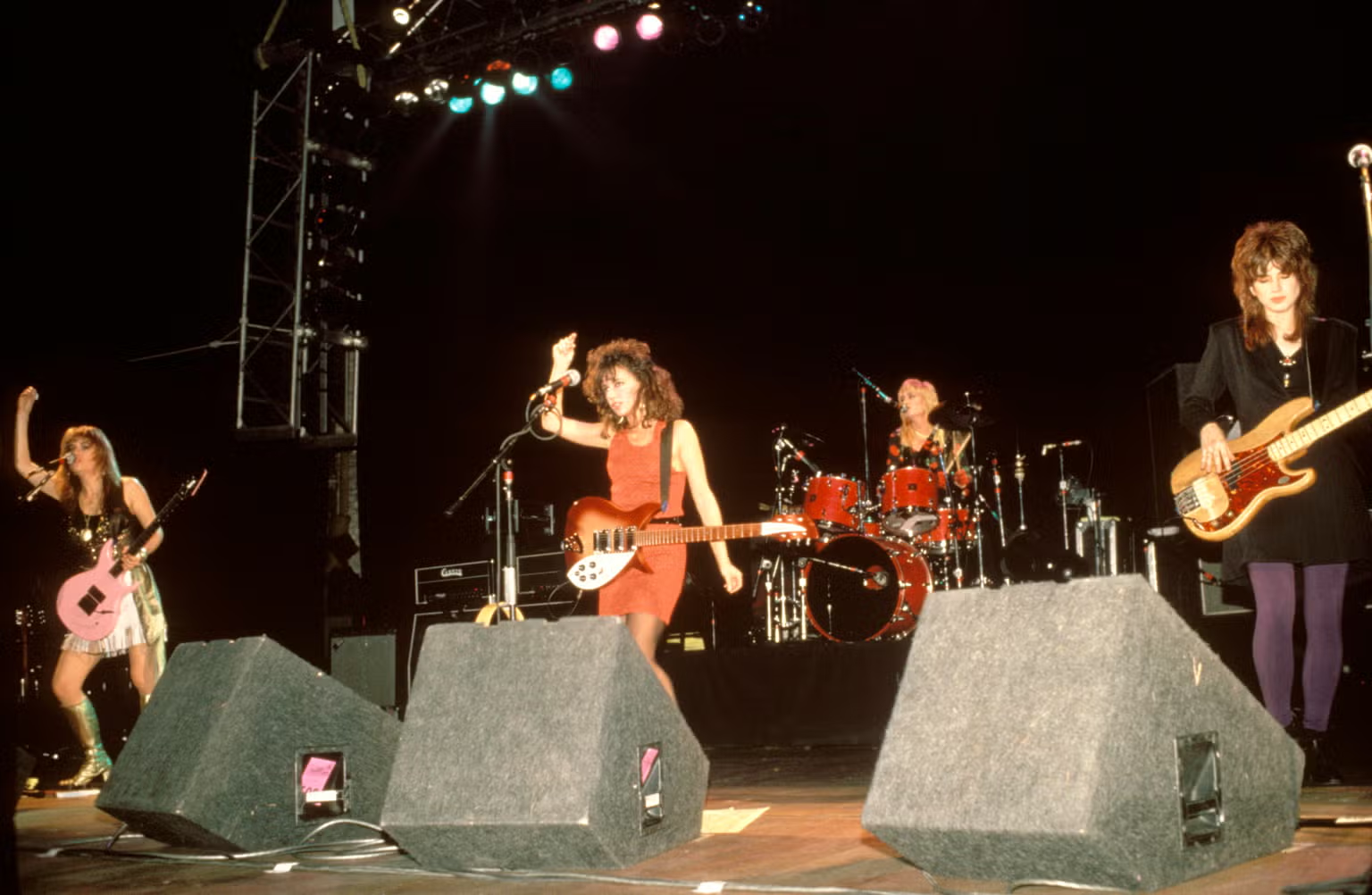
In 1986, an all-female rock band from California took an unlikely song about ancient Egypt all the way to the top of the Billboard charts. And if you were around at the time, chances are you remember the dance just as well as the music.
On December 20, 1986, the Bangles reached No. 1 on the Billboard Hot 100 with “Walk Like an Egyptian,” a quirky pop-rock single that would spend four consecutive weeks at the top of the chart.
The all-female group, featuring Susanna Hoffs, Vicki Peterson, Debbi Peterson and Michael Steele, had already enjoyed success with “Manic Monday” earlier that year. But “Walk Like an Egyptian” took their popularity to another level.

Ebet Roberts / Getty Images
The song’s origins were almost as unusual as its title. Songwriter Liam Sternberg reportedly came up with the idea after watching passengers on a ferry struggle to keep their balance, their awkward movements reminding him of figures in ancient Egyptian artwork, according to Billboard History Book.
The track was originally offered to other artists before finding its way to the Bangles, whose combination of harmonies, humor and new-wave energy helped turn it into a hit.
Its music video made the song even more memorable. Alongside footage of the band performing, the clip featured people striking the now-famous Egyptian-inspired pose, with their arms bent at sharp angles.
Soon, the dance was everywhere, from school parties to television screens.
Yet there was another surprising detail behind the recording: not every member of the Bangles sang on the finished track. Hoffs, Vicki Peterson and Michael Steele each took lead vocals on different verses, while drummer Debbi Peterson did not receive a lead vocal part.
The single appeared on the band’s 1986 album Different Light, which also featured “Manic Monday,” written by Prince.
“Walk Like an Egyptian” became Billboard’s No. 1 song of 1987 on its year-end Hot 100 chart, despite first reaching the top in December 1986.
Four decades later, its instantly recognizable opening and playful choreography remain reminders of an era when an unlikely idea could become a worldwide pop sensation.








Leave a Reply