
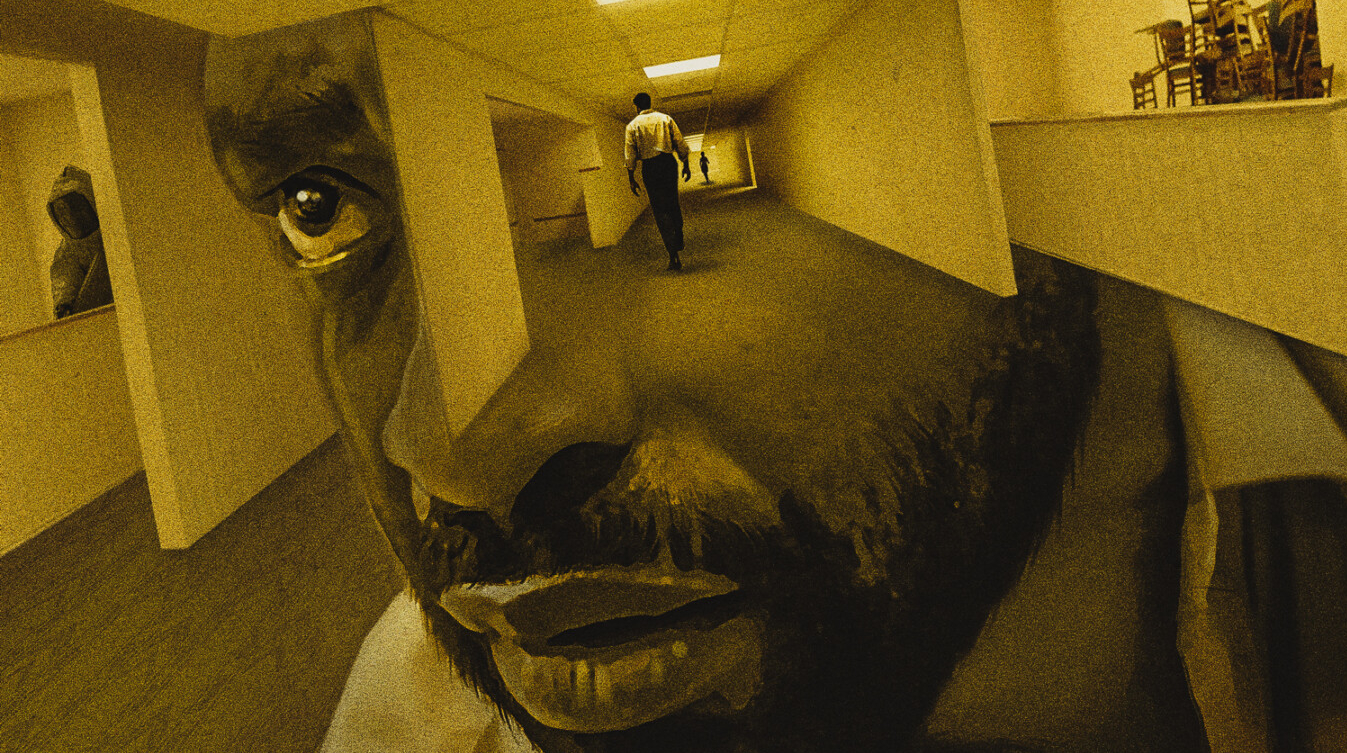
Backrooms opened as the No. 1 movie in the world, and has brought the supernatural lore of the hit web series to the big screen. Backrooms web series creator Kane Parsons also directed the feature film, and longtime fans of the series have been spotting all kinds of tie-ins with the web shorts.
While it’s not at all required to view the original Backrooms shorts before the film, they do offer a more complete view of Parsons’ lore. They help explain why things take such a wild turn in the third act of the Backrooms movie and what the enigmatic ending really means.
What Happens In Backrooms‘ Final Act? (SPOILERS)
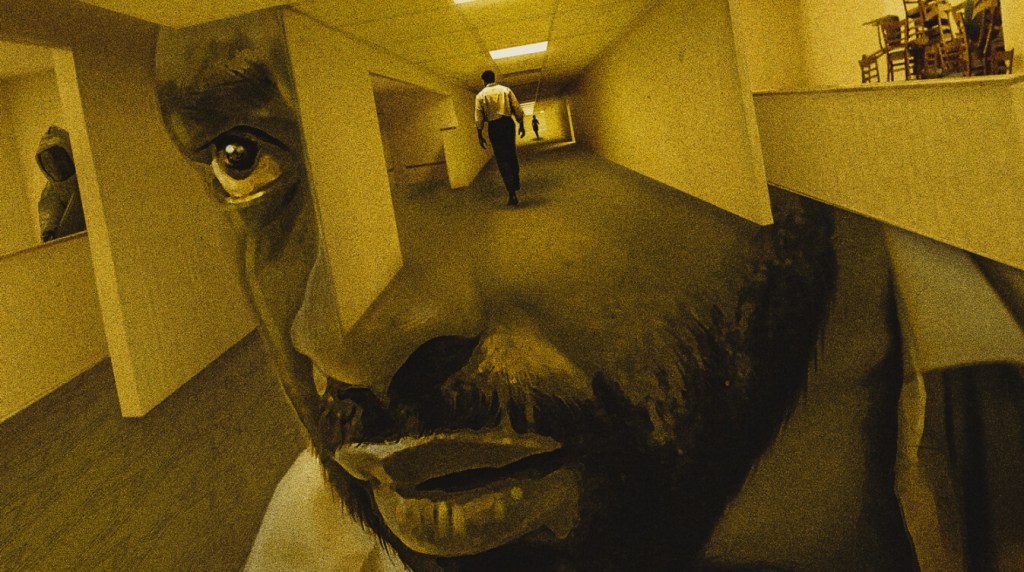
The Backrooms movie follows failed architect-turned-struggling furniture store owner Clark (Chiwetel Ejiofor), who is desperately trying to navigate post-divorce life. Down on his luck and reduced to sleeping in the store, one night, Clark discovers a portal into the Backrooms in the basement. Over the course of the film, he tries to explore the surreal realm and then hires a film crew to document the space. Things go tragically wrong, and the film crew is killed, while Clark loses his mind from being in the Backrooms for too long.
The final act of the film sees Clark’s therapist, Dr. Mary Kline (Renate Reinsve), go searching for him after Clark had been acting erratically in their last session. She tracks things to the portal in the basement and similarly gets stranded in the Backrooms. She finds Clark, but he knocks her out and takes her hostage, revealing his insanity by introducing Mary to his “friends,” who are three nightmarishly disfigured humanoids. One of them, who looks like Clark dressed up as the pirate-themed mascot of the furniture store, goes mad and kills Clark, before chasing Mary back through the Backrooms. Mary faces the monster in a Backrooms version of the furniture store, and barely escapes before she’s captured by the Async Research Institute, which has been exploring the Backrooms for some time.
Backrooms Ending Explained: Bad Copy
There’s a now-famous monologue from Clark, midway through Backrooms, in which he tries to explain to Mary what the mystery realm actually is: “Imagine describing a dog to someone who’s never seen one before and then asking them to draw it,” Clark said. “It will look similar, but the devil is in the details.”
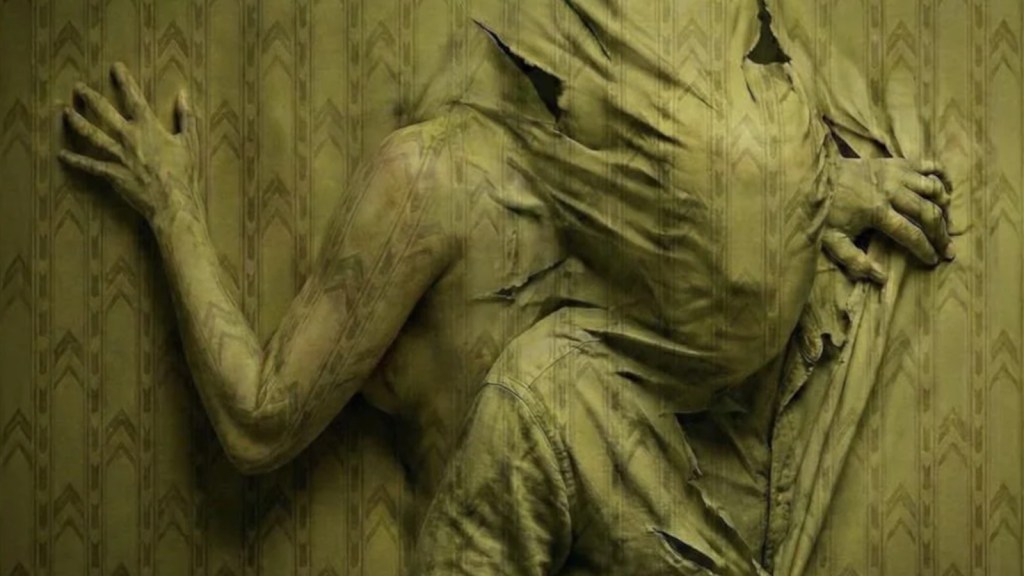
The implication of that quote and the sequences of the film in the Backrooms suggest that what Clark says to Mary is more than just an analogy: it’s a key insight into the nature of the Backrooms. The long and short of it is that the Backrooms seem to function like an amplifier of memory, suggesting it has some sort of psychic consciousness at work, which can “read” the minds of those who come there, and tries to “reflect” their memories. However, being some otherworldly realm, the Backrooms can’t comprehend the basic nature of people or the inaccuracy of their memories, which results in twisted, distorted copies of people, places, and things from the minds of those who enter the backrooms.
While it’s never confirmed directly, there is a heavy implication that the domestic setting where Clark takes Mary as his hostage is his former home. Similarly, there are a lot of fans who think that at least one of the two twisted copies that Clark is with is his ex-wife. That theory is supported by the fact that Clark scalps the female copy and makes Mary wear the scalp and hair as a wig, for her to “role-play” as his wife, as she often did in their therapy sessions.

In the final scenes, when Mary is with the Async team and talking with researcher “Phil,” (Mark Duplass), the camera cuts to panning around the Backrooms, and reveals that Mary’s traumatic memories of living in a house with an agoraphobic mom, and the eventual forced demolition of that house, are all memories that are starting to be collected and manifested by the Backrooms. The final shot of the film reveals that Mary is also starting to lose herself and her sanity, as teased by the final sight of a Backrooms version of Mary, who looks made of broken pieces all slapped together into a single disfigured body.
Backrooms is listed as “psychological horror” for a reason. It’s clear from the film that Kane Parsons is less concerned with nightmare “entities” and more focused on the psychologies of the characters venturing into the Backrooms, and the traumas that they bring into the freakish space. That’s probably for the best, as the premise is wide and open enough that any sequels can function more like anthologies, following new sets of characters as they become trapped in the Backrooms, and have the surrealist space take the shape of whatever is lurking inside their heads.
Backrooms is now playing in theaters. Or check out the web series HERE.






Leave a Reply