
When casting director Nancy Nayor was young, her parents were puzzled by her entertainment choices. “I would race home after school and become glued to the television watching ‘Outer Limits,’ ‘Twilight Zone,’ ‘Dark Shadows‘ and all sorts of genre films,” Nayor told IndieWire. “I was such a horror geek, and my parents just couldn’t figure me out. It wasn’t what they expected.”
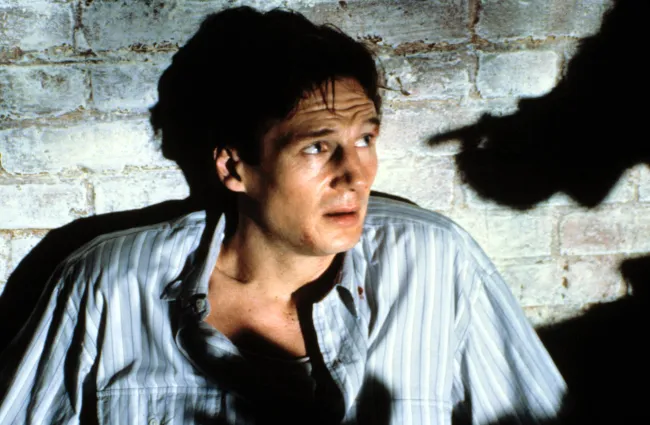
Nayor eventually turned her obsession into a career, casting some of the most important genre films of the last 40 years. From giving Liam Neeson his big break in Sam Raimi’s “Darkman” and finding the right actors for the American remake of “The Grudge” to casting “Barbarian,” “Companion,” and Raimi’s recent return to form, “Send Help,” Nayor has been a key creative force on dozens of horror hits. (Nayor has also had plenty of non-horror successes, including the recent love stories “Regretting You” and “Office Romance.”)


Nayor was running the casting department at Universal in the mid-1980s when she worked on her first horror movie, “Psycho III.” “I was vice-president of casting, overseeing all the feature films at Universal, and I would cast certain films in-house,” Nayor said. When she got the assignment to cast “Psycho III,” which was to be directed by its star, Anthony Perkins, Nayor was thrilled. “‘Psycho’ and ‘The Bad Seed’ were two of my favorite genre films growing up, so to be able to work with Tony Perkins was a dream come true.”

The experience was especially pleasurable since Perkins was nothing like his homicidal onscreen persona. “He was not what I expected,” Nayor said. “I only knew the character from the film, and the character was so edgy, and the films were so edgy that I thought, ‘He’s going to be complicated and mysterious, and I’m going to have to figure him out.’ But he was the sweetest guy, straightforward, caring, and communicative. All the qualities you would want from a director.”
Nayor came to learn that Perkins was not alone as a kind man directing terrifying movies; one of her most frequent collaborators, Sam Raimi, proved to be similarly warm and supportive. “To this day, he wears a jacket and tie to all of the auditions,” Nayor said of Raimi’s way of showing respect to the actors. She recalled that when they made “Darkman” together, Raimi would give all the actors standing ovations, which sometimes led to confusion.

“Their agents all thought they’d be getting callbacks, and I would have to explain to them that it’s just the beauty of Sam Raimi,” Nayor said. “He just loves whatever he loves about all the actors to the point that he’ll give them all applause. It was just so sweet to see the actors appreciated.” Like Raimi, Nayor is determined to create an environment in the audition process that will facilitate the actors’ best work and make them feel encouraged — starting with encouraging them to go as crazy as they want to if they’re auditioning for a horror film.
“When it comes to genre films, sometimes they have to be screaming at the top of their lungs, or possessed by the devil, or freaking out,” Nayor said. “It takes more nurturing during the process to let them know it’s OK. We used to have an office with a dentist and a chiropractor downstairs, and I think actors would see the signs on their way up the stairs. Their first few screams would be a little timid, and I was like, ‘Don’t worry, they know what we do up here. Nobody’s going to call the police. Just scream at the top of your lungs.’”
One thing Nayor loves about genre films is that they often sell themselves, giving her more freedom in the casting process. When she and Raimi chose Liam Neeson as the lead in “Darkman,” for example, he wasn’t anything close to a household name, but Nayor knew he was right for the role and cast him over better-known actors. “We discussed a lot of contenders, but there was something so soulful in his eyes and his presence,” Nayor said, adding that casting an unknown in the role gave it more power.
“There’s something exciting about audiences immersing themselves in the story because they’re not overly familiar with the lead,” Nayor said. “They feel they can go on a journey with someone who’s new to them.” Nayor prides herself on staying on top of up-and-coming talent so she can surprise audiences with performers who are great but haven’t been overexposed yet. “Our job is to search every crevice of the business, every little independent film, every Broadway show, and every Off-Broadway show. We’re more familiar earlier than the general audience.”

One actor Nayor knew had talent right out of the gate was “Companion” star Sophie Thatcher. The only problem: Thatcher initially turned down the movie. Nayor and director Drew Hancock moved on and read other actresses opposite male lead Jack Quaid, but Hancock couldn’t let go of the idea of Thatcher. “He wanted to revisit it, because maybe it just hadn’t been presented to her properly,” Nayor said. “She looked at it again, she met with the director, and that was it. So often you hear a no, but you can’t necessarily accept it. In that case, the director could not — he just could not get her out of his mind.”
Nayor finds that tenacity and refusing to take no for an answer are important when dealing with actors’ representatives, some of whom have been snobbish about horror over the years — though it’s getting a little better now that actors like Demi Moore and Amy Madigan are getting Oscar nominations (and in Madigan’s case, a win) for their work in genre fare. When Nayor was casting director Denis Iliadis’ brilliant and brutal “Last House on the Left” remake, for example, Aaron Paul’s agents wanted nothing to do with it.
“We had a great role for him in that movie,” Nayor said, adding that she really believed in Iliadis’ talent. So when Paul’s agents told her he wasn’t interested in doing genre films, Nayor reached out to Paul personally and asked him to watch Iliadis’ first film. “He took the film home, watched it, and called me and said, ‘I’m in.’ I want to do this film.” Nayor doesn’t blame the agents — “they have a really hard job because if their client is popular, they’re juggling hundreds of offers” — but says it’s just part of her job description to leave no stone unturned when going after the actors she knows are right for her projects.
The acclaim generated by horror directors like Jordan Peele and Zach Cregger has, along with the recent success of “Obsession” and “Backrooms,” made it an exciting era for horror in Nayor’s mind, and she says many of the old prejudices are less prevalent. The other major change in casting horror is the ubiquity of self-taping, which Nayor sees as a positive for the genre. “People can literally be out screaming in the woods for their audition,” Nayor said. “They don’t have to come into an office building, so they can really release the Kraken.”
Nayor has more genre projects in the pipeline — she recently completed a new horror film called “My Boyfriend’s a Demon,” and is finishing Drew Hancock’s follow-up to “Companion” — and hopes the current horror boom keeps building so she can continue to do what she loves. “I think it’s just such a cool profession,” Nayor concluded. “I can’t believe I get to do it for a living.”





Leave a Reply