
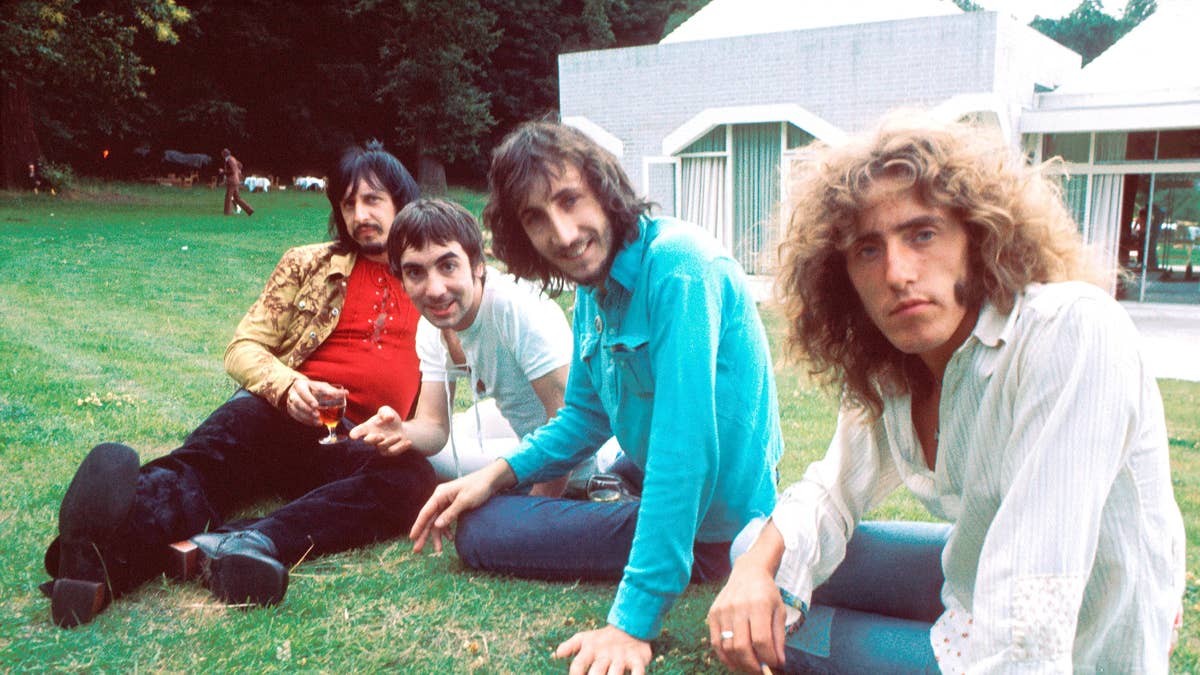
The Who’s “Baba O’Riley” is not only a standout track but is also recognized as one of the greatest classic rock songs in music history.
Driven by their signature blend of power pop and mod rock, accompanied by Roger Daltrey’s powerful vocals and electrifying stage presence, the quartet, which includes guitarist and singer Pete Townshend, bassist John Entwistle and drummer Keith Moon, emerged as one of the most influential bands of the 20th century, leaving an enduring legacy.
However, out of all the 26 songs of The Who that made it to the U.S. Billboard Hot 100, “Baba O’Riley” never made it on the list but was considered their iconic track.
In a ranking released by Collider, the 1971 track was listed among the 25 greatest classic rock songs of all time, with David Bowie’s “Heroes,” Derek and the Dominos’ “Layla” and Bruce Springsteen’s “Born to Run” securing the top three spots.

Michael Putland/Getty Images
At No. 6, “Baba O’Riley” was described as the band’s “defining track” and a masterpiece that balances a hypnotic atmosphere with explosive rock energy.
In addition, Rolling Stone also ranked “Baba O’Riley” No. 6 among The Who’s 50 greatest songs of all time. The publication recognized it as an “epic track that opened Who’s Next,” referring to the band’s fifth studio album.
Written by Townshend, the song was inspired by his spiritual teacher Meher Baba and composer Terry Riley.
The guitarist initially wrote the track for his Lifehouse project, an unfinished science fiction rock opera, but it was ultimately included on The Who’s fifth studio album.
@officialthewho ‘Baba O’Riley’ at Shepperton Studios in 1978. #TheWho #70sMusic
♬ Baba O’Riley – The Who
Contrary to popular belief, the line “teenage wasteland” wasn’t about youth rebellion but rather Townshend’s disillusionment with the aftermath of music festivals and seeing how the drug culture had taken on many young people.
“The absolute desolation of teenagers at Woodstock, where audience members were strung out on acid and 20 people had brain damage,” he said in an interview as cited by American Songwriter, adding, “The irony was that some listeners took the song to be a teenage celebration.”
As for the music, Townshend’s fascination with emerging music technology at the time was also reflected in “Baba O’Riley.”
That influence led him to incorporate electronic sequencing and an early synthesizer, creating the song’s iconic repeating notes that sounded unlike anything produced by a traditional piano or guitar at the time, according to PopMatters.
More than five decades after The Who released “Baba O’Riley,” the song continues to resonate across generations, making it one of rock music’s timeless anthems.
Related: ’80s Rock Band, Ranked Among Best Supergroups of All Time, Announces Exciting News






Leave a Reply