
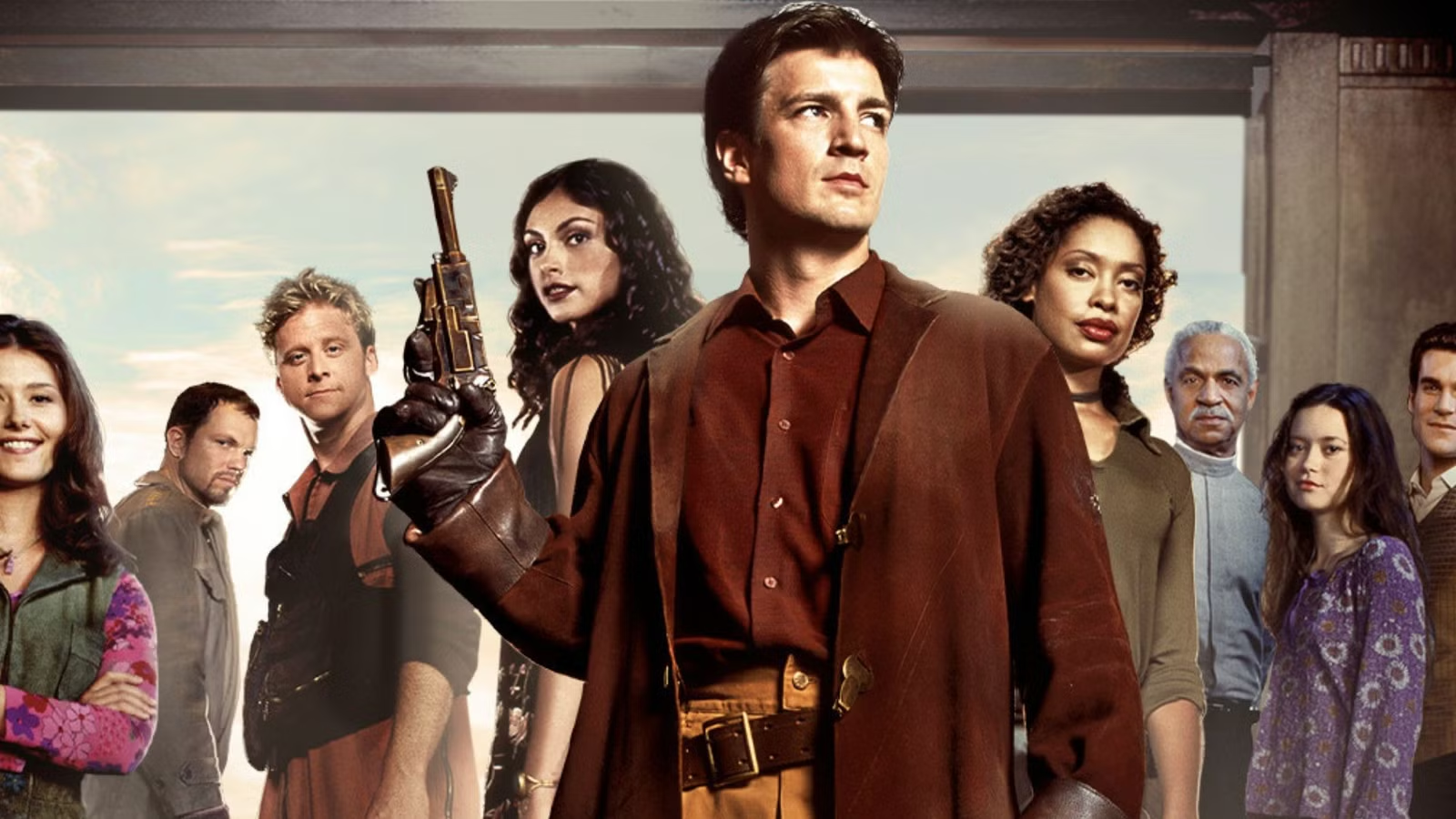
Sometimes a show is canceled too soon. That’s exactly what happened when the sci-fi cult classic Firefly ended prematurely with just one season. Since then, there have been numerous space shows with ensemble casts, proving that Firefly was simply too ahead of its time. If it had come out today, it would likely find success, especially considering how passionate we all are to see it return in the future.
Over the years, many shows have attempted to fill the void with sci-fi on the small screen, from Battlestar Galactica to Dark Matter— but there’s one series that is everything Firefly should have been: the Prime Video 6-season space opera, The Expanse. Its long run allowed it to deliver exactly what we wanted in an alternate timeline where Firefly got the treatment it deserved. But it also expanded the very idea of what a high-quality space adventure show could be.
‘The Expanse’ Pushed The Sci-fi Genre Forward
The Expanse arrived at just the right moment when we were all longing for a successor to the early‑2000s trend of space adventures on TV. None of them succeeded like The Expanse, which didn’t just copy what came before, but truly tried to evolve the genre in an ambitious new direction. The Prime Video series embraced the same DNA that made Firefly work on so many levels, from its ensemble cast to its sense of a lived-in universe. It made space feel thrilling and intimidating at the same time, taking a note from George Lucas. But unlike its predecessors, The Expanse had the opportunity to tell a full story across several seasons, and that narrative consistency made all the difference.
You might think that’s exactly what Battlestar Galactica already did for serialized sci‑fi storytelling, but it didn’t elevate the genre to the same degree as its action often overshadowed its themes of space exploration. However, The Expanse found the perfect balance between the two. Throughout its 6 seasons, it evolved into the rare show that could go from an intense standoff involving the Martian Marines to an intimate, character‑driven moment aboard the Rocinante.
In fact, the Rocinante itself feels like the spiritual successor to the Serenity, as a crew of misfits who never signed up to be heroes. But unlike Mal’s crew, the Roci team was allowed to grow across dozens of episodes, with satisfying character arcs thanks to its long run on streaming.

Instead of primarily relying on genre tropes and common archetypes, The Expanse rewarded viewers with unique plot lines, as well as character development that felt genuinely earned over the course of several years. That approach gave the series a sense of maturity which was often lacking in sci-fi TV at the time.
But what makes The Expanse truly special is the way it modernized the genre, without compromising the charm of a character‑driven space epic. In the grand scheme of sci-fi, that means something. Major franchises tend to lean heavily on nostalgia like Star Wars or their built-in audiences whenever they’re adapting source material like Foundation, but The Expanse stands out as an original epic. It’s everything Firefly could have been as an ambitious series following a ragtag group across the universe.

- Release Date
-
2015 – 2022-00-00
- Network
-
SyFy, Prime Video
- Directors
-
Breck Eisner, Jeff Woolnough, David Grossman, Kenneth Fink, Rob Lieberman, Terry McDonough, Thor Freudenthal, Bill Johnson, David Petrarca, Jennifer Phang, Mikael Salomon, Sarah Harding, Marisol Adler, Anya Adams, Nick Gomez, Simon Cellan Jones
- Writers
-
Georgia Lee, Robin Veith, Hallie Lambert, Matthew Rasmussen, Ty Franck, Naren Shankar, Mark Fergus, Hawk Ostby, Daniel Abraham, Dan Nowak
-

-

Dominique Tipper
Naomi Nagata




Leave a Reply