
Animated dark comedy series Hazbin Hotel, produced for Prime Video by Animator-Turned-Writer-Director-And-Producer Vivienne Medrano (better known online as Viviziepop) through her studio SpindleHorse Toons, has been on a meteoric upward path in popularity since its initial conception as a pilot episode posted to YouTube in 2019. The show, which wrapped its second season in November of 2025 and is expecting a third in 2027, is set in a modernized version of Hell and follows Lucifer Morningstar’s daughter, Charlie Morningstar, and her friends as they try to redeem damned souls, allowing them to move on from Hell’s torments and enter a pastel-colored utopian Heaven (although, of course, this proves more complex than Charlie and crew could have planned). The resulting in-universe conversations around morality, religious dogma, systems of power, and who exactly is deserving of redemption have fueled unending discussion and theorization within Hazbin Hotel‘s massive fan base.
Normally heavy topics such as whether bigots deserve redemption, what actions are bad enough to damn someone to Hell, and whether God exists are casually discussed in the fandom due to their relevance to the worldbuilding and internal logic of the Hazbin Hotel universe. However, both this internal logic and the seven years of fan discussion orbiting it have just been upended, as at DragonCon 2026, Medrano revealed in no uncertain terms that not only does Roo— an enigmatic figure who had prior to now only existed through vague easter eggs and was considered by some to be a fan theory— exist in the Hazbin Hotel universe and as a “Definitively evil god”, but that a “Definitively good god” also exists— an idea that sounds quite close to the concept of God and Satan in the Christian worldview that Hazbin Hotel seems to aim to challenge.
Hazbin Hotel Already Takes A Complex Approach To Morality And Religion
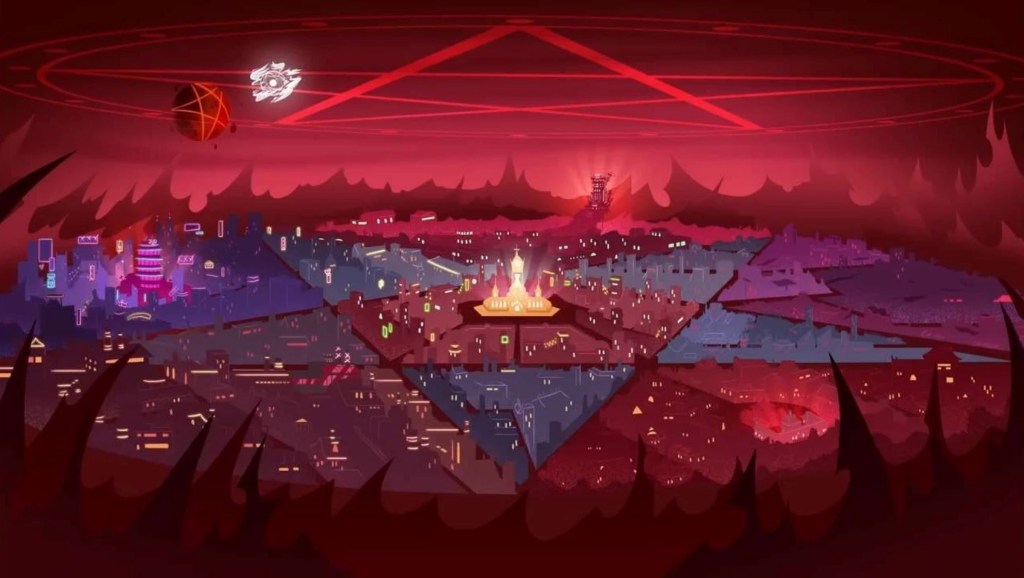
The Hellaverse, the larger universe in which Hazbin Hotel and its sister series Helluva Boss exist in, has always had an uncommon approach to its religious themes. Basing its stories almost entirely in Hell and (less often) Heaven, the Hellaverse features many characters from both Biblical and later Christian lore such as Lucifer, Lilith, Saint Peter, Beelzebub, and Abel (played to unexpected perfection by Fall Out Boy’s Patrick Stump). Yet in spite of this, the Hellaverse’s worldbuilding specifically goes out of its way to avoid placing these locations and characters within any Christian canon. One prime example of the Hazbin Hotel‘s first official episode, “Overture”, where Charlie narrates the story of Lucifer and Lilith’s banishment to Hell.
The story told is, at its base level, the Book of Genesis (albeit with the inclusion of the Lilith story, in which the demon Lilith is Adam’s first wife before Eve— an addition to the Genesis story that gained prominence in Early Medieval Jewish Mysticism). However, despite the story clearly being a version of the biblical Genesis, and despite people and concepts such as Adam, Eve, Heaven, Angels and Lucifer all being fairly accurately named, this retelling of Genesis contains no mention— let alone physical presence— of God.
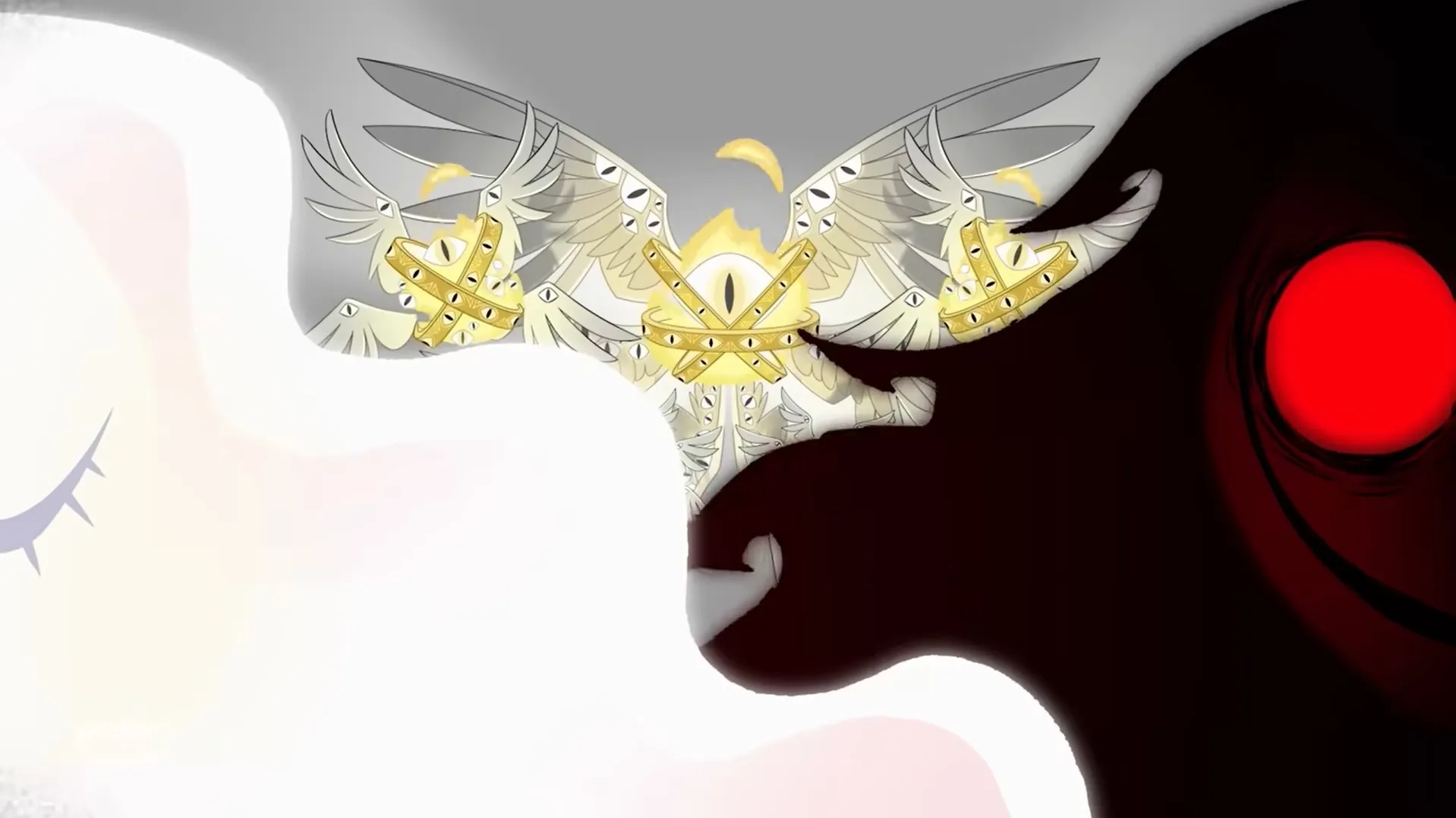
Instead, Heaven’s angels are described as “Worshipping Good and protecting against Evil”, with the two concepts briefly shown as two opposing faces. After that, all functions taken by God in the original Genesis story are performed by the angels, and this arrangement continues (at least for the most part as, shall be addressed later in this article) across Hazbin Hotel‘s first two seasons and into current canon. This approach to God makes sense for Hazbin Hotel, as, despite being set in Hell, the show portrays such concepts as good, evil, redemption and mercy in a purely secular light. In Hazbin Hotel canon, the countless sinners roaming and suffering in Hell are there not because their actions in life were displeasing to some all-powerful deity, but because they had done real and inarguable harm.
The concept of Redemption (at least, Redemption as Charlie imagines it) works similarly, involving self-awareness, kindness, selflessness, accountability, and generally learning to be part of a community— while notably not containing a singular reference to prayer or spiritual purification. Hazbin Hotel‘s lore treats sin as simply another word for harmful behavior, and within such a world, the abstract concept of “Good” being substituted for an Abrahamic deity is intuitive and plot-supporting. In light of these facts, what does Vivzie’s announcement actually change, and how could it affect the worldbuilding and themes of Hazbin Hotel?
Who Or What Is Roo?
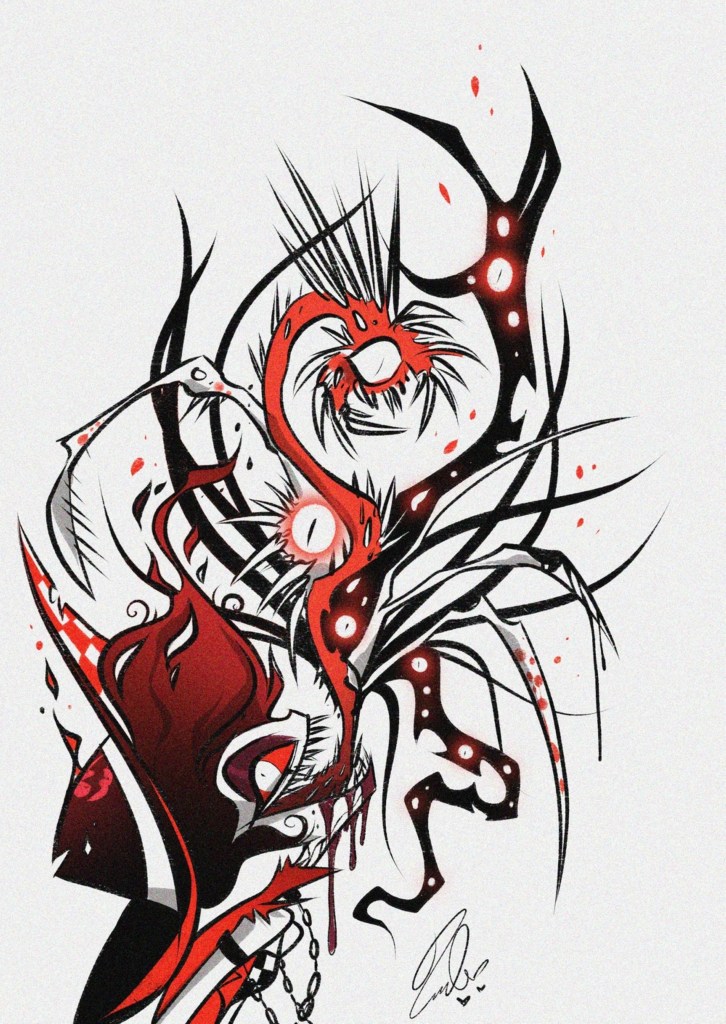
Roo, an entity of currently unknown nature and origin, first appeared as a sketch posted to Vivzie’s twitter in 2019, depicted as a smug, sinister-looking woman with deathly skin, a wide-brimmed hat, chains around her throat and arms, and a tangle of eldritch abominations sprouting from her fanged mouth. It was understood from her first appearances that the character belonged to the Hazbin Hotel universe, but as the show evolved from sketches to animated pilot to Amazon Prime streaming series, Roo was nowhere to be seen, leaving older fans unsure if her concept had survived later storyboarding, and newer fans unaware of her existence.
However, while Roo herself has not yet appeared in Hazbin Hotel, constant hints towards her presence (and countless fan theories about which characters may be connected to her) have persisted, with Roo’s name being present in a Bluesky post by Vivzie listing her favored characters from the series. In terms of in-universe hints, in the aforementioned intro sequence, the face representing “Evil” is clearly meant to be Roo, and later on the red energy creeping through the Tree of Knowledge may be connected to her as well. The show’s eerie depiction of Eve as she eats the apple, and the sinister tendrils and red eyes that surround Earth after she does so, also all bear strong aesthetic resemblance to Roo. Outside of the intro sequence, red eyes like those sprouting from Roo’s mouth tentacles still cover Hell in the present day, popping up on the sides of buildings and really anywhere that there’s a flat surface for them. Vivzie confirmed in a September 2026 Bluesky post that those eyes are indeed Roo’s, so seems that this malicious entity keeps a very close watch on what’s happening in Hell.
In Hazbin Hotel’s canon-sharing sister series Helluva Boss, demonic assassins Blitzo, Moxie and Millie get an unpleasant surprise when the seemingly-normal human family they had been hired to kill turn out to be murderous cannibal cultists who worship both Satan (a real entity in the Hazbin Hotel and Helluva Boss universe, who does not seem like he would care about human sacrifice at all) and a mysterious entity and/or concept known as “The Root Of Evil” — a fascinating hint that Roo may have supporters in the mortal realm.
This phrase, combined with Roo’s association with both trees and the Biblical Eve, has led many fans to speculate that Roo and Eve share some lasting connection, with the names “Roo” and “Eve” together making up the phrase “The Root of All Evil”. Some fans have taken this even further, claiming that Roo and Eve are the same being (a theory which may or may not hold water after this announcement).
The Question Of God In Hazbin Hotel
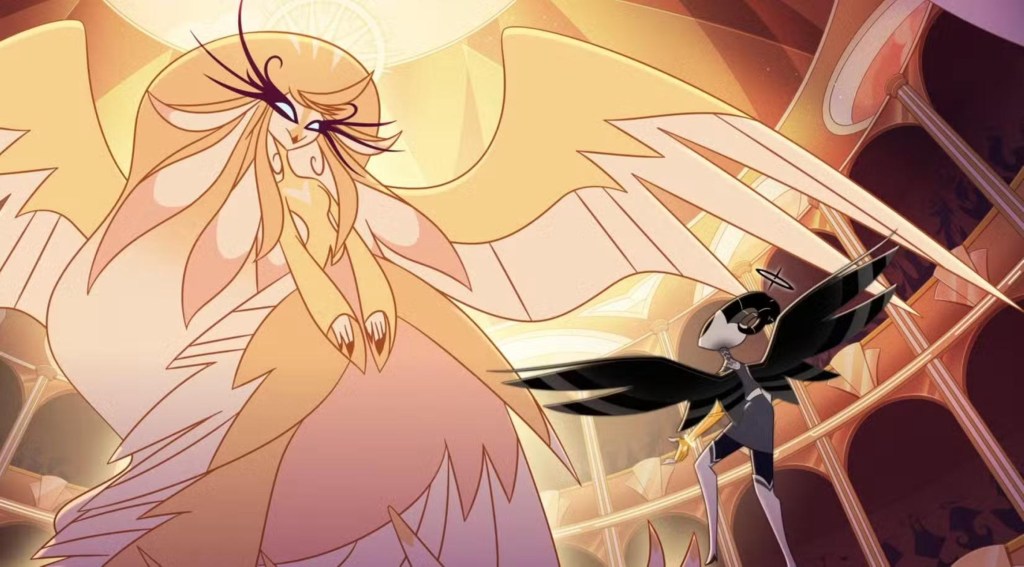
While Vivzie’s announcement more or less confirmed God’s existence, this is actually not the first time that Hazbin Hotel canon has heard mention of this deity. In the show’s second season, a character known only as The Speaker of God is introduced. A mysterious birdlike figure who descends from the higher levels of heaven to offer guidance when the angels are unsure how to deal with the arrival of the first-ever redeemed sinner Sir Pentious, and who later appears to the angel Sera when she prays for guidance regarding her own guilt over the atrocities she allowed to happen in Hell, the Speaker is clearly a powerful and respected figure in Heaven.
However, it was unclear at the time if the words “Of God” in her name actually referred to any deity, or if the Speaker, like Hazbin‘s version of Saint Peter, kept the name of an Abrahamic-Faith figure but not the connections that that name or title implies. Now, Vivzie’s reply seems to have definitively settled this issue. Based on Vivzie’s decision to leave the “Definitive good god” unnamed while clearly naming the “Definitive evil god” as Roo, and the existence of The Speaker of God, it can be solidly inferred that the “Definitive good god” is, in fact, at least a version of God From The Bible, and that the face shown in the show’s intro to represent “good” is likely theirs.
This Information Changes Everything
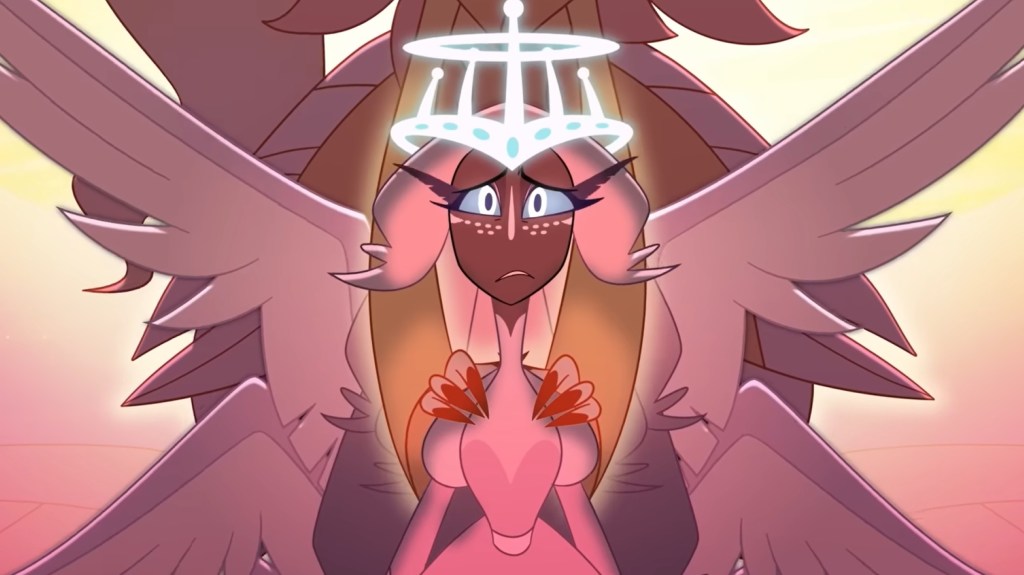
In a show that revolves around the idea that sin and evil are defined by secular understandings of harm, and that the eternal consequences of sin and evil can and should be reversed if the sinner can better themselves as a person, introducing a God-and-Devil morality system halfway through is certainly a way to throw a wrench in every aspect of the narrative. The strangeness of this development is even further intensified when we remember that not only does Hazbin Hotel already feature Lucifer as a prominent character, portraying him as a dreamer and visionary who let Evil into the world by mistake and was cursed to rule Hell for it. Not only that, but Hazbin Hotel‘s sister show Helluva Boss also features the stern, judgmental, biased not at all inherently evil figure of Satan. There’s two Devils in this universe already, and until now the choice to make neither of them embody the original, eternal evil present in the Christian Adversary seemed to be a conscious decision in service of the show’s messages about morality.
The situation with God seems sure to be no less disruptive to the show’s themes — while Hazbin Hotel‘s first season had Heaven as clear-cut antagonists massacring Hell’s denizens every year with shameless glee, Season 2 gives us a look into Heaven, exploring life in this celestial realm and following Heaven’s leadership as they come to terms with the harm they have done to Hell, and struggle how building peaceful diplomatic relations with their former enemy. These complex discussions of accountability and morality will doubtless be upended, for all parties involved, by the addition of an omnipotent, all-powerful being who as of yet has done nothing to halt the celestial city’s actions against Hell.
Where Do We Go From Here?
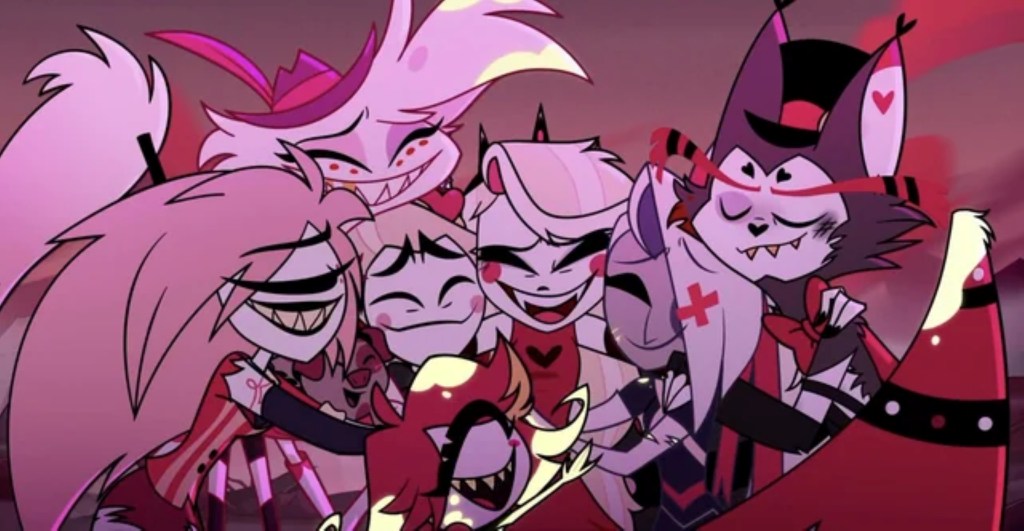
So, how should the characters of Hazbin Hotel, and we as fans, react to these developments that seem to fly in the face of the show’s own core themes? The best outcome is that the characters and the fans react the same. Like us, the fictional inhabitants of the Hazbin Hotel universe, especially those with a stake in the idea of redemption, will likely be shocked, confused, and even betrayed or angered by the reveal that while they were trying to show how people can change and that it’s not as simple as pure good versus pure evil, they have been living in a world locked ruled by omnipotent, unimaginably ancient and powerful beings embodying pure good and pure evil.
To denizens and fans of the Hellaverse alike, this is upsetting and disruptive information. It threatens to destroy every ideal that Charlie has built her life around— and that’s how characters and stories grow. If these reveals are handled well, the confusion and upheaval they bring to the characters’ lives and worldviews will be fuel for the characters, their goals, and the story itself to grow and change. A mid-series bombshell reveal doesn’t have to mean abandonment or destruction of the story’s pre-reveal values, and if there’s anyone who can stick by what they believe in and make it work despite all odds, it’s Charlie Morningstar and her friends.




Leave a Reply