
Some space opera anime build their worlds around political rivalries, military strategy and civilizations spread across entire star systems. Giant robots and massive space battles are easier to sell than orbital mechanics and slow-burn political drama, so plenty of brilliant shows get buried under mainstream hits.
However, some of these forgotten space operas have aged remarkably well. The animation of these series may show its age, but their writing often has not. These anime deliver memorable characters, brutal battles, complicated politics and worlds that feel genuinely lived-in.
Starship Operators Turns a War Into a Fight for Ratings

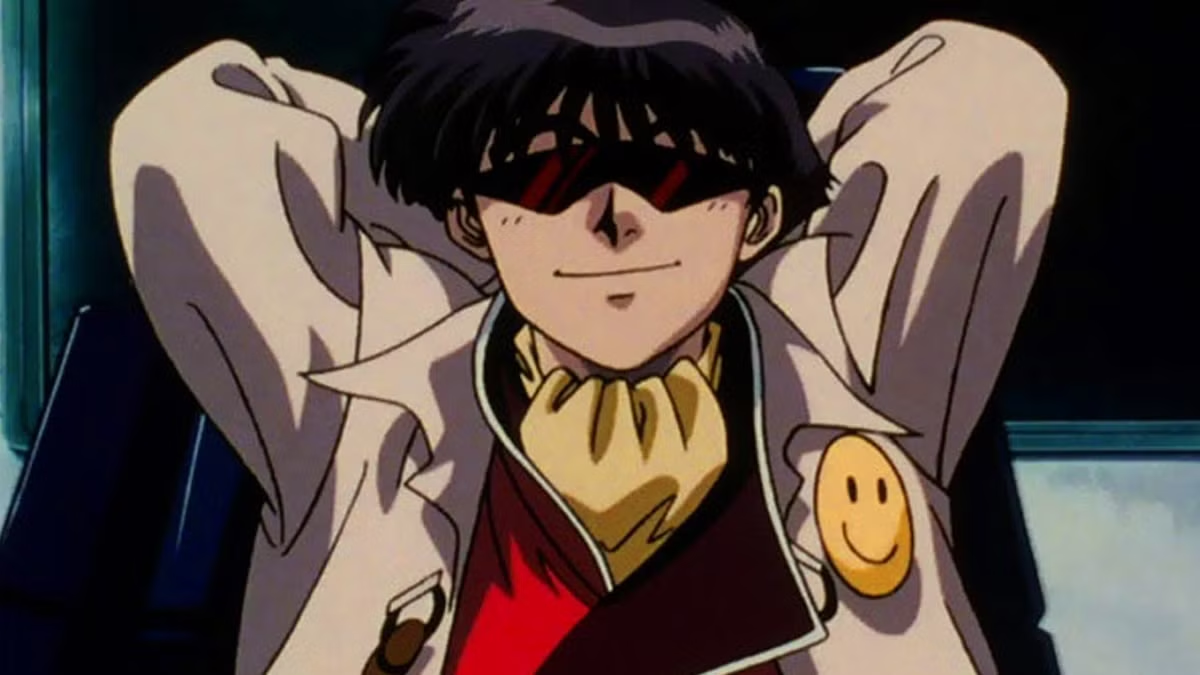
A TV network ends up funding a rebellion in Starship Operators. The cadets aboard the Amaterasu refuse to let their home planet Kibi surrender to an invading Kingdom. Sinon Kouzuki leads the crew as they keep their resistance going by selling broadcast rights to a media network that turns their war into reality TV.
This wild premise gives Starship Operators a fun take on how people watch war from a safe distance. The space battles are just as refreshing, relying on inertia, heat management and limited ammunition instead of mecha spectacle or convenient power-ups. Sinon and her crew have to win through patience and smart planning, with many battles turning into tense games of positioning.
The Amaterasu’s media deal also gives the rebellion a fun political twist. Every battle becomes both a military fight and a public show, and forces Sinon to think about how every victory or defeat affects the audience paying for her resistance. The mix of war, entertainment and survival gives Starship Operators a personality that still feels surprisingly fresh for a 2005 anime.
Crest of the Stars Builds Its Galaxy Around Politics and Culture
-
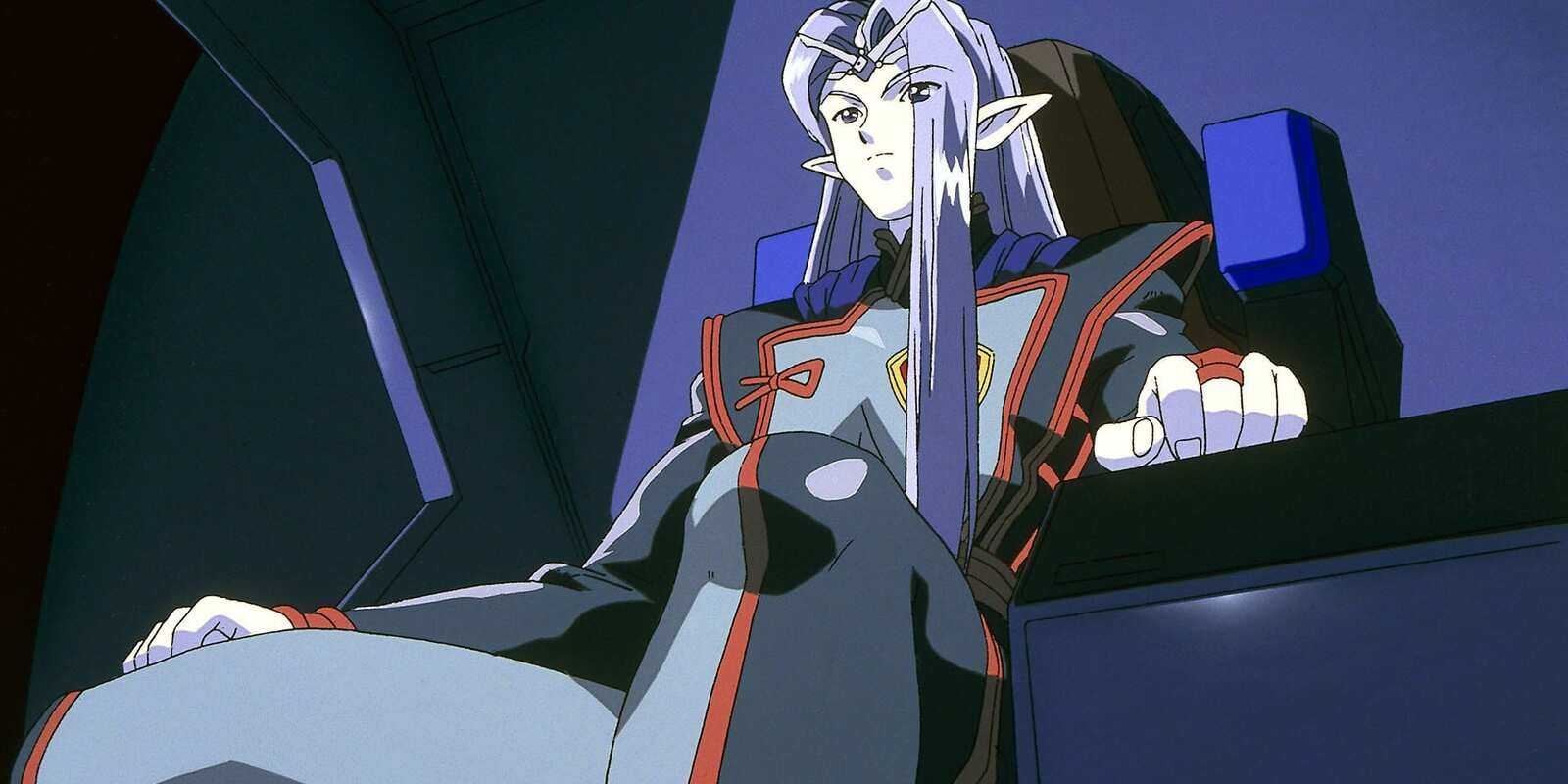 Image via Sunrise
 -
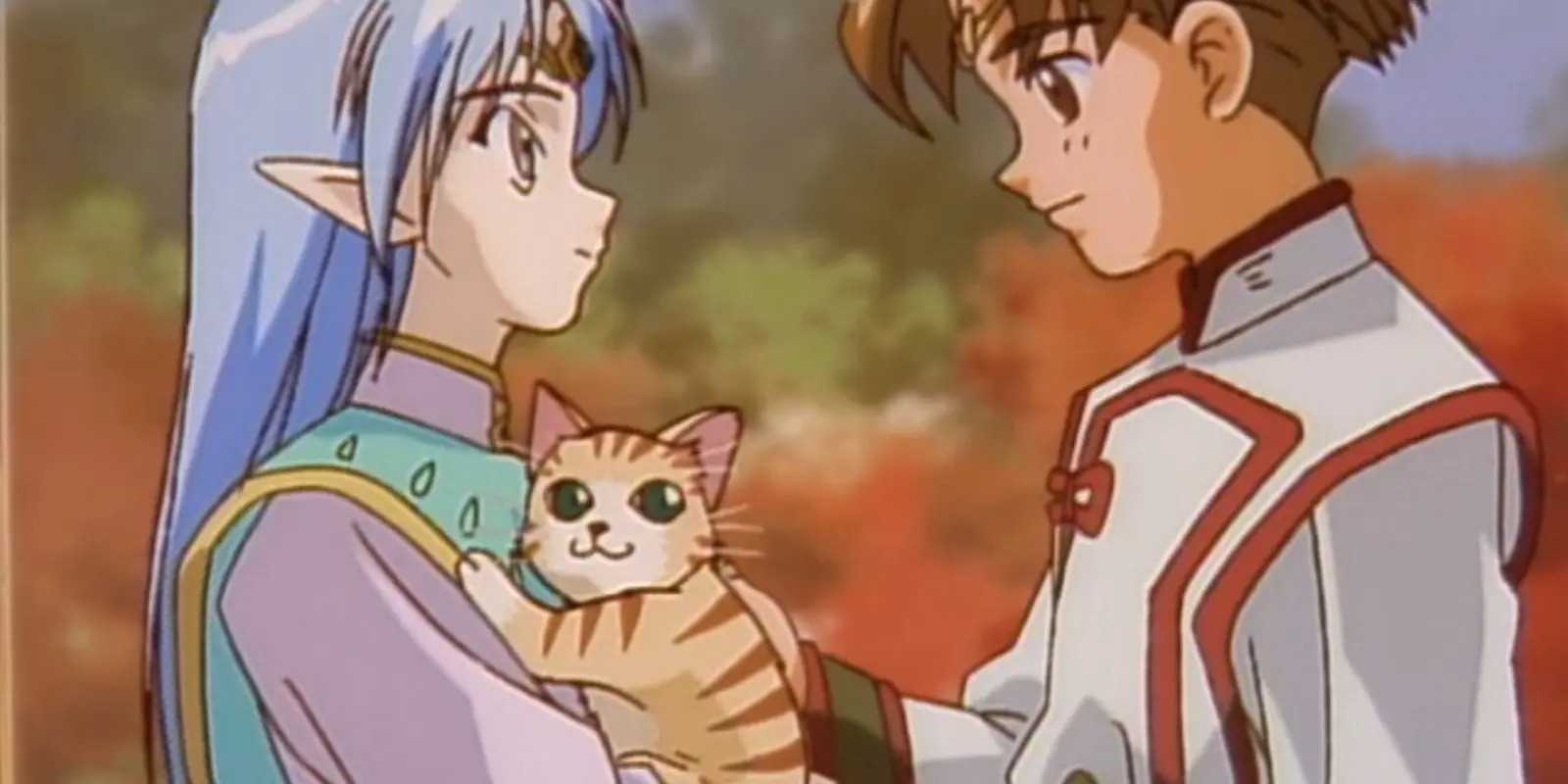 Image via Sunrise
 -
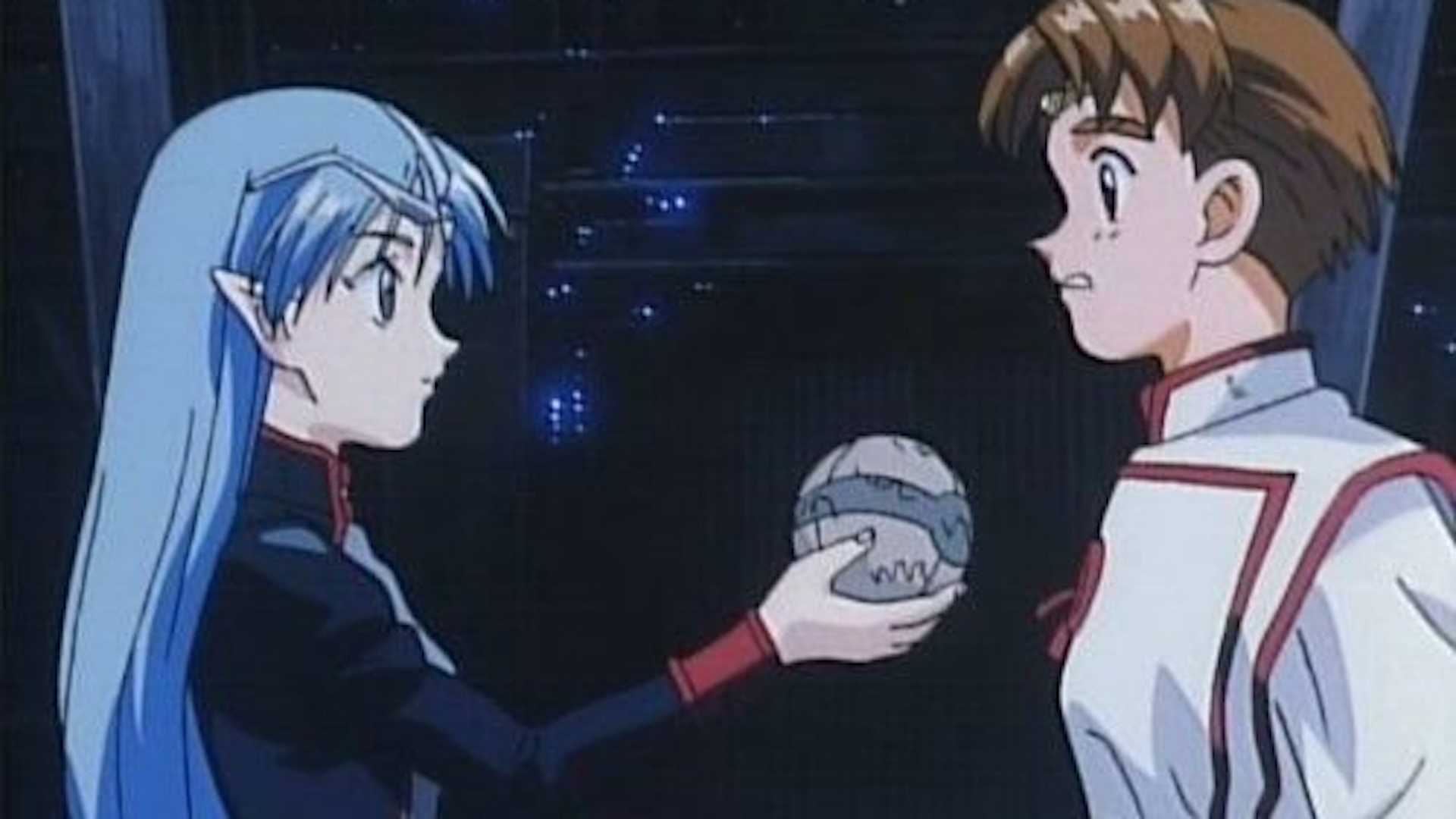 Image via Sunrise
Crest of the Stars approaches space opera through Jinto Linn and Lafiel Abriel rather than treating its enormous interstellar setting as background decoration. The Abh Empire has its own language, customs and political structure that makes the galaxy feel real instead of like a backdrop for space battles.
Jinto and Lafiel give Crest of the Stars an intimate center for such a huge story. Their relationship makes ideas like imperialism, class, loyalty and cultural misunderstanding surprisingly easy to get invested in. The anime’s deliberate pacing has aged particularly well.
The world-building lets political institutions and cultures breathe without slowing things down with lengthy explanations. The Abh Empire is also far too complicated to fit neatly into a hero-or-villain box, and that confidence makes the 13-episode series feel less like an old space adventure, and more like discovering the first chapter of a book about a civilization worth learning more about.
The Irresponsible Captain Tylor Turns Military Absurdity Into Sharp Satire

The Irresponsible Captain Tylor initially looks too ridiculous to sit beside a serious military space opera. Justy Ueki Tylor joins the United Planets Space Force hoping for an easy life, only to receive command of the Soyokaze and stumble into a war against the Raalgon Empire.
The ridiculous setup becomes one of the show’s biggest strengths, and turns the military hierarchy into a playground for some genuinely clever comedy. Tylor’s apparent incompetence creates the show’s funniest mystery. His crew cannot decide whether he is unbelievably lucky or secretly brilliant, and watching them struggle to figure him out is half the fun.
His laid-back attitude also makes the increasingly dangerous situations around the Soyokaze even funnier, especially when everyone else seems to understand the danger long before he does. The series also knows when to let the jokes take a back seat.
The Raalgon conflict carries real political weight, which gives the story more substance. The balance has aged well, allowing The Irresponsible Captain Tylor to poke fun at military traditions while it still delivers a space opera with characters and conflicts worth investing in.
Heroic Age Gives Ethical Scale to an Interstellar War

Heroic Age feels like someone decided a space opera was not big enough and added Greek mythology to it. The future is divided between the Iron, Silver, Bronze, and Heroic Tribes, creating a cosmic hierarchy that makes humanity look tiny by comparison.
That simple idea gives the 2007 series a wonderfully grand sense of scale without relying on another generic battle between good and evil. Age is what keeps all that cosmic spectacle from becoming cold. As a member of the Heroic Tribe, he has absurd power, yet the series uses him to highlight just how outmatched humanity is.
Heroic Age has a thoughtful edge that makes it so much more interesting than a standard chosen-one story, especially as humanity struggles to survive among civilizations that operate on completely different levels. The series also goes all-in on its strange mix of mythology, alien civilizations, psychic powers and massive space battles.
Xebec gives Heroic Age a scale that goes far beyond its familiar space-opera setup, which is what makes the series especially memorable. Its ideas about destiny, loyalty, survival and coexistence make its familiar space-opera ingredients feel much bigger and more mythic than expected.
Toward the Terra Turns Space Opera Into a Fight Over Humanity’s Future

Toward the Terra uses a sprawling science-fiction setting to tackle the subject of authoritarian control. The anime imagines a society ruled by the Superior Domination system, where an AI called Grand Mother controls everyday life while genetically engineered children face memory alteration and the evolved Mu are pushed to the margins.
This bleak setup gives the series plenty of room to explore its bigger ideas. Jomy Marquis Shin becomes compelling as his personal journey reflects the much bigger question of what makes someone human.
His encounters with the Mu force him to question everything his society taught him, while Soldier Blue and Keith Anyan offer very different ways of dealing with the same oppressive system. Toward the Terra refuses to treat its politics as background decoration.
The anime also deserves credit for thinking bigger than a single generation. Characters grow older, political situations shift and the conflict between humanity and the Mu keeps changing in ways that feel genuinely consequential.
The Galaxy Railways Finds Human Drama Among the Stars

The Galaxy Railways takes one of the strangest ideas in space opera and somehow makes it feel completely natural. The series’ bizarre concept of interstellar travel through enormous trains that cross the galaxy along established railway lines gives it a unique charm. Through it all, Manabu Yuuki and the Sirius Platoon keep the series focused on its characters.
Their missions involve rescues, disappearances, disasters and threats to civilian travelers that make space feel like a place where ordinary people actually live and work. Treating interstellar travel like public infrastructure is what gives The Galaxy Railways a lived-in quality that many bigger space operas completely miss.
The anime perfectly balances adventure with character drama, while its enormous network of routes makes the galaxy feel busy rather than empty. What really makes the series stick, though, is how often it asks whether people can choose their own path.
The stories keep circling back to fate, sacrifice, life and death, giving even its standalone adventures meat for viewers to chew on. The Galaxy Railways is surprisingly thoughtful beneath all those giant trains and space battles, and this earnest approach has aged well.
Galaxy Warring State Chronicle Rai Fuses Feudal Politics With Space Opera Tropes

Galaxy Warring State Chronicle Rai takes the most gloriously over-the-top approach to space opera by dropping the rivalries of feudal Japan and imperial China into a galaxy-wide war. The anime puts Rai Ryuga at the center of a power struggle after the Sacred Galaxy Empire collapses.
The result mixes samurai imagery, military campaigns and interstellar societies into a setting that sounds completely ridiculous until viewers get hooked by it. The story treats galactic rulers like historical warlords, with shifting alliances, territorial ambitions and political grudges constantly changing the balance of power.
Rai’s dream of reunifying the galaxy gives the chaos a clear direction, while characters such as Hiki Danjo and Lord Masamune make the political side just as entertaining as the battles. The 52-episode adaptation also gives Galaxy Warring State Chronicle Rai plenty of time to let its rivalries develop.




Leave a Reply