
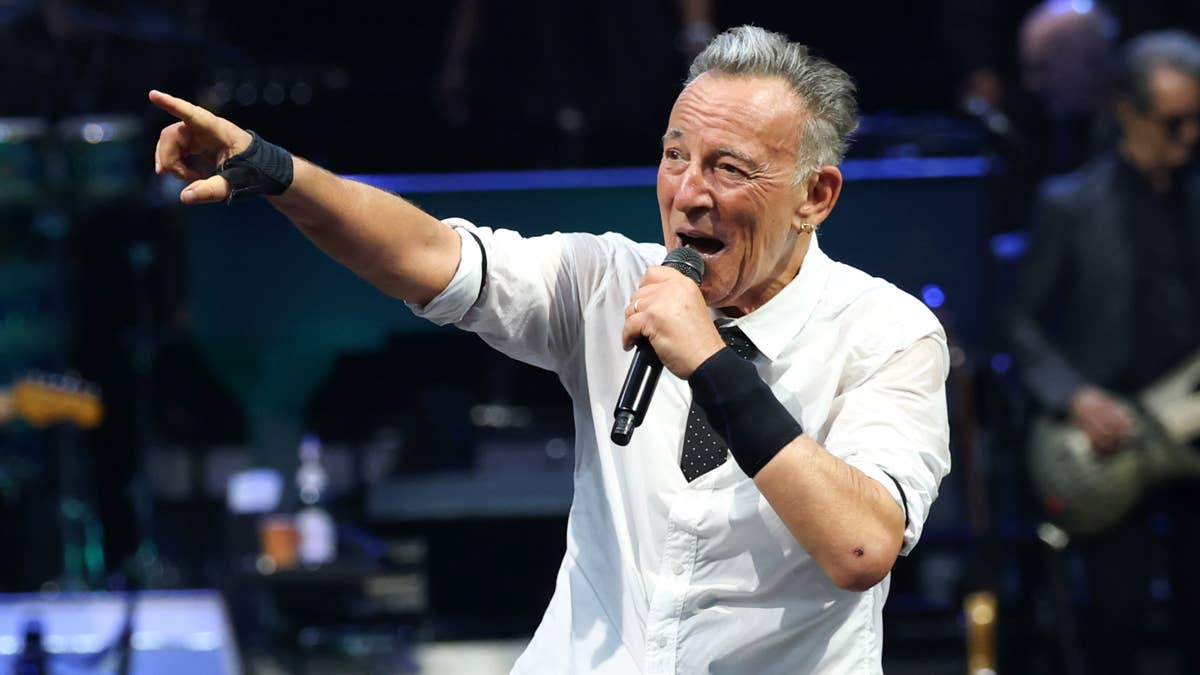
In the late 1980s or early 1990s, Columbia Records, a Sony-owned company, reportedly handed Bruce Springsteen ownership of all his album masters to keep him from leaving during contract renegotiations. It was an unusually generous move in an industry where labels typically guard their masters fiercely, since those recordings are among the most valuable assets an artist’s career can produce. Decades later, he sold his master recordings back to Sony, along with the rest of his catalog and his publishing rights, for a reported $500 million.

Getty Images
While The New York Times said the 2021 deal “may exceed $500 million,” neither Springsteen nor Sony has ever confirmed the exact figure, so the number remains an estimate. Still, it topped other big catalog sales at the time. Bob Dylan sold his songs to Universal Music Publishing Group in 2020 for more than $300 million, and Paul Simon, Stevie Nicks, and Neil Young also cashed in for hundreds of millions. The wave of sales reflected a larger shift in the music business, as investors and major companies raced to acquire proven catalogs that generate steady income through streaming, licensing, and radio play. By most accounts, though, the “Born to Run” singer’s payday was the biggest ever for a single artist.
Billboard reported the deal covers about 300 songs, 20 studio albums, and 23 live LPs. That puts Sony in charge of some of his best-known and most acclaimed work, including “Born in the U.S.A.,” “Streets of Philadelphia,” and “Thunder Road.” These songs have been woven into American culture for generations, which helps explain the high price tag.

Richard E. Aaron / Getty Images
It’s a fitting full-circle moment. Springsteen signed with Columbia in 1972 and has stayed with the label for five decades, a rare level of loyalty in an industry known for artists jumping from one company to the next. According to Variety, he has sold more than 65 million albums in that time. In the end, the relationship began when a young artist from New Jersey signed his first record deal and ended with one of the largest catalog sales in music history.






Leave a Reply