
Veteran game artist Kenney Vleugels, known fondly to some as “Asset Jesus” for his enormous library of ready-made game assets, recently joined the chorus of devs standing against AI and the billionaires pushing it – and in doing so, managed to thoroughly piss off AI-first billionaires Tim Sweeney of Epic Games and Elon Musk of SpaceX and xAI.
On October 18, Vleugels chucked a fairly innocuous message into the sea of Twitter. “Don’t let billionaires convince you slop is the future,” he argues. “They’re used to managing [and] directing, not making things themselves. Of course they can’t see the difference. They don’t understand your love for the craft. Keep making personal, beautiful games.”
Vleugels’ post followed a vocal pivot to AI-led development and vibe coding from Epic Games, which proudly boasted of using AI to help assemble a new storefront launcher that has not yet solved the problem of categorically losing to Steam. Evidently reading the post as a slight against him or others like him, Sweeney was quick to reply.
Latest Videos FromGamesRadar+
“This is bullshit, Kenney,” Sweeney counters. “I’m the same tech tree following optimist who moved from C to C++, from 2D to 3D, and from closed source to open source. I run a company. I write code. I contribute to published papers. I’ve upped my expectations of AI. Up yours!”
Vleugels informed Sweeney that Epic Games employees “are liking my post” and “reach out to me all the time,” and stressed that the “‘adapt or die'” messaging around AI tools is exhausting and unfair. “We want to choose our own paths just like you did yourself,” he told Sweeney.
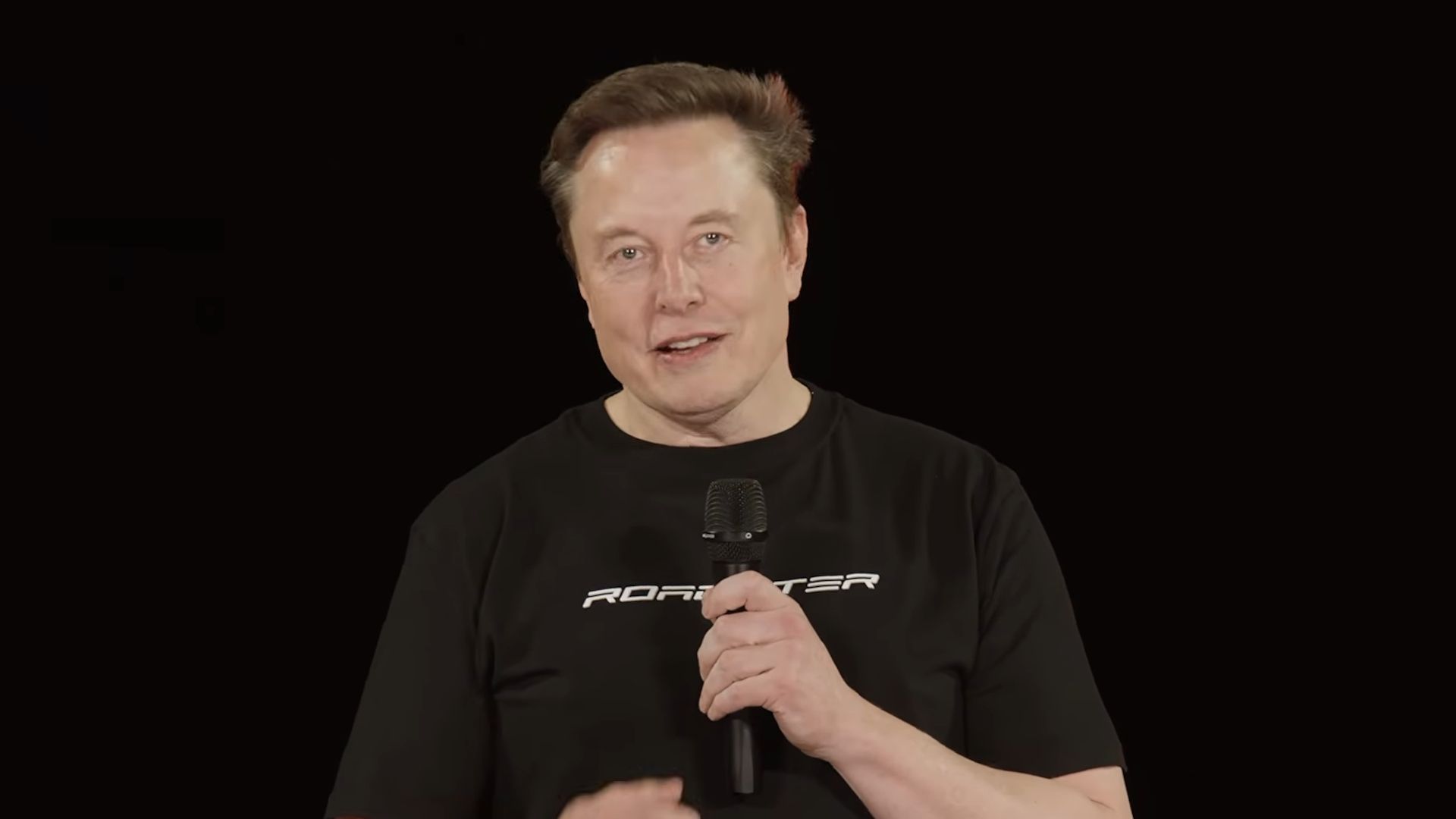
Later that day, Musk responded to Sweeney’s initial reply, saying, “Tim Sweeney is right (obviously).”

Sweeney’s final counterargument is that “the velocity of development of it is the force to be reckoned with here. It really is becoming a race between cars and rockets, and there’s risk that convincing devs to abstain from the new way leaves them behind.”
Vleugels wrapped things up by noting that “we’re both trying to offer guidance to the next generation. The thing is, speaking as an artist, we’ve been force fed NFT’s, metaverse, blockchain, and now AI. Let these things naturally take its course, they’ll find their place (or not).”
This exchange centers much of the controversy over gen AI in game development. The unprofitable technology cannot survive in its current shape without widespread adoption or untenable subsidies, and it has been praised by some as the second coming of Prometheus. AI has broader support as a coding assist and is more readily embraced in the eastern hemisphere, yet many creators oppose it because they care more about the work than the output; they do not want to outsource their critical or creative thinking, don’t care to risk stunting their long-term growth, and do factor in AI’s ethical failures and environmental costs.
This has also given Vleugels a rare feather for his cap. After seeing Musks’ reply, Vleugels wrote on Bluesky, “Last I’ll post about this, but Elon Musk disagrees with me. This means I am onto something, and I feel more valid in my opinion than ever.”

The same day, Xbox business strategy manager Brandon Stirrup argued that devs who aren’t using AI should not “be in the business of being a business,” saying gaming is “the only industry pretending to not use AI.”
As we’ve seen here, many game companies, like Sony and Ubisoft, are vocally pro-AI, but many game devs are also plainly against it, or at least its current forms, for several reasons. We continually see two truths treated as mutually exclusive by AI’s biggest proponents, when in reality they can coexist just fine: good and successful games can be made without gen AI, but some games will be made – are being made! – with AI assistance. Why AI supporters are furious that people aren’t following them down the rabbit hole isn’t always clear.
Nintendo, the biggest first-party game powerhouse in the industry and, to many devs, a North Star creatively, appears neutral at best on AI. Former Nintendo of America boss Doug Bowser said in 2025 that, “If developers choose to use AI, and it is a discussion right now at Nintendo, it’s not the only method of developing games.” In 2024, Nintendo president Shuntaro Furukawa said the company doesn’t need gen AI, both because it knows how to make games and it’s wary of the legal risks attached to AI.
Konami president Hideki Hayakawa more recently claimed that gen AI won’t have a “significant” effect on game development because “people and creators” are the most important factor.
Palworld studio Pocketpair avoids gen AI for many reasons, a big one being “gamers don’t want it,” as comms and publishing lead John Buckley told us.
Devs are canceling their demos to stop AI users from stealing their games – creator of one of Steam’s most-wishlisted is “concerned” it may be ripped off and beaten to its own launch.









Leave a Reply