
In the first-ever episode of Mad Men, the ad executives of Sterling Cooper are trying to figure out a fresh new way to advertise Lucky Strike cigarettes after the recent revelations that everyone’s favourite pastime is causing cancer. One of the agency’s team members offers research suggesting that smokers are driven by a collective death wish, that they keep smoking because hey, we’re all going to die someday, so why not take another puff? Don Draper turns the pitch down, but the ever-slimy Pete Campbell tries to suggest the idea to Lucky Strike executives. To the shock of nobody except Pete, they think it’s bad business to remind customers of their impending demise. One wonders if that advert would work in 2026, when cigarettes are suddenly cool once more.
The rebirth of the smoker has been one of the more fatalistic aspects of the 2020s. Gen Z-ers were meant to be the generation that killed off tobacco entirely, after several years of gradual decline in the number of people smoking, but now, it seems that they’ve heartily embraced the lung-ravaging delights of nicotine. Amid the endless vape clouds is the undeniable stench of the real thing. E-cigarettes and other alternatives were already unexpectedly popular among high schoolers and young adults, and now smoking has made the comeback of the century among that demographic. Why? Well, apparently everyone’s doing it.
We are a species of followers, and it doesn’t take much to get people to jump aboard a bandwagon, with or without addictive qualities. Change in the other direction can be incremental and require far more work in its favour. Anti-smoking campaigns have spent decades doing everything in their power to discourage the image of aloof glamour perpetuated by femme fatales, action heroes, and that one guy in your local bar you’d let ruin your life. They had to bellow from the rooftops about the horrific medical side-effects, including photographs of diseased lungs and rotten teeth on the packaging. Films and TV shows cut back on portraying smoking as a symbol of heroic coolness. There was, for better or worse, a social ostracization of smokers, a willingness to call out those who ruined the mood with the smell and the antisocial impact.
But then vaping entered the scene. And, admittedly, smoking does seem like the less dorky option compared to vaping. Nobody has or ever will look good sucking on an e-cig for several seconds at a time and emitting a cloud of candy-floss flavoured vapour. Humphrey Bogart puffing on a Juul? Imagine it. Nicotine pouches look even worse, evoking images of chewing tobacco being spit into a bucket in old Westerns. But vaping didn’t catch on because it was uncool. Clearly, to the implied target demographics of these companies, there was an appeal to young people in these products. Finally, a way to make kids addicted to something else! It was bright, shiny, and came in all these cutesy flavours. What was initially sold as a way to help cigarette smokers wean themselves off the real thing became another way to get people of all ages hooked on something with weird health side-effects.
In a 2018 piece for The New Yorker, Jia Tolentino wrote about how the Juul had become a new status symbol among adolescents. Juuls could be personalised, either through style or taste, and offered a strange kind of communal experience. She also quoted one person who said that the craze was ironic, claiming it was similar to the millennial embrace of Guy Fieri. “It’s young people doing something terrible for them that’s supposed to be healthy.”
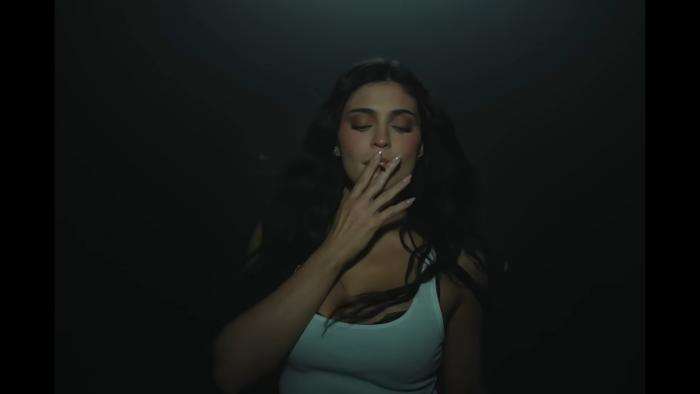
Irony has always permeated the mythos of smoking. It’s a dangerous act that, as Tolentino said, was “gross and terrible for me—a way of confronting everyday stresses in a manner that seemed suitably destructive and illogical.” Live fast, die young, and leave a good-looking corpse, right? There’s a reason that Rockstars smoked, that stoic heroes and dangerous women light up in pop culture. Being bad is good. Rolling your eyes in the face of propriety is alluring. That’s never gone away, and a culture dominated by the haze of nostalgia and desperate romanticism in the face of doom seems primed for the reignition of cigarettes. Consider Lana Del Rey or influencers on a night out or the Heated Rivalry guys in Paris while dressed head to toe in couture.
The return of smoking seems to go hand in hand with the revival of the ultra-skinny body. Cigarettes were the original appetite inhibitor, and it’s tough to ignore how many celebrities and influencers are lighting up in the Ozempic age. As with all aspects of the so-called wellness industry, cigarettes can be packaged as a lifestyle improver, yet another way to attain the societal requirement of mega-thinness. It seems almost more honest than yet another celebrity claiming they just have good genes or love hiking, and isn’t that depressing as all hell?
In 2018, an investigation led by the Campaign for Tobacco-Free Kids revealed that the “four largest tobacco companies are using social media in more than 40 countries to promote tobacco use without disclosing that they financed the content.” A report from Tobacco Tactics noted how “stealth advertising” had become the norm for cigarette brands in the 2020s. “In 2021, in Germany, Japan Tobacco International (JTI) ran disguised adverts on social media to promote its cigarette brands […] These adverts focused on areas of interest to young people, including music and travel. Pages were listed under the categories “festivals” and “communities”, seemingly aligning with the platforms’ rules and policies, but without making it clear that they were connected to JTI’s Winston brand.” According to research published in 2024, nearly 90% of Instagram posts from tobacco-brand-owned accounts do not carry “fully compliant warning labels” and many included content likely to appeal to young people.
Amid moments of economic, medical, and social turmoil, the people have decided to embrace the downward tumble of fatalism. I can hardly blame them for it. You survive a pandemic, a fascistic government, and a crumbling job market and all you get out of it is a data centre in your backyard and a planet on fire. Everything else is going to hell, so why not light up on the road to inferno? The thing about nihilism is it’s incredibly easy and you risk very little by pretending nothing matters. Giving a damn is “performative” now, apparently.
So, forgive me for sounding like your mother, but smoking is f*cking gross and we need to make it embarrassing again. Oh, you think you look like a chic French New Wave star? Well, you smell abysmal. Why don’t you just hand all your money over to the wallet inspector if you’re so desperate to waste it? Are you so easily taken in by a trend that you’ll take up an increased risk of lung cancer to do it? What benefits do you truly see from this? Is the irony poisoning not enough?
I dislike fatalism. While I understand it, I have no time for the eagerness with which some people have decided that there’s no way we can ever improve the world so why bother caring. There’s a distinct smarm around this attitude, and by extension the smoking revival, that reeks of insincerity and, frankly, trying way too hard. It’s the façade of contrarianism that barely conceals a painful eagerness to hop on a trend and adhere to a corporate demand. And yes, I do think it’s that serious. It’s bad to embrace an anti-health fad at a time when we have so much to fight for. And it’s tacky as hell. Earnestness will always be preferable to a fog of desperation.






Leave a Reply