
For decades, science fiction has been not just incredibly prevalent in anime but also one of the medium’s most crucial genres that has, since its outset, pushed anime as an art form forward. As such, many classic anime titles that have shaped the medium into what it is today belong to the sci-fi genre.
While not all anime classics, regardless of how influential they were at some point, have aged equally well, there is a substantial number of older sci-fi anime that hold up as truly timeless masterpieces. The impact of these films and series can still be felt in the medium today, and their brilliance cannot be disputed.
Space Battleship Yamato Revolutionized More Than Just Sci-Fi Anime

Released in 1974, Space Battleship Yamato is, in some ways, the show modern fans have to thank for the blossoming state of the industry they enjoy today. Space Battleship Yamato proved to audiences anime’s capacity to tell serialized, complex stories aimed at mature viewers, and the grand space opera narrative it weaves can leave fans awestruck even today.
The tale of Space Battleship Yamato begins with the titular spacecraft departing on a crucial mission to retrieve a device to save the dying Earth from a faraway planet – the perfect setup for the epic, high-stakes adventure it delivers. While certainly dated and not without elements modern fans might find tediously cliché, Space Battleship Yamato remains both an important and highly enjoyable classic of anime sci-fi, with its influence obvious in its countless successors.
Patlabor Grounds Futuristic Mechs in Realistic Circumstances

Although mecha was ever-present in sci-fi anime of the ‘80s and ‘90s, Patlabor’s take on giant robots was certainly distinct. Instead of portraying mechs as galactic war machines, the series focused on their application in day-to-day life, such as construction and police work, allowing Patlabor to craft a curious combination of futuristic science fiction and a refreshingly grounded procedural action-comedy.
However, the most acclaimed entries in the Patlabor franchise, namely Mamoru Oshii’s Patlabor 2: The Movie, saw the potential in the series’ premise to dive into considerably more poignant themes of political hypocrisy, institutional dysfunction, and the fragility of peace amidst growing societal unrest. Thanks to its thematic intricacy, Patlabor 2 is often revered as the best installment in this classic series.
Memories Merges Three Sci-Fi Masterpieces Into One

Memories, released in 1995, is a sci-fi anime film that combines three distinct narratives into one, bringing together an even greater number of industry legends to execute such an ambitious idea. The film’s short stories – Magnetic Rose, Stink Bomb, and Cannon Fodder – share nothing in common (aside from all being sci-fi) in terms of plot, style, or even tone; nonetheless, they click together flawlessly to provide fans with an unforgettable, thought-provoking experience.
Among the three, Magnetic Rose is often singled out for its unorthodox take on cosmic horror, emotionally resonant thematic core, and tantalizingly eerie atmosphere. However, only by experiencing all that Memories has to offer can one choose their favorite segment, as all of them deserve to be called masterpieces.
Project A-ko Takes a Fun & Lighthearted Approach to Futuristic Sci-Fi

The sci-fi genre certainly has an affinity for self-serious, elaborate stories. However, that hardly means that everything within science fiction anime has to be gloomy and pompous, as there’s plenty of room for lighthearted comedy within versions of an imaginary future. The 1986 anime film Project A-ko delights in not taking sci-fi anime clichés too seriously, offering viewers a fun ride perfect in its frivolity.
Following the titular high-school protagonist, A-ko, and her best friend, C-ko, as they face their rival, B-ko, in various hilariously absurd futuristic hijinks, Project A-ko doesn’t prioritize realism or plot complexity. Instead, the movie goes all-in on the entertainment factor, treating fans to riotous slapstick violence, loving parodies of ‘80s sci-fi, and plenty of high-energy, visually stunning action.
Legend of the Galactic Heroes Explores Cosmic Warfare From All Possible Angles

When it comes to sheer scope and narrative meticulousness, no space opera anime holds a candle to Legend of the Galactic Heroes – a famed military sci-fi epic that scrupulously chronicles a sprawling conflict between two interstellar states with opposing ideologies. Unlike most similar sagas, Legend of the Galactic Heroes has little interest in flashy warfare or black-and-white heroics.
Instead, the series dives deep into the motives, sensibilities, and ideological stances of people on both sides of the war, paying attention to thorough, realistic characterization and equally lifelike strategy and political intrigue. As a result, although the monumental events of the show unfold in a fantastical, futuristic world, they feel as nuanced and immersive as real history.
Cowboy Bebop Is as Visually Stunning as It Is Profound
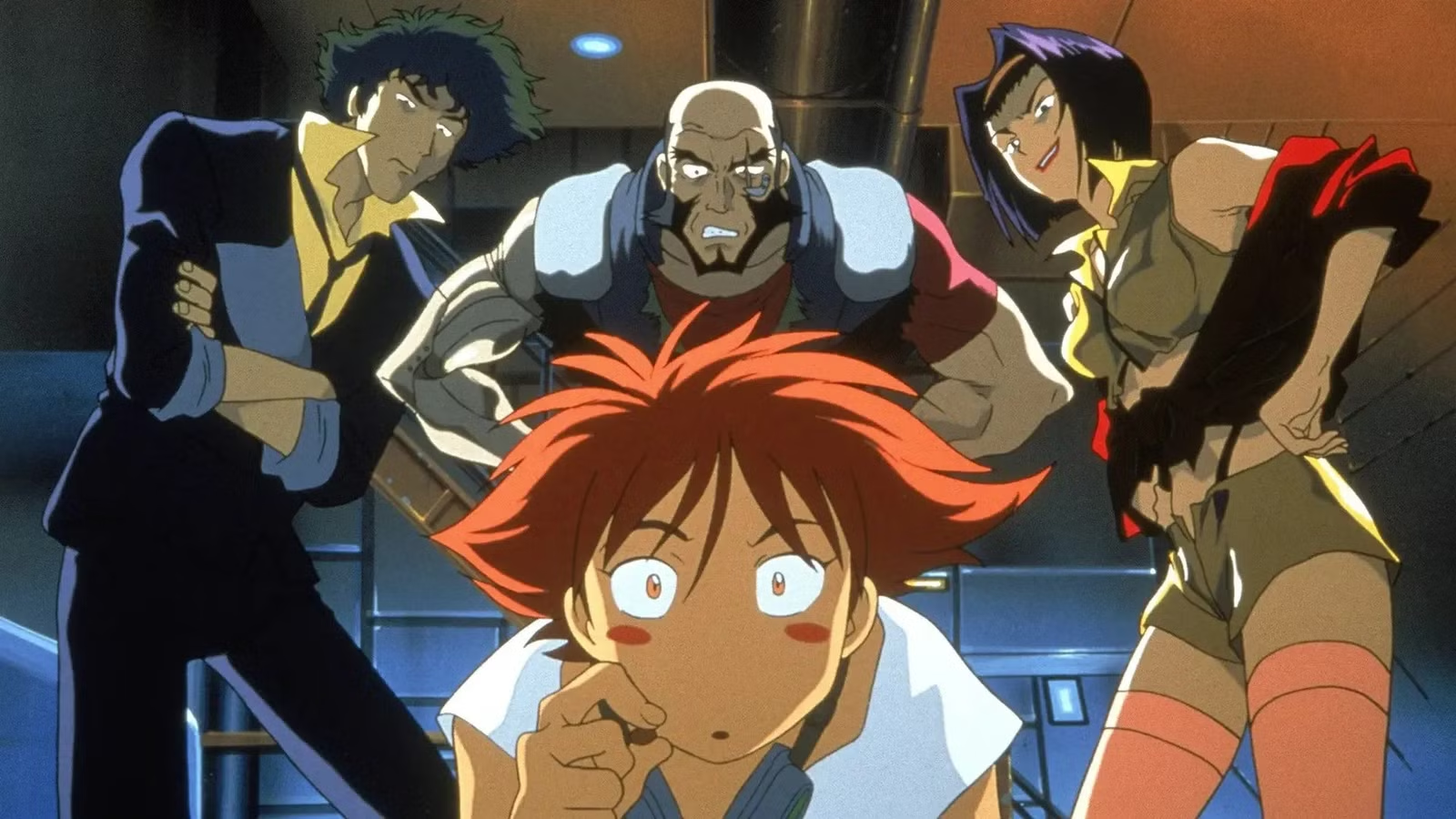
A stylish and multifaceted collection of influences and genres that, nonetheless, come together flawlessly into one of the 1990s’ most remarkable anime narratives, Cowboy Bebop chronicles the escapades of a space-faring bounty hunter crew, all of them disparate but alike in their desire to escape their pasts. Despite switching between genres and tones so dynamically, Cowboy Bebop possesses a truly one-of-a-kind ambiance, drawing viewers in from the first minutes with its striking aesthetics.
Beneath the genre-hopping fun and visual splendor, Cowboy Bebop hides a remarkably vulnerable and poignant story that makes up its overarching narrative and speaks profoundly about the regret and loneliness that catch up to people even in the vastness of space. And, no matter how many decades pass, Cowboy Bebop will continue to resonate with audiences just as strongly.
Mobile Suit Gundam Started the Most Influential Franchise in Mecha Anime

In the modern day, Mobile Suit Gundam is basically synonymous with the mecha anime genre, being its biggest and most prolific franchise, which has been going strong for nearly half a century. However, regrettably few people acknowledge the series’ first, most influential entry – the 1979 Mobile Suit Gundam series – for the timeless masterpiece that it is.
Gundam 0079 was the start of what is now known as the “real robot” subgenre of mecha, bringing the fantasy of giant robots into the devastatingly grounded realities of cosmic warfare. To this day, the immersive space-opera storytelling and the poignant anti-war themes of the original Gundam remain both resonant and relevant, regardless of one’s familiarity with the larger canon of Gundam works.
Ghost in the Shell Continues to Resonate With Viewers Across Generations

As a franchise, Ghost in the Shell appears to be eternally relevant – every decade since its creation has produced at least one influential entry, with its latest revival dating to just this year. However, the series truly became a cultural keystone of the sci-fi anime canon with its first (and still most acclaimed) animated entry: Mamoru Oshii’s 1995 film, Ghost in the Shell.
Ghost in the Shell provides a look at a future both brilliant and terrifying – a high-tech dystopia in which humanity and machinery have almost fully blended into one. Within it, there is plenty of excitement contained in the film’s high-stakes crime thriller plot, but just as much impactful philosophical reflection on the nature of identity and consciousness in a world dominated by machines.
Neon Genesis Evangelion Presents the Mecha Genre at Its Most Captivatingly Surreal
Hideaki Anno’s Neon Genesis Evangelion, for all the influential cultural phenomenon it was, remains a singular work of art. It takes the framework of a mecha hero’s journey – where teen pilots must protect Earth from alien invaders – and transforms it into something far more raw and terrifying: a tale of a broken child who doesn’t want to be the hero, confronting the pains of being human through brutal cosmic horror encounters.
Evangelion deals with flawed heroes who possess remarkable psychological depth, all while immersing viewers in a purposefully enigmatic, convoluted plot about the impending apocalypse. Despite its obvious bizarreness and affinity for the surreal, Evangelion captivated generations with its vulnerable uniqueness, and it continues to do so to this day.
Akira Is a Peerless Icon Among Cyberpunk Anime
Katsuhiro Otomo’s Akira is a film of such staggering, unprecedented influence that it hardly needs any introduction. Peerlessly stylish, addictively suspenseful, and gorgeous to look at in all of its high-octane, destructive glory, Akira has defined Japanese cyberpunk as a genre; and, to this day, no anime film has come even close to being as impactful and artistically influential.
The decaying yet alluring high-tech megapolis of Neo-Tokyo barely contains the riveting chaos and the looming threat of complete destruction, and Akira masterfully balances the gritty, dynamic action this world roars with a brilliantly profound story that alludes to still-relevant themes of corruptive power and technological anxiety. Be it gorgeous hand-drawn visuals, thought-provoking storytelling, or directorial splendor, Akira holds up marvelously in all departments.










Leave a Reply