

Follow us
Add us as a preferred source on Google
Foundational Persona and Shin Megami Tensei designer and director Kouji Okada has a new RPG called Villion:Code coming to PS4, PS5, Switch, Switch 2, and Steam on January 26, 2027. In a video interview with GamesRadar+, Okada reflects on his origins in RPG development, how Persona got started, and how it’s all led him to Villion:Code.
“First, I’d like to explain how Persona came about,” he begins. “Before that, I had worked on several RPGs in which an ordinary protagonist suddenly becomes caught up in a quest to save the world. Those stories certainly had their appeal, but after making games about saving the world several times, I was beginning to grow a little tired of it myself.”
Okada’s early work included, as a sample, 1987’s Megami Tensei, 1992’s Shin Megami Tensei, and 1996’s Revelations: Persona (that is, Persona 1). Another key title was 1994’s Shin Megami Tensei if…, which helped launch the Persona series to begin with through its retelling of Shin Megami Tensei series pillars. This late ’80s, early ’90s period certainly saw heaps of RPGs appoint unlikely heroes in epic quests globetrotting around fantasy worlds of varying flavors.
Latest Videos FromGamesRadar+
“I also wondered whether players might find one grand, epic setting after another somewhat overwhelming,” Okada recalls. “I wanted to see whether they would enjoy an Okada game set within a smaller, more intimate world. As a genuine experiment, we created Shin Megami Tensei if…, and the response from players was far more positive than we had anticipated. That encouraged us to take the idea even further and fully explore a smaller-scale, coming-of-age setting, which led us to begin developing Persona.”
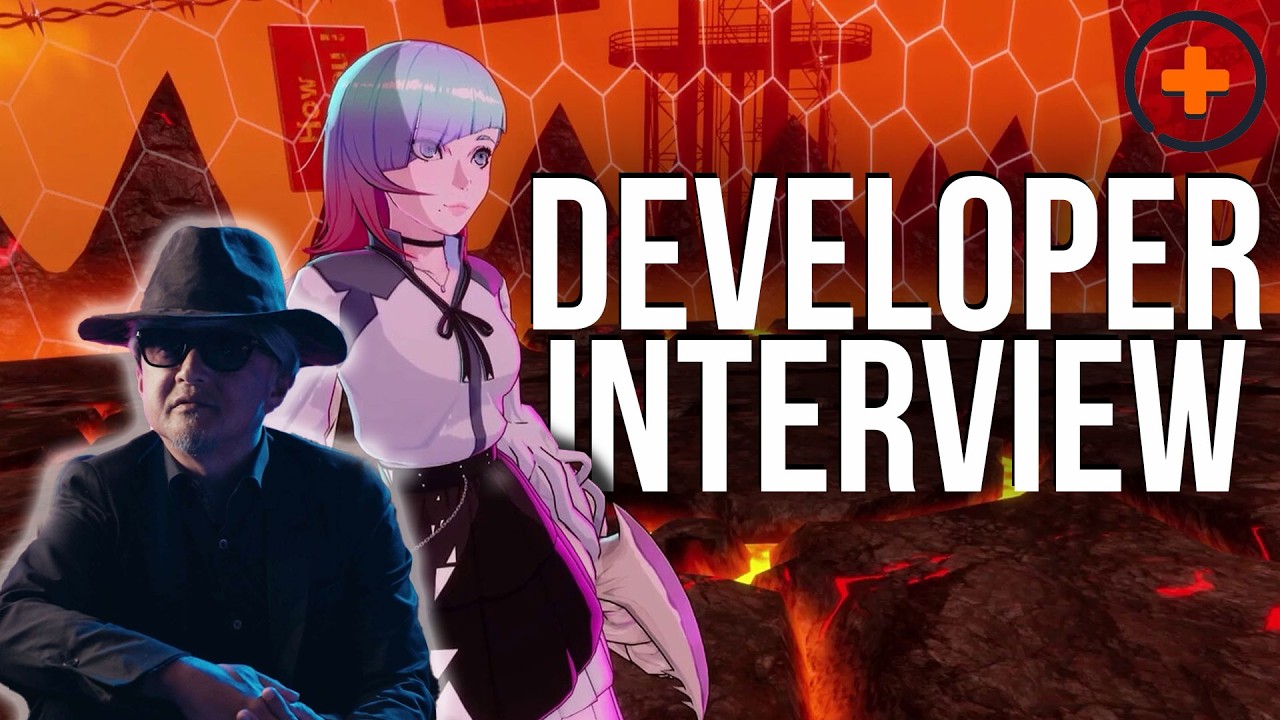
Watch On
A school setting suited a story like this and has now stuck around for decades, not least in the Persona series. As little as we know about Persona 6, we do know that it’s another “everyday school life” story where you “build friendships, pursue romance, and cultivate memories that matter,” at least according to its early store pages.
Villion:Code also features a cast of students. Okada suggests that school settings excel in RPGs like these because they’re widely relatable or nostalgic and hurl characters into a formative time in their lives, flush with extreme emotions and ripe for storytelling.
“I think school life is something most people have experienced or are currently experiencing,” he says. “It is also a highly impressionable time in a person’s life, with many relatable elements that connect closely to their own experiences. That is why we chose a school setting.”
Okada recalls the many memories he made outside classrooms during his own school years, from clubs to jobs. “Even now, I consider those experiences irreplaceable,” he says. “They introduced me to society and allowed me to experience both its positive and negative sides.” Many years before Persona 3 codified social links, Okada says the relationships he built – and still maintains – with some classmates are “something I continue to treasure.”
Here, we begin to arrive at what ultimately defines Okada’s approach to games. “If I were to describe what makes a game distinctly mine, I would say it is the way the world and gameplay systems come together as a unified whole,” he explains. “By making full use of interactivity, I aim to create an experience that combines engaging gameplay with meaningful messages and presents players with a variety of questions. I believe that is what defines an Okada game.”
“There is no doubt that Persona influenced this title,” series veteran says of his new RPG, but “our intention was not to create a different version of Persona”











Leave a Reply