
The anime industry has shown tremendous change over the past several decades, but a certain constant that fans have gotten used to is that One Piece is an evergreen staple. Eiichiro Oda’s signature shonen series made its anime debut in 1999, and has proceeded to air 1180 episodes over the course of 27 years. Luffy and the Straw Hat Pirates’ adventures have evolved in unbelievable ways while simultaneously staying true to the series’ roots.
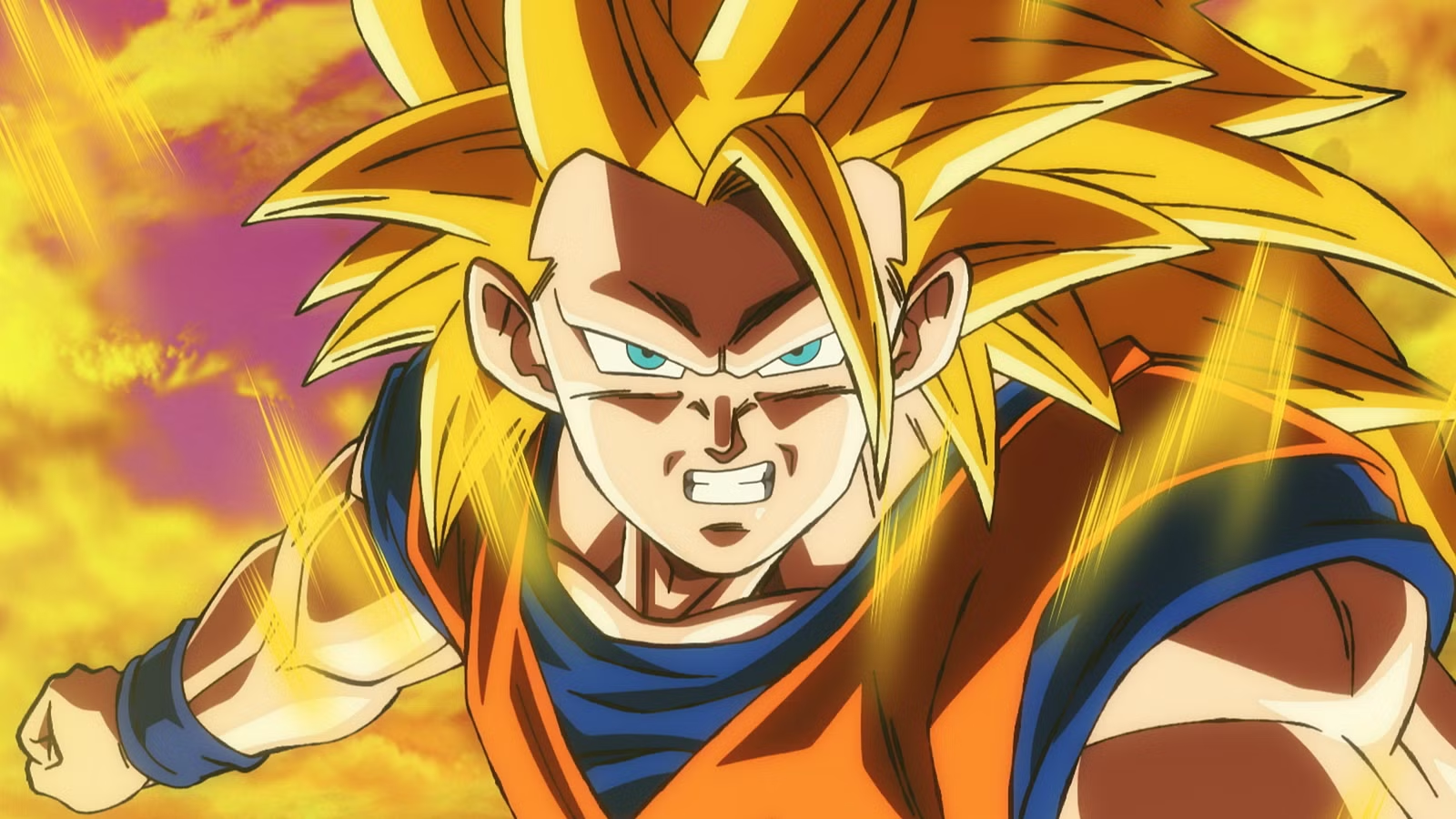
Franchise fans were thrown for a loop when September 27, 2026 marked One Piece‘s “final” episode, which led to the series switching from releasing weekly to a seasonal schedule. The anime’s absence has been a jarring change for many fans. Fortunately, the anime’s time slot replacement — Dragon Ball Super: Beerus — is the perfect substitution that doesn’t just tap into the same energy, but also reflects the battle shonen genre’s evolution.
Dragon Ball Taking Over One Piece’s Time Slot Is A Symbolic Passing Of The Shonen Guard
So many anime are streamed by international audiences rather than being watched on their terrestrial networks. Nevertheless, there’s still a lot of value that’s put into an anime’s time slot. It’s an element that still has the potential to help an anime sink or swim, particularly newer titles that are in need of finding an audience.
A desirable time slot, plus the title’s surrounding programs, can be just as important as the studio that’s working on the anime. An anime can fail to connect with audiences if it’s sandwiched between titles that have a completely different energy. Similarly, the title that replaces an anime can also be integral in retaining an audience.
There’s a lot of crossover between One Piece and Dragon Ball‘s audience. Both are titles that preceded — and influenced — Weekly Shonen Jump‘s “Big Three” and are viewed as foundational shonen series. Eiichiro Oda drew endless inspiration from Akira Toriyama’s style of storytelling, yet it has progressively found an original voice that’s even managed to surpass Toriyama’s masterpiece in several areas.
It’s quite touching to see Dragon Ball Super: Beerus step in to fill One Piece‘s absence as this shonen predecessor replaces one of its biggest influences. It’s a sweet way for Fuji TV to pass the torch between these two shonen juggernauts that both represent crucial pillars of Toei Animation.
There’s even precedent and history when it comes to these anime working together around a common time slot. The infamous three-way crossover between Dragon Ball, One Piece, and Toriko specifically took place because all three Toei titles were part of the same “Dream 9” programming block on Fuji TV.
It’s unlikely that One Piece‘s impassioned audience will be oblivious when it returns from its hiatus, but keeping the same audience tuned in with 19 episodes of Dragon Ball Super: Beerus makes sure they’ll still be around when the two titles once again switch places. A proper date for One Piece‘s return hasn’t been stated beyond a broad 2027 comeback. Dragon Ball Super: Beerus‘ final episode is set to air on February 14, 2027.
There are still more remastered and enhanced episodes on the way, which could just as easily begin airing on February 21, but this would also be an appropriate time for One Piece to return. The anime’s new 26-episode seasonal approach means that there will be plenty of opportunities for it to trade places with various Dragon Ball anime.
One Piece’s Time Slot Departure Isn’t The First Time It’s Moved Around
It certainly feels significant to see One Piece vacated of its signature time slot as another anime steps in. That being said, this shift isn’t that radical when the anime’s entire history is taken into consideration. Japanese fans have been used to watching Luffy’s adventures air at 11:15pm on Sundays since April 2025.
This is hardly where the franchise originated, and it’s just the latest in a long run of time slot changes that do their best to cater to the anime’s needs. One Piece originally made its anime premiere on Wednesdays at 7pm on Fuji TV, where it would stay for nearly two years and 63 episodes.
April 2001 marked the series’ Sunday debut, where it’s remained ever since. Sunday shonen anime are often regarded with greater legitimacy, and it’s seen as the prestige day to air. Its migration to Sundays solidified its status as anime royalty, and it’s now hard to imagine the series airing on any other day of the week.
It’s been a Sunday series since 2001, but it has still experienced a handful of pivots before it found its way to the 11:15pm slot. After starting on Sundays at 7:30pm, it would eventually move to the 7pm and 9:30am spots on the schedule. The anime’s 1123 episode functioned as a standalone special on Saturday before it would move to its ongoing late-night time slot of 11:15pm.
11:15pm on Sundays is a long way from its 7pm weekday origins. It’s a shift that makes sense considering that it’s gradually become darker and more mature. Granted, it’s still quite light in comparison to many of its shonen peers. Its more recent developments certainly warrant a late-night time slot that doesn’t have to sanitize Oda’s story.
One Piece’s Time Slot Shift Prepares the Audience For Many Changes Ahead
One Piece has been a shonen staple for the past three decades and its presence alone is a warm comfort to many anime fans. That being said, even a title as big as that isn’t immune to the bigger changes that have affected the anime industry. It’s become increasingly rare for any anime to run year-round without any significant breaks in the schedule.
One Piece was one of the final series to receive such a privilege, but Toei has announced that it will be switching to a seasonal schedule that tops out at 26 episodes a year. This shift is meant to help enter the anime’s endgame with as big of an advantage as possible so that it can give these important episodes the time and attention that they deserve.
Its shorter schedule, along with its potential time slot shift, is just the first of many broader changes for the franchise. 2027 is set to be a seismic year of change for One Piece. Its anime will make its long-awaited return, but WIT Studio’s reboot, THE ONE PIECE, will also debut in 2027.
The franchise also announced that two new canonical movies are on the way — God Valley and BAAD — with premieres in 2027 and 2029 respectively. Other recent additions to the One Piece franchise, like One Piece Heroines, LEGO One Piece, and Netflix’s live-action series, are likely to release even more material in the coming years.
It’s been exciting to see how much its brand has evolved in the last few years and what lies ahead in its future. Dragon Ball Super: Beerus replacing One Piece on the schedule and a possible time slot shift doesn’t seem like that big a deal in the context of all these other changes.

- Release Date
-
October 20, 1999
- Network
-
Fuji TV
- Directors
-
Hiroaki Miyamoto, Konosuke Uda, Junji Shimizu, Satoshi Itō, Munehisa Sakai, Katsumi Tokoro, Yutaka Nakajima, Yoshihiro Ueda, Kenichi Takeshita, Yoko Ikeda, Ryota Nakamura, Hiroyuki Kakudou, Takahiro Imamura, Toshihiro Maeya, Yûji Endô, Nozomu Shishido, Hidehiko Kadota, Sumio Watanabe, Harume Kosaka, Yasuhiro Tanabe, Yukihiko Nakao, Keisuke Onishi, Junichi Fujise, Hiroyuki Satou
- Writers
-
Jin Tanaka, Akiko Inoue, Junki Takegami, Shinzo Fujita, Shouji Yonemura, Yoshiyuki Suga, Atsuhiro Tomioka, Hirohiko Uesaka, Michiru Shimada, Isao Murayama, Takuya Masumoto, Yoichi Takahashi, Momoka Toyoda
-

Mayumi Tanaka
Monkey D. Luffy (voice)
-
Kazuya Nakai
Roronoa Zoro (voice)




Leave a Reply