
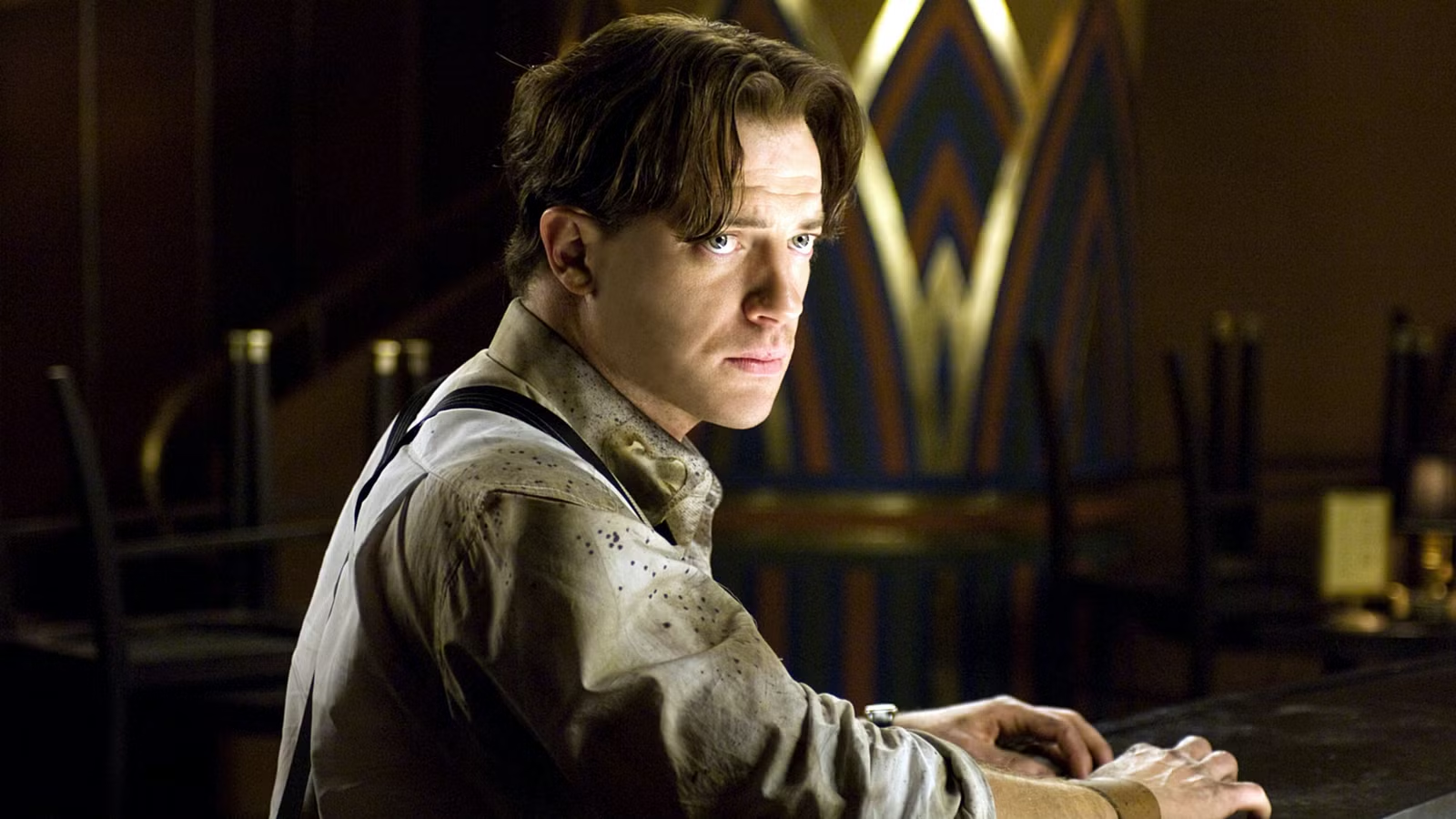
From Imhotep’s resurrection to globe-trotting quests, The Mummy franchise has pulled viewers into its ancient world of curses and lost civilizations for almost three decades. Beginning with the adventures of Rick and Evelyn O’Connell in 1999, the action IP spans two sequels, a spin-off, a Tom Cruise-led reboot, and an animated series, turning a classic Universal monster into a sprawling saga.
Recently, however, it was announced that the franchise will be taking a step back, with the upcoming Mummy 4 reportedly erasing the second sequel, Tomb of the Emperor, from canon. The first timeline rewrite in the IP’s history, the decision will turn the decade-spanning franchise into a long-awaited trilogy, bringing back Brendan Fraser and Rachel Weisz to correct the mistakes of recent attempts.
The Mummy 4 Is Making a Big Timeline Change

While currently going by the working title Mummy 4, the highly anticipated sequel won’t technically be the fourth in the official franchise timeline. Per several recent interviews, directors Matt Bettinelli-Olpin and Tyler Gillett have confirmed that the third entry, Tomb of the Dragon Emperor, isn’t canon, letting one line do the talking: “Well, Rachel is in this one.”
Earlier this year, it was confirmed that Weisz would be reprising her role as Evelyn in the upcoming sequel, previously replaced by Maria Bello in Rob Cohen’s divisive third movie. Earning 13% on Rotten Tomatoes, the sequel faced backlash for its recasting, with many deeming Bello’s interpretation a subpar reinvention that lacked the British charm of Weisz’s original character.
Reportedly, Weisz stepped away due to creative differences and scheduling constraints, unwilling to spend months away shooting as a new mother at the time. However, she has long shown affection for the franchise, expressing an interest in returning for the right script.
While Weisz is yet to speak publicly about her upcoming reprisal, co-star Brendan Fraser has openly shared his thoughts on the duo’s return. Speaking to Associated Press in November 2025, he explained, “I’m proud of the third one because I think it’s a good standalone movie. But the one I wanted to make is forthcoming.”
Noting that this has been years in the making, he continued, “I’ve been waiting 20 years for this call. Sometimes it was loud, sometimes it was a faint telegraph. Now? It’s time to give the fans what they want.”
Though exact plot details are yet to be disclosed, The Mummy 4 nonetheless promises a return to the first two movies. Ignoring the events of Cohen’s entry, which also moved the story away from its familiar Egyptian setting to China, fans can finally expect a faithful follow-up to Sommers’ The Mummy Returns.
Erasing Tomb of the Dragon Emperor Will Be a Major Shift for the Mummy Franchise
After almost 30 years of expansion through sequels, spin-offs, and a reboot, it’s the end of an era for The Mummy franchise. While how much of a timeline shift fans can expect is currently unknown, reports do suggest that everything post The Mummy Returns will be ignored.
This includes the 2017 reboot (which wasn’t canon but a part of the franchise), the 2001 animated series, the four sequels to The Scorpion King, and Tomb of the Dragon Emperor. Scrapping everything unconnected to the first two films, the series will officially become a trilogy.
This is a strong pivot in the franchise’s direction, pushing forward from past failed attempts to tell one continuous story on a shared timeline. And, considering the jumbled nature of the franchise today, this is very much needed.
The biggest issue The Mummy has faced in recent years is a lack of continuity. Cohen’s 2008 movie swapped the sands of Egypt for the mountains of China, each of The Scorpion King’s sequels had recasts and different creative directions, the animated series followed an alternate timeline, and Cruise’s movie was a failed attempt to build from the success of Sommers’ original.
Aside from the first two movies, the franchise is a collection of standalone stories that fail to build upon their predecessors, which has come at the expense of several elements. The biggest, however, is character development, which became inconsistent post The Mummy Returns.
Evelyn, barring the obvious change, went from a brilliant but clumsy librarian into a standard, martial-arts-wielding action heroine. Rick became a bored, retired father who spent his time aggressively fly-fishing, lacking the passion and drive seen in Sommers’ originals.
Jonathan became the comic relief, more so than earlier portrayals. And Alex aged up into an arrogant and secretive adult who resented his parents. The warm family bond from the first two films was completely erased, replaced by predictable and cliche dynamics that dragged the characters down.
Now, building solely from Sommers’ 2001 sequel, the leading duo and co have a second chance. Per the changes, the last time fans saw Alex was when he was a mischievous child, which opens up boundless opportunities for his development. And, should Bettinelli-Olpin and Gillett stick to their promise of “all the heart and character that you could hope for”, fans will likely see the original trio in all their whimsical and adventurous glory once more.
Moving past its era of inconsistency, The Mummy’s future is more promising than ever. Rewriting its timeline for the first time, the franchise is officially leaving behind the mistakes of its past, pushing forward with a legacy sequel that will faithfully bring the Rick and Evelyn saga to a close.
Ignoring the movies and TV shows that held it back, the possibilities are now endless for continuation. It’s a much-needed clean slate that’ll turn an overexpansive franchise into a tight trilogy, setting up a new chapter of romance, wonder, and humor reminiscent of Sommers’ beloved action classics.

- Release Date
-
May 19, 2028
- Director
-
Tyler Gillett, Matt Bettinelli-Olpin
- Writers
-
David Coggeshall
- Producers
-
James Vanderbilt, Paul Neinstein, Sean Daniel, William Sherak




Leave a Reply