
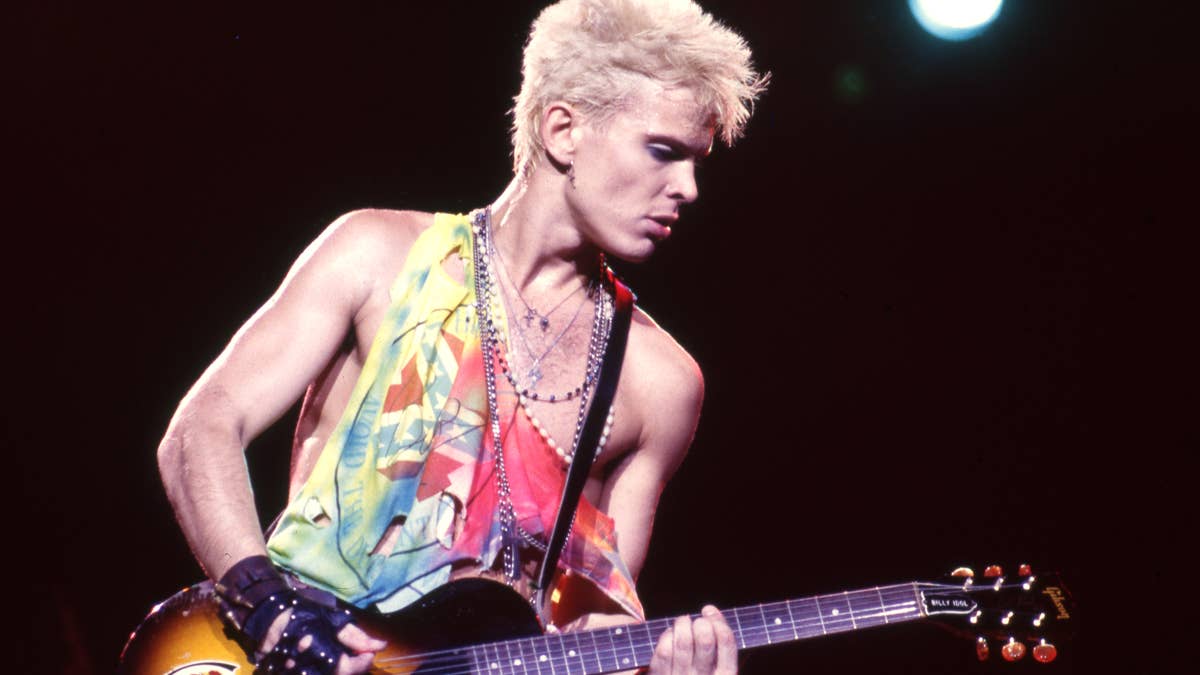
Billy Idol’s “Dancing with Myself” is now one of the best-known songs linked to the British rock star, but its journey to becoming a lasting classic was far from easy.
The song, first recorded with Gen X, was released in the United Kingdom in 1980. It reached only No. 62 on the UK Singles Chart, making its first run a commercial disappointment. After Gen X broke up and Idol began his solo career, he released a new version in the United States in 1981.
That release helped introduce the song to a much wider audience, although it still did not become a major mainstream chart hit at the time. The Billy Idol version reached No. 27 on the U.S. Hot Dance Club Play chart.
Nearly 45 years after its 1981 solo release, however, “Dancing with Myself” has outlived its early chart struggles. The song has become a defining part of Idol’s catalog and a lasting example of how a track that fails to make a big impact at first can later become part of rock music history.

Photo by Ross Marino/Getty Images
The song also remains closely tied to Idol’s rise from the British punk scene to international rock fame. Its mix of new wave, post-punk, dance-rock and punk energy helped show the direction Idol would take as a solo artist.
Billy Idol’s ‘Dancing with Myself’ Began With Gen X
The story of “Dancing with Myself” began before Billy Idol became a solo star.
Idol and bassist Tony James wrote the song during their time with Generation X. The band later shortened its name to Gen X after a lineup change. The song was recorded and eventually released by Gen X in 1980.
According to American Songwriter, its inspiration came from a trip to Japan in 1979. Idol and James saw young people dancing in a Tokyo discotheque. Instead of dancing with one another, the crowd appeared to be dancing while looking at their own reflections in the club’s mirrored walls.
That scene became the idea behind the song.
The lyrics include the line, “A-with the record selection and the mirror’s reflection/I’m a-dancing with myself,” directly connecting the song to the experience that inspired it.
Over the years, some listeners have understood the song as having a sexual meaning. However, the original idea came from the image of people dancing alone while looking at themselves in mirrors.
The Gen X version reached No. 62 on the UK Singles Chart in its initial release period. It later returned to the chart in early 1981 but again failed to become a major hit.
Soon after, Gen X broke up. That could have been the end of the song’s story. Instead, it became part of the beginning of Billy Idol’s solo career.
After moving forward as a solo artist, Idol revisited the song in 1981. Producer Keith Forsey remixed it for release in the United States, placing less focus on the guitars and bass while removing the tambourine.
The new version was released as part of Idol’s early solo work and helped launch his career in the American market.
The song still did not immediately become a major pop chart success. But Idol’s growing profile changed how people heard it.
His solo career gained momentum, and his music videos became an important part of the new MTV era. The video for “Dancing with Myself,” directed by Tobe Hooper, gave the song a powerful visual identity. Idol appeared as a lone figure in a post-apocalyptic city setting, surrounded by strange, partying figures.
The video became an important part of Idol’s early MTV presence.
By the time the song reached a larger audience, Idol was no longer simply the frontman of a former British punk band. He had become a major solo performer with a distinctive look, sound and attitude.
His 1982 debut album, Billy Idol, helped establish him in the United States. His 1983 album Rebel Yell pushed his fame even further with songs such as “Rebel Yell,” “Eyes Without a Face” and “Flesh for Fantasy.”
“Dancing with Myself” benefited from that growing recognition.
The song was reissued in 1983, but it again struggled on the charts. In the United States, that release reached No. 102 on the Billboard Bubbling Under Hot 100 chart, while the song reached No. 39 in Canada and No. 9 in New Zealand.
Those numbers tell an unusual story.
“Dancing with Myself” was never a huge chart smash in the same way as some of Idol’s biggest hits. Yet its place in popular culture continued to grow.
The song has also been covered by other artists. Maren Morris released her own version in 2024, giving the track a new arrangement with acoustic guitars, banjos and her smoky vocals.
Idol himself has continued to perform the song throughout his career. In May 2026, he performed “Dancing with Myself” as part of a medley at the American Music Awards while accepting a lifetime achievement award. He was joined by longtime collaborator and guitarist Steve Stevens.
Per Hollywood Reporter, Idol told the audience, “When I started out in punk rock back in 1976, we thought it may only last about six months — let alone 50 years.”
The song’s continued presence also comes as Idol remains active on the road. His 2026 touring plans include his “It’s a Nice Day To… Tour Again!” run, along with a five-show “Hot in the City” Las Vegas residency at Fontainebleau in August and September.
Today, “Dancing with Myself” stands as a classic Billy Idol song and one of the enduring tracks from the early 1980s rock and new wave era.
Related: ’80s Rock Legend Is Suddenly Climbing the Charts 41 Years After No. 1 Hit





Leave a Reply