
If you’ve spent any amount of time reading history, then you know how fragile everything has ever been. Nothing is destined to happen, and humanity’s changes (both positive and negative) come either through concerted efforts by large, determined groups or through sheer happenstance. We can look through history and see patterns emerging, and, as citizens of time, attempt to change the course of things through specific, pointed actions. Often, however, we cannot predict how things will turn out, no matter how learned we are.
The best we can do is look back and posit a long string of what-ifs. If a key moment of history had played out differently, what would the present look like? If a notable historical figure — Plato, Jesus Christ, Shakespeare, Freud, Elvira — hadn’t been born, would humanity still have stumbled upon their ideas, or did we need specific brains to change the course of time? Such questions are whimsical, exciting conversation starters for those keen on notions of causality.
Naturally, filmmakers and authors often delve into those what-if questions, and give themselves the leeway to create alternate versions of history where everything turned out a little differently. Movies let us envision historical periods where, for instance, Adolf Hitler was killed by Americans earlier during World War II (see: “Inglourious Basterds”). Or a world where superheroes changed the course of human development (see: “Watchmen,” “The Fantastic Four: First Steps”).
The following five films might not be terribly well known to modern audiences, or were once, but have slipped from the collective memory. Each one pictures an alternative history of the world if one thing had been changed in the past, and examines how we would have adjusted to that change. They all come recommended.
Born in Flames (1983)
Lizzie Borden’s “Born in Flames” is, without hyperbole, one of the best films of the 1980s. It’s a fiery, queer, fist-in-the-air film made to protest the oppression of women and queer people, but also to examine how in-fighting on the extreme Left can ultimately do damage to the cause and allow fascists and oppressors to rise.
“Born in Flames” is set in the present, but in an alternate timeline in which, 10 years earlier, a peaceful socialist-democratic uprising occurred in the United States. Women now rule everything, and stand united against the violence that is constantly befalling them; when a woman is accosted on the street, all the women nearby rush in to help her. The government, however, is seeing a right-wing backlash, and both the (male) president and the FBI are uniting to take down some of the most outspoken political media personalities of the day. The movie’s two main characters are Honey (Honey) and Isabel (Adele Bertei), lesbians who run rival political radio stations and are both under pressure to join more active, street-level protest groups, all while seemingly being hunted by the FBI.
“Born in Flames” doesn’t have the patience to be subtle about its politics. It wants to address what’s going on in the present. It’s still relevant. The movie points out that women will always have to fight, even in an alternate future where left-wing political movements have seemingly won. Of course, by the end of the movie, the right-wing president is suggesting that women be paid to stay at home and be homemakers while men remain the only ones in the workforce. In 2026, this doesn’t seem too far off the mark.
The movie still holds up.
Dick (1999)
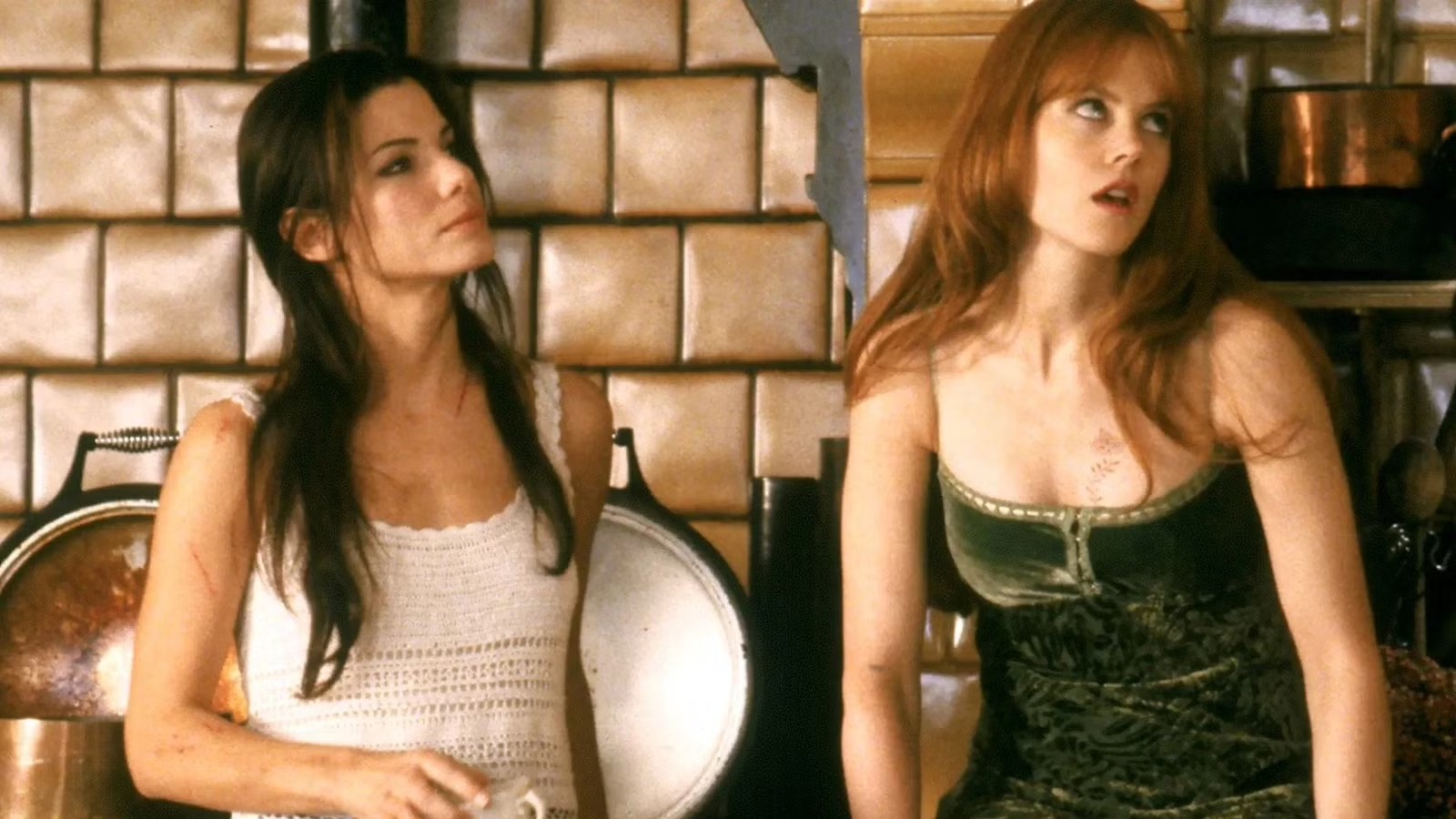
Andrew Fleming’s “Dick” is a very strange idea for a comedy. Michelle Williams and Kirsten Dunst play Arlene and Betsy, two none-too-bright teenagers living in Washington, DC, in 1972. Betsy lives in the Watergate Hotel with her mother, so something big is about to go down. “Dick” posits that Arlene and Betsy were the ones who pretty much instigated or broke every detail of the Watergate scandal, inadvertently causing the downfall of Richard Nixon (a sublime Dan Hedaya).
“Dick” is a bright teen comedy that assumed all 1990s teens knew the details of the Watergate scandal. For instance, when Arlene and Betsy sneak out of the apartment to mail a letter to Bobby Sherman (!), they tape the door latch down. Nixon scholars will note that the taped door was what alerted police to the Watergate break-in. The two girls are spotted by G. Gordon Liddy (Harry Shearer), and Nixon feels he needs to keep them close, in case they know anything. They don’t. They’re kind of oblivious to everything, all giggles and optimism.
And yet, their presence changes everything. “Dick” posits that they brought weed cookies to the Nixon-Brezhnev accords. They will be the ones who call Woodward and Bernstein (Will Ferrell and Bruce McCullough), posing as Deep Throat. Arlene records 18 and a half minutes of love songs on a secret tape recorder in Nixon’s office, forcing him to erase it. Yeah, “Dick” is a hoot.
History didn’t turn out substantially different at the end of “Dick” — Nixon still resigned in disgrace — but it’s amusing to think that ditzy teens were the secret puppet masters all along. And now that we know who Deep Throat actually is, we can see that this is more of an alternate-history movie than ever.
C.S.A.: The Confederate States of America (2004)
One of the biggest musings in alternate history centers on the question, “What if the bad guys won?” There are endless works of speculative fiction and sci-fi TV episodes that wonder what might have happened if the Nazis had won World War II (for instance, see “The Man in the High Castle”). Kevin Willmott’s 2004 mockumentary “C.S.A.: The Confederate States of America” asks how chillingly different the world might look had the South prevailed in the Civil War.
In a novel approach, “C.S.A.” is presented as a halcyon, hagiographic Ken Burns-style documentary, tracing the great history of this nation, only it’s an evil nation that never existed. It imagines a time during the Civil War when Jefferson Davis convinced England and France to join the fight for “states’ rights.” With the Brits and France on their side, the Union was overwhelmed, and Abraham Lincoln was forced to flee the Confederate States of America. With slavery still legal and racist theories put into widespread practice, the C.S.A. begins to grow and grow. All abolitionists flee to Canada, while the C.S.A. takes over land, makes it legal to own all non-white races, and bans all non-Christian religions.
To keep modern audiences oriented, “C.S.A.” still sees the rise of several notable figures, also in alternate versions. Adolf Hitler, John Kennedy, and Ronald Reagan all still become politicians in this universe. A line of politicians named Fautleroy, however, remains at the center of everything.
The film is meant to be chilling, a takedown of what the modern Right Wing has always seemingly dreamed of, and it specifically points out what the Civil War was fought over and what we need to be vigilant about to protect the nation.
Fido (2006)
Andrew Currie’s 2006 film “Fido” posits what might have happened if there had been a zombie outbreak on Earth in the 1950s. Instead of World War II, this universe fought in the Zombie Wars, which the humans ultimately won. Of course, radiation still causes certain people to rise from the dead and seek out human flesh to eat, so humanity has adapted by putting them in specialized shock collars that curtail their hunger. The zombies are trained to be pets and/or servants. By the 1950s, most well-to-do suburban homes have zombie pets.
“Fido” follows the Robinson family after they buy Fido (Billy Connolly) to be their zombie slave. Father Bill (Dylan Baker) is afraid of Fido, while Mom Helen (Carrie-Ann Moss) tries to keep an open mind. The movie is told largely through the perspective of little Timmy (K’Sun Ray), who becomes good friends with Fido and treats the zombie like a beloved dog. There’s a cute moment when Timmy is in peril and sends Fido to go get help, a trope left over from old “Lassie” episodes. Fido, meanwhile, begins to prove that he is developing a new mind of his own.
“Fido” is, of course, a satire of 1950s white suburban bliss. Everything was hunky-dory for homeowners, but there was always something monstrous lurking right there on the surface. Racism, sexism, homophobia, etc. were as common features of suburbia as picket fences. “Fido” comedically puts all those horrors on the surface by stuffing suburbia with zombie slaves, and having everyone behave like it’s the most normal thing in the world. “Fido” is plenty amusing. Billy Connolly, a well-known Scottish comedian, doesn’t have much to say as Fido, but he still gives a fun performance through his smirks and grunts.
Abraham Lincoln: Vampire Hunter (2012)
Oh gosh, remember this one?
So, in 2009, author Seth Grahame-Smith rewrote Jane Austen’s celebrated 1813 novel “Pride and Prejudice,” adding action scenes in which the Bennet sisters would occasionally whip out weapons and fight off zombie hordes. The bulk of the book’s plot remained the same, using Austen’s language, but Grahame-Smith broke up the original book’s romantic fizziness with bloody mayhem. It was a huge hit. The following year, Grahame-Smith decided to outdo himself and penned “Abraham Lincoln: Vampire Hunter,” a historical biography of the 16th president of the United States, positing that in his off hours he was also slaying immortal bloodsuckers.
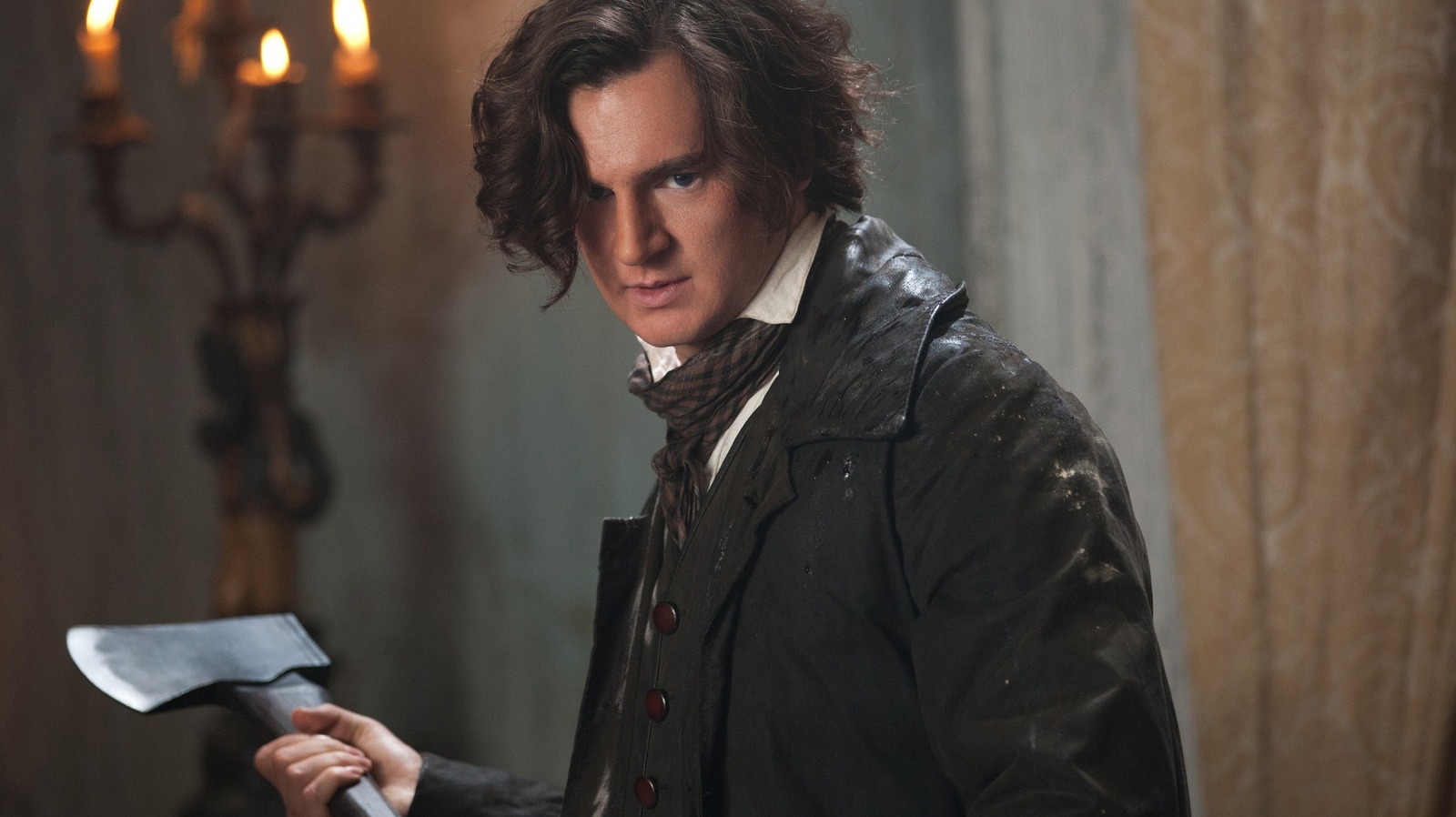
In 2012, “Abraham” was adapted into a feature film directed by Timur Bekmambetov, starring Benjamin Walker as a young, action-ready Abe Lincoln and Mary-Elizabeth Winstead as Mary Todd Lincoln. Dominic Cooper plays Henry Sturges, the man who teaches Lincoln all about vampires and the hunt for them.
The film deftly includes real-life figures like Will Johnson (Anthony Mackie), Jefferson Davis (John Rothman), and even Harriet Tubman (Jacqueline Fleming), and carefully traces the rise of Lincoln’s political career, but also throws in a 5,000-year-old vampire lord (Rufus Sewell) and stages exciting action scenes where Abe has to fight monsters in the middle of a cattle stampede.
It’s weird to think that “Abraham Lincoln: Vampire Hunter” is already forgotten, given that it is merely 14 years old. But it’s astonishing to think that Grahame-Smith’s book and this movie were once right at the center of online discourse, representing the snarky satire of the day, and how it has since fallen aggressively by the wayside. This is one, I think, that we would have a little fun remembering. It’s no cinema classic, but it’s wacky enough to remain ever notable.




Leave a Reply