
Zack Snyder refuses to abandon the passion project that has consumed roughly a decade of his creative life. Days after The Last Photograph premiered at the Toronto International Film Festival (TIFF), the director has confirmed he still intends to bring Ayn Rand’s controversial novel to the screen.
Zack Snyder has written 10 of the 12 Fountainhead episodes
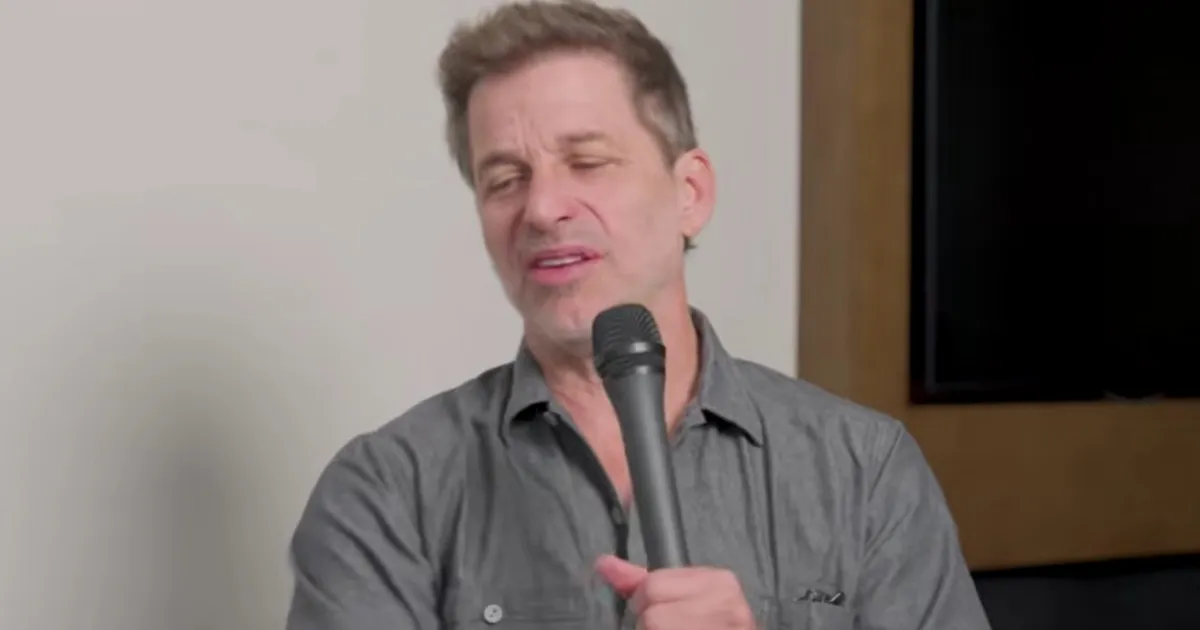
Snyder told Happy Sad Confused podcast’s host Josh Horowitz that his long-gestating adaptation of Ayn Rand’s 1943 novel is “absolutely on the list” of projects he wants to tackle next. “I really feel like it’s a good time for Fountainhead,” Snyder said. “I wish I had Fountainhead ready to release on the heels of [The Last Photograph].”
The director also revealed that interest exists from unexpected corners. “Strangely, there’s a lot of very powerful, very wealthy people that like Fountainhead. So, you know, there’s some places. There’s some interest,” he added. Snyder’s vision for the project has evolved into a limited series format. The filmmaker confirmed he has written 10 of the 12 episodes: “I’ve written it as a 12-part [limited series].”
The director began writing his treatment in 2018 and drew on Rand’s original 310-page script for King Vidor’s 1949 film adaptation. “I used that script to help me edit—the storylines that she felt like weren’t in the movie,” Snyder explained. “Because it’s not every single thing, you know, because the book’s like 700 pages. So there are a few edits I made, not crazy.”
However, Zack Snyder’s road to production of Fountainhead hasn’t been smooth. He sold it to two companies, only to have them back out within a week. “Weirdly, I took it around, and it was interesting. They came back…and were like, ‘Oh, we can’t do it,’” Snyder recalled.
He suspects the material’s controversial reputation scared buyers off. “I think they just [took] it up the flagpole and everyone was like, ‘What? You’re insane! We can’t make Fountainhead. So, I’m excited about that,” he said. “That’s a reason to make it right there.”
Rand’s novel follows Howard Roark, an ambitious young architect who refuses to compromise his vision for industry conventions. The book remains divisive for its defense of individualism over collectivism.







Leave a Reply