
Hanna Bergholm delivered one of the most underrated horror movies in recent memory with Hatching, her 2022 Sundance standout. The dark fable follows Tinja, a 12-year-old gymnast struggling under the thumb of her perfectionist influencer mother, who discovers a mysterious egg that eventually hatches into a birdlike monster. Hatching was a cleverly crafted story about the horrors of toxic mother-daughter relationships, leaning heavily into body horror, puppetry, and practical creature effects.
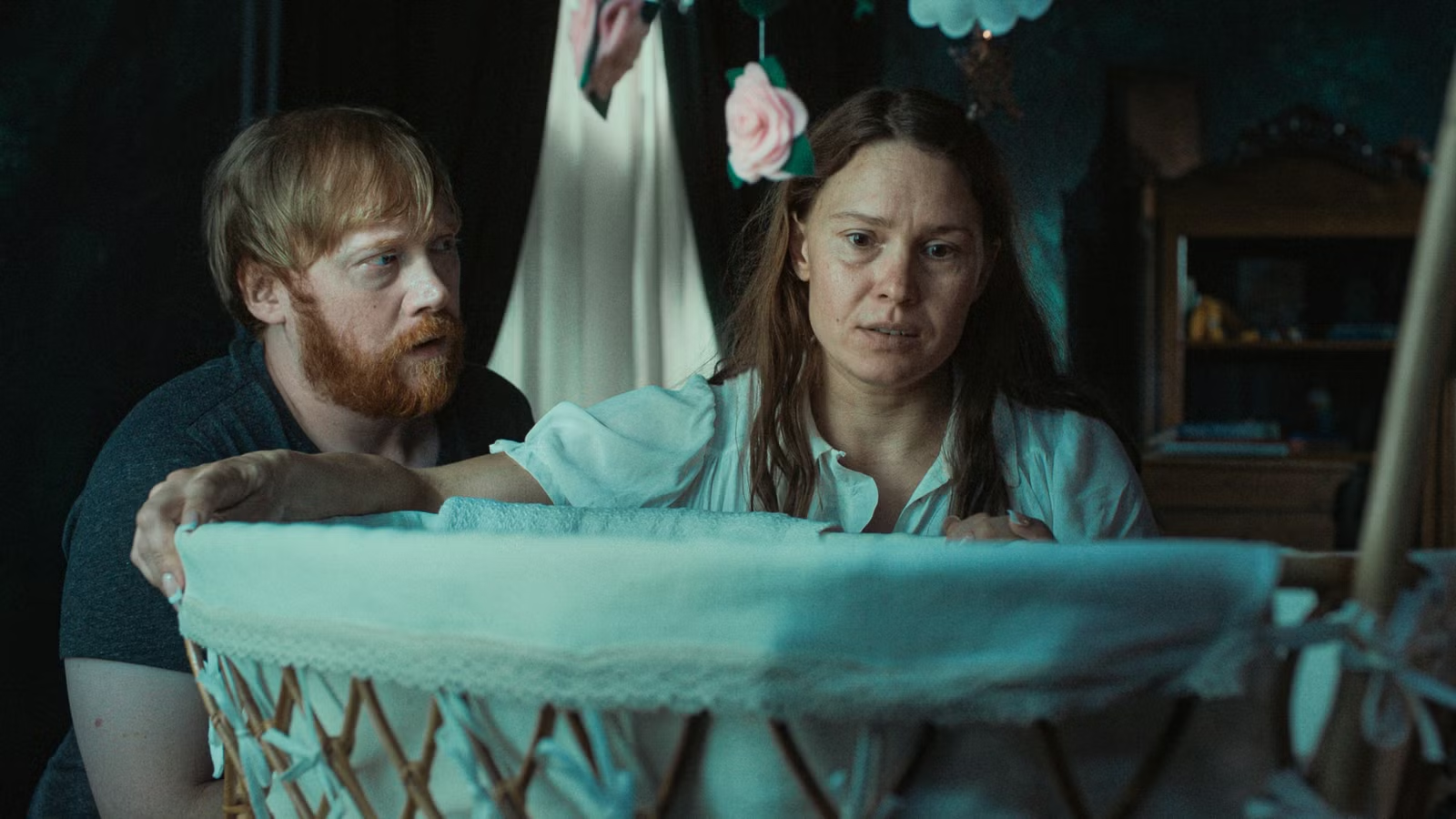
Nightborn, Bergholm’s latest, is similar in many ways. This time, rather than a preteen gymnast, the movie focuses on Saga (Seidi Haarla), a Finnish woman who returns with her British husband, Jon (Rupert Grint), to the forest home where she spent much of her childhood to start their family. The only problem is that, once their son is born, Saga becomes convinced something is very wrong with the child, despite everyone insisting the boy is fine.
Much like Hatching, Nightborn has a distinctly mythological feel, excellent creature work, and a central story rooted in what happens when the mother-child bond goes sideways.
Nightborn’s Visual Atmosphere Is Spot-On

Perhaps Nightborn‘s biggest success is its distinct sense of place. Saga’s decrepit house, once a place of childhood wonder, has become overgrown and nearly one with the surrounding woods. It serves as an unsubtle but still effective metaphor: Jon and Saga’s relationship deteriorates after the birth of their son, and although they attempt to repair both the house and their marriage, the foundation continues rotting beneath them and giving way to the earth below.
The woods themselves are subtly unnerving enough to immediately set off alarm bells for savvy horror viewers. The audience is introduced to the house and forest almost as soon as Saga and Jon arrive, and the ancient, misshapen trees resemble fertile female figures, complete with breasts.
Bergholm’s excellent direction and editing are also at play here, particularly in a sharp cut from Jon and Saga having sex in the woods —leaning against one of those oddly bosomy trees — to a shockingly graphic sequence of Saga giving birth to their son, Kuura. The visual cue could not be clearer: The baby and the woods where he was presumably conceived are inextricably linked.
Nightborn Balances Humor and Horror

The darkly funny sensibility displayed in the satirical Hatching is alive and well in Nightborn. Even during the most gruesome, blood-drenched scenes, the script is wryly humorous, and Grint and Haarla do a fabulous job maintaining that tenuous balance. There’s a sense throughout that Jon and Saga recognize the absurdity of their situation. It’s both horrific and hilarious to watch them play tug-of-war over a bag of cow’s blood that Saga is trying to feed to their increasingly feral infant.
There’s also an unnerving realism to Saga’s postpartum struggles, despite the unreality of the story. Her traumatic childbirth and the physical damage it inflicts leave her feeling grossly disconnected from her body. The film shows the viscera of the post-birth carnage in extreme detail, including one scene in which Saga attempts to change her bloodied postpartum underwear while sitting on the toilet.
Similarly, Saga’s struggle to breastfeed Kuura is all too real. Plenty of women have experienced the searing pain caused by a bad latch, though probably not Saga’s experience of a feral infant attempting to literally suck her blood. It’s heartbreaking and horrifying to watch her ignore the discomfort and continue nursing because she feels she must. Despite fearing the child and feeling so disconnected from the baby that she only calls him “it,” Saga remains devoted to his needs.
Indeed, the evolving relationship between Saga and Kuura is arguably the film’s most fascinating element. Although she feels as if the baby is an alien creature who isn’t truly hers, she still fulfills her maternal obligation at all costs. She even argues with Jon to protect Kuura’s comfort after realizing that metal, sunlight, and clothing hurt him.
At one point, Jon suggests Saga needs space, prompting her to take an overnight trip with friends. She rushes home, however, when an extreme rash overtakes her body — and it only begins to ease once she’s reunited with Kuura.
Nightborn‘s Baby Is Effectively Creepy

Creepy children aren’t exactly a novel horror trope, but baby Kuura is deeply disturbing. Once again, Bergholm’s love of physical effects is out in full force, and the film is better for resisting the temptation to create a CGI-heavy, Renesmee-style baby. Kuura’s movements are animalistic and distinctly inhuman, as is the dark hair covering his body.
Perhaps the most daring choice is Bergholm’s decision not to show Kuura’s face clearly until the strangely joyous yet devastating finale.
That said, it becomes fairly obvious early on what is happening, lending a degree of predictability to the way the story plays out. Nightborn is resonant and will likely hit a nerve, particularly for recent mothers who have experienced the lesser-acknowledged, not-so-sunny emotions that new parenthood can conjure. Still, its story isn’t as sharply formed as Hatching‘s dark fable of girlhood.
Even so, Nightborn is a satisfying follow-up that confirms Bergholm as one of horror’s most promising new voices. It may not land every beat with the precision of her debut, but its fearless body horror, tactile creature work, and unflinching portrayal of motherhood make it difficult to shake — and an easy recommendation for fans of uncompromising films like The Substance.
Nightborn is now streaming on Shudder.








Leave a Reply