
On Sunday, Bob Dylan’s landmark release “Blonde on Blonde” turned 60 years old. The album serves a very interesting role in the legendary musician’s discography, as it’s this point of no return for Dylan.
We find a musician at the absolute peak of stardom desperately trying to shed the bonds of expectation and labels. This cultural place that Dylan had created (or been thrust into) was at a fever pitch with this record, and afterward, it exploded with Dylan’s motorcycle accident and his retreat into the shadows of Woodstock.
Before that, however, Dylan put out one of his greatest releases of all time and forever cemented his folk rock trilogy as one of the best runs of albums in music history.
14 of Dylan’s Best Songs
Keeping in line with the previous two albums in this trilogy, Dylan thrusts the listener into the fire immediately with a raucous, chaotic song that instantly immerses you in the energy of the record. With “Bringing It All Back Home,” the opening track of “Subterranean Homesick Blues” feels like the exuberance of Dylan’s first experimentation with electric guitar. The lyrics are fast, rebellious, and untethered, immediately hitting you like a train.
On “Highway 61 Revisited,” the anger and disillusionment of that record is immediately apparent with “Like a Rolling Stone.” As “Blonde on Blonde” begins, you’re flung into what feels like a medieval flogging with “Rainy Day Women #12 & 35.”
“They’ll stone you when you’re trying to be so good” are the opening words of this record, and they instantly place you into the records atmosphere of a grandiose alienation, and the sense of confusion and loneliness that accompanies that.
Dylan’s position as maybe the single most talked about American musician is wearing down on him, and he has had enough. We imagine Dylan as the one being stoned, likening himself to some public vagrant being tortured by the whole world.
The sequencing of the album soldiers past this point with such a masterful string of songs. Immediately following the opening track is “Pledging My Time,” a violent, chugging blues tune that sees Dylan occupying the position of a dutiful, disappointed lover stuck in a relationship that gives him nothing in return. I always imagined this song to be about Dylan’s relationship with his audience. This feeling of putting all your effort into this authentic art just to be completely dismissed is portrayed excellently, and it’s punctuated with an ear-splittingly loud harmonica solo that I absolutely adore.
These two tracks really set up the emotions of this album in a pretty straightforward way by Dylan’s standards, which is what makes the third track so special. The song that made me fall in love with this album is “Visions of Johanna.” It’s a song I’ve never really been able to place. It rounds out the first three tracks with the other incredibly special part of this album, which is Dylan at possibly his most poetic. I think it speaks to this unwanted longing for perfection that he was facing at the time, and the emotions behind that are palpable throughout.
There are countless lines on this album that speak to some unconscious truth in the back of my head without me being able to fully grasp them. “Visions of Johanna” is full of these lines. The one I always find myself thinking about is “the ghost of electricity howls in the bones of her face.” Nobody does it like Bob Dylan.
From then on, the track list operates in a similar space to these three songs I’ve already mentioned. Operatic, intimate, and passionate, the albums continues to soaring heights. Grandiose, emotional songs like “One Of Us Must Know,” or the incredible closer “Sad-Eyed Lady of the Lowlands” make the album into this massive, sweeping project.
On the flip side, more intimate tracks like “Just Like a Woman” or “I Want You” humble the album and bring it to a more personal place. The latter of those two tracks has one of my favorite opening lines of a Dylan song, which goes as follows:
The guilty undertaker sighs
The lonesome organ grinder cries
The silver saxophones say I should refuse you
The third category of the album includes more punchy blues tracks, like “Stuck Inside of Mobile with the Memphis Blues Again” and “Obviously Five Believers.” With all the places the album dips its feet, there’s a strong case that this is one of the most perfect rock records every created. I’m consistently blown away by how complete the whole thing is, especially with the amount of material it features.
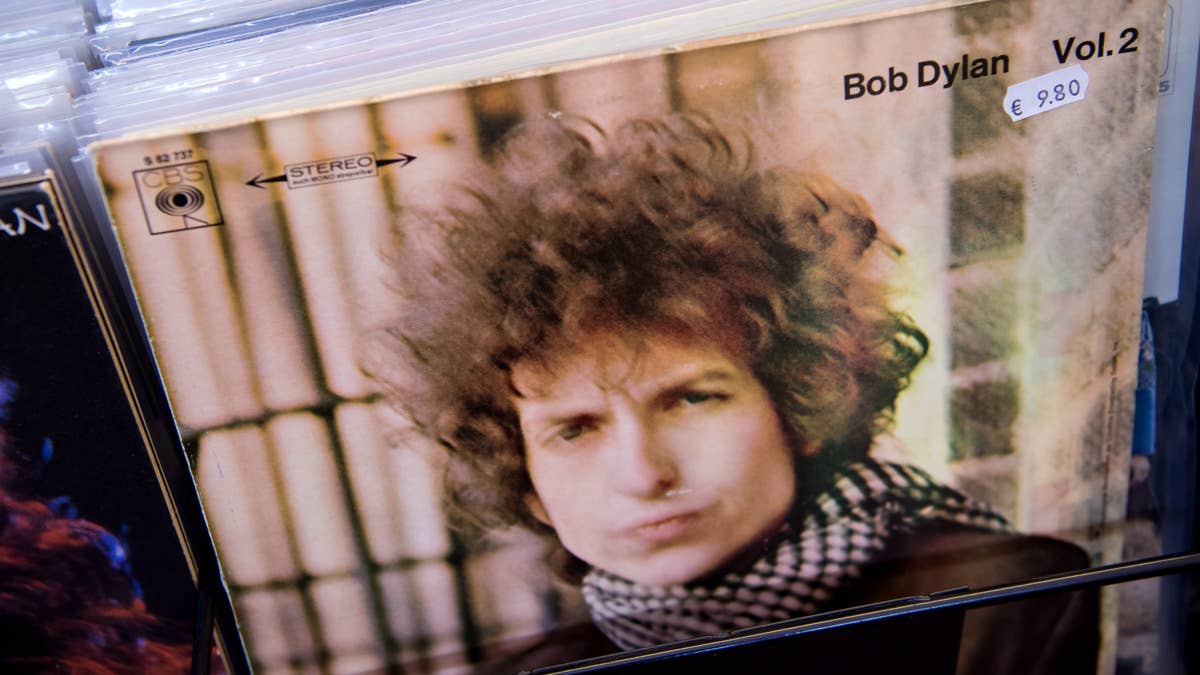
One of Music’s Best Album Covers
I would be remise if I didn’t mention the amazing album artwork. The iconic gatefold of the album pictures Dylan standing if held sideways, and we see him looking a bit blurry. The photographer Jerry Schatzberg took a number of photos, with Dylan choosing the final one. The choice behind the blur is one that has been heavily speculated upon, but the real reasoning is rather silly.

Photo by Sven Hoppe/picture alliance via Getty Images
As the story goes, there was no grand artistic vision… it was just really cold outside. Both men were shivering, causing the photo to come blurry. I personally think it’s an amazing fit for the album. Dylan as a figure is someone who was “out of focus” at this point in his career. I think it’s a really wonderful subjective representation of the place Dylan was at in the public eye.
An Enduring Legacy
“Blonde on Blonde” remains one of Dylan’s most celebrated works. It’s a monumental achievement that finds him at his most iconoclastic, charting a path of abstraction that is still being talked about today.
The album is a fascinating exploration of the alienation of stardom, and all the emotions and battles that come with that. It’s one of my absolute favorites of his, and an album I think everyone should listen to before they die.
Related: At His Lowest, Bob Dylan Made His Darkest Album — Then It Won Album of the Year
🎬SIGN UP for Parade’s Daily newsletter to get the latest pop culture news & celebrity interviews delivered right to your inbox🎬






Leave a Reply