
If you pay attention to comics communities online, there are a few dozen out-of-context scenes and panels that are in constant circulation. Every year or two, someone’s just seen some joke for the first time, so they reshare it and that sends it around again, like the time Deadpool landed a Shoryuken on Kitty Pryde. One of the go-to memed scenes for fans of DC Comics is from the late Dwayne McDuffie’s run on Justice League of America in the early late 2000s. Vixen (Mari McCabe) is suddenly confronted by one of the worst superheroes anyone’s ever seen: the Brown Bomber, an unnamed bald white guy who can transform into a superhuman Black man by shouting the words “Black Power!” Vixen is, naturally, appalled.
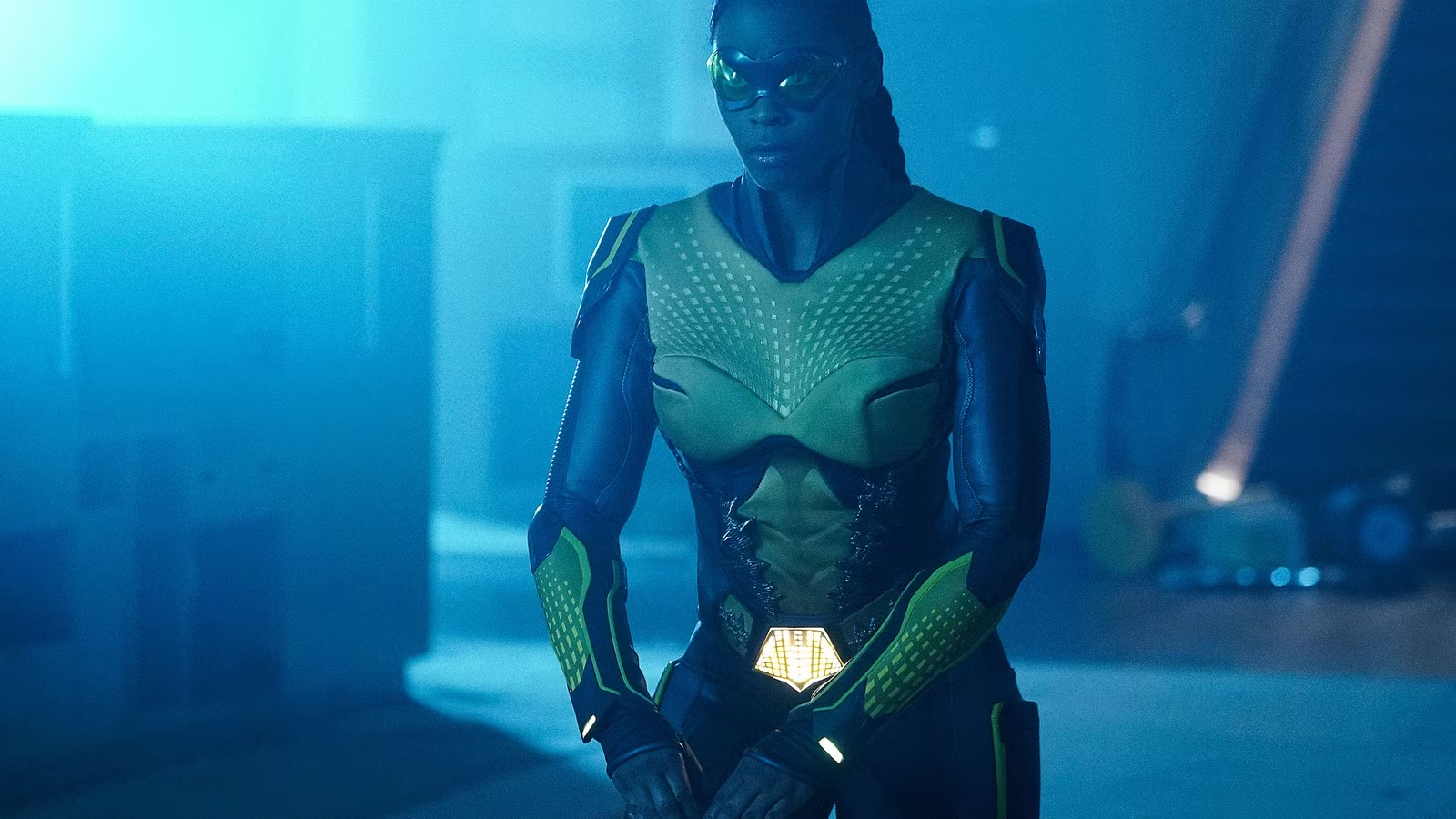
This is a deep cut for anyone who knows DC Comics’ history, but the Brown Bomber is a version of an unused character who led directly to the creation of one of DC’s premiere superheroes: Jefferson Pierce, better known as Black Lightning. Jeff is also the star of a surprisingly faithful TV adaptation that got four seasons and 58 episodes on the CW between 2018 and 2021 as part of the sprawling “Arrowverse.” If you’re interested in a quick binge, Black Lightning has one more week on Netflix before it leaves on Aug. 31.

The story of the “Black Bomber” comes from Jenny Isabella, Black Lightning’s co-creator, in her introduction to the 2016 trade paperback that collected the first volume of Black Lightning. The Bomber began as the star of a planned new series from DC circa 1977. As conceived, the Bomber was a bigoted white Vietnam veteran who had developed the power to turn into a Black superhero “in moments of stress.”
DC hired Isabella to polish the first two issues of Black Bomber, then become its sole writer with the third, but Isabella understandably balked at the idea. At the time, the Bomber would’ve been the first Black character to get his own solo comic from DC… and the character was actually white. Instead, Isabella went back to the drawing board and presented DC with the character who became Jefferson Pierce.
Forty-one years later, Black Lightning was tapped as a new entry in the sprawling “Arrowverse” continuity, which drew its inspiration from both Isabella’s comics and later writers’ work. While the series returned Black Lightning to his roots as a teacher, it also included his superheroic daughters Thunder and Lightning.
When Black Lightning begins, Jefferson Pierce (Cress Williams) is a high school principal in Freeland, Georgia, a city that’s currently being wrecked by a street gang known as the 100. Nine years ago, Jeff was a superhero and vigilante named Black Lightning, but his dual life ruined his marriage and scared his kids. He’s still got the powers, but he’s hung up his costume.
Now the body count is picking up in Freeland courtesy of the 100. Jeff doesn’t want to put the mask back on, but then the 100 kidnaps his daughters Jennifer (China Anne McClain) and Anissa (Nafessa Williams). That forces Jeff to come out of retirement, and his daughters’ slowly-developing powers keep him there.
Is Black Lightning worth watching?
Black Lightning got two seasons more or less to itself before it got pulled into the Arrowverse and its related multiversal shenanigans. Before that point, it’s a surprisingly faithful adaptation of the comics, down to Jeff’s family and his archenemy Tobias Whale (Marvin Jones III). Even afterward, it keeps its focus firmly on Jeff, Jennifer, and Anissa, as they navigate their relationships, powers, and attempts to keep their city safe.
The rest of the Arrowverse overshadowed Black Lightning much of the time. Black Lightning stayed relatively grounded, no pun intended, while Arrow went full ninja and Legends of Tomorrow went full superheroic Doctor Who on DC continuity. On its own merits, however, Black Lightning is an easy, quick watch that’s smarter than it really had to be. If you like The CW’s superhero shows but aren’t up to following the intricate continuity of The Flash, Black Lightning strikes a good balance thereof.
All four seasons of Black Lightning are leaving Netflix Aug. 31.








Leave a Reply