
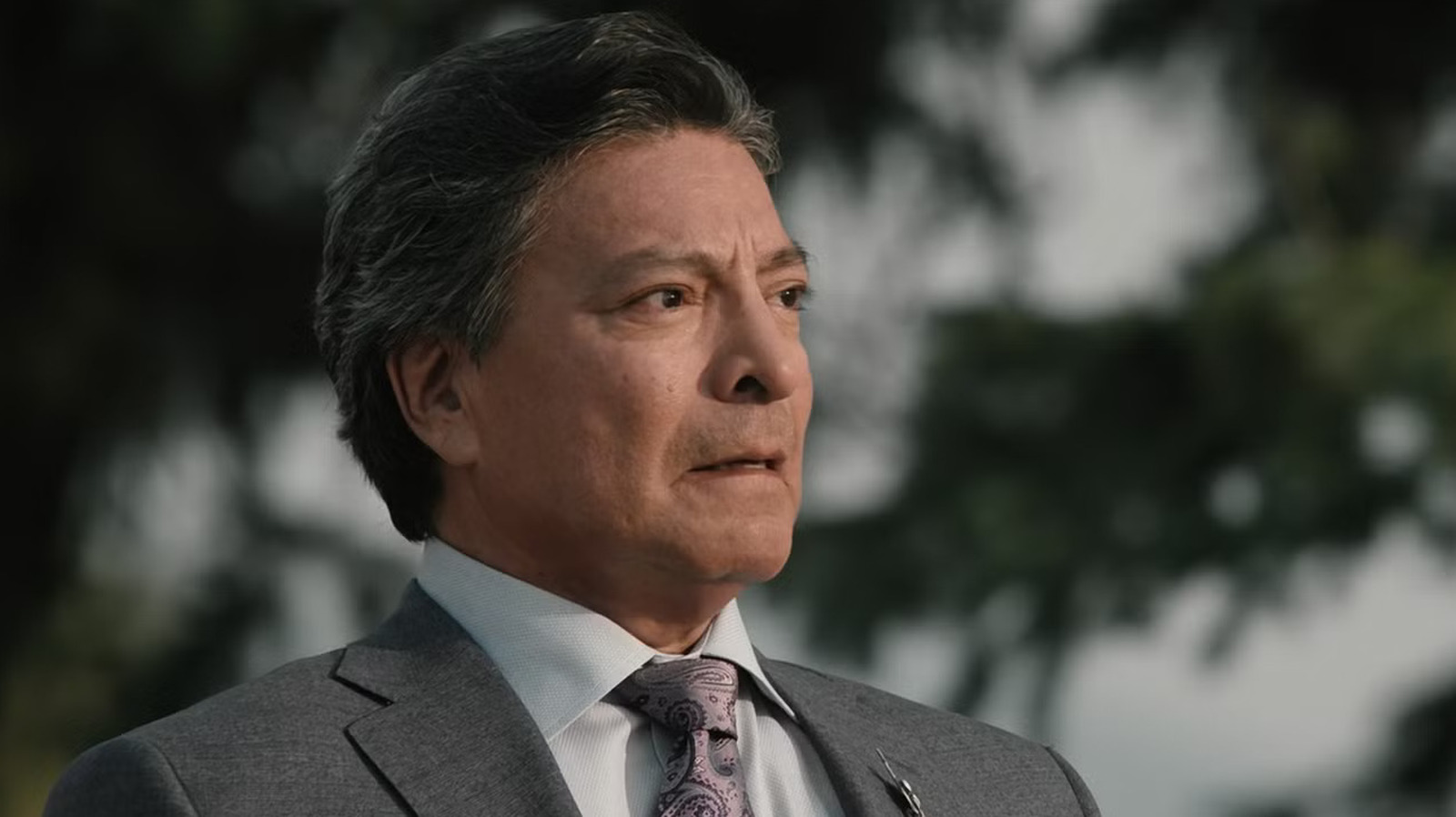
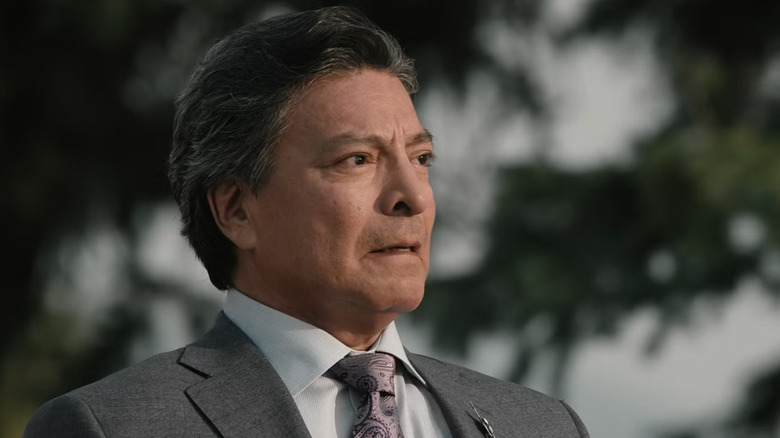
Hollywood has never been very friendly to Native Americans. Western films of the 20th century often propagated the myth of Natives as “savages,” and even today there aren’t too many A-list Native American actors. That means the Native actors who have reached that level stand out, such as the late Graham Greene (who was of Canadian First Nation descent), Wes Studi, Zahn McClarnon, and Gil Birmingham.
Movie/TV fans might recognize Birmingham especially for his varied collaborations with writer-showrunner Taylor Sheridan. Birmingham appeared in 2016 Neo-Western “Hell or High Water,” written by Sheridan, as the Texas Ranger Alberto Parker. (Birmingham also has Mexican ancestry, hence him playing parts like Alberto.) When Sheridan directed a film, “Wind River” — which is explicitly about the epidemic of missing/murdered Native women — he cast Birmingham as grieving father Martin Hanson.
Birmingham and Sheridan’s most sustained collaboration was on Western TV hit “Yellowstone,” where Birmingham played Chief Thomas Rainwater. A wealthy casino owner and chairman of the fictional Confederated Tribes of Broken Rock, Rainwater wants to reclaim his people’s ancestral lands, including the Dutton Ranch. Introduced as an antagonist, Rainwater sticks around through the show and follows an archetypal “initial villain becomes an ally” journey (the Vegeta of “Yellowstone”).
Rainwater continues to appear on the “Yellowstone” spin-off “Marshals” (which has some clamoring for Rainwater to get his own show), but Birmingham is staying plenty busy in other roles. He’s even been part of the Marvel universe since 2024, voicing Forge on “X-Men ’97.” A mutant, Forge possesses an innate understanding of technology and how systems work that makes him a genius mechanic and inventor; he can whip up a time machine as easily as fixing a jet engine. He’s also one of the more storied Native characters in Marvel, and a perfect role for Birmingham.
Forge’s depictions across X-Men comics and cartoons, explained
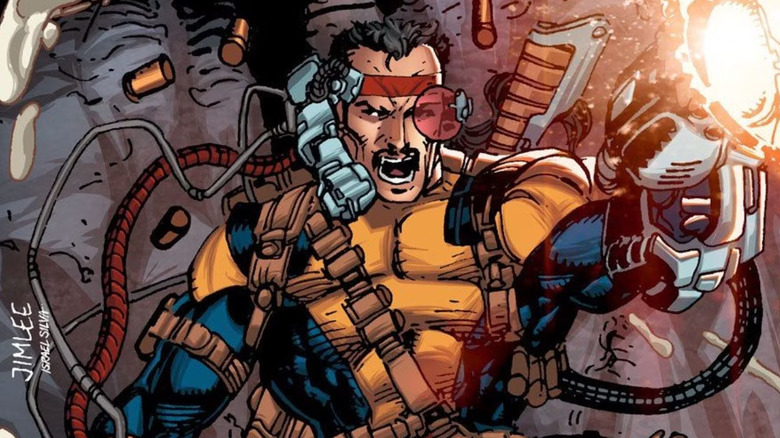
Created by “X-Men” legends Chris Claremont and John Romita Jr. in 1984, Forge first appeared in “Uncanny X-Men” #184. His most famous storyline came soon after in “Uncanny X-Men” #186, or “Lifedeath” (drawn by Barry Windsor-Smith). After Storm loses her powers, she shacks up with Forge and they begin a romance… until Ororo learns Forge originally created the technology that stole her mutant gifts.
While Forge has yet to appear in any of the “X-Men” movies, he’s appeared in each of the regular “X-Men” cartoons… albeit rarely in a major role. In the 1990s “X-Men” cartoon, Forge (Marc Strange) debuted in the show’s adaptation of “Days of Future Past.” Forge invents the time-traveling technology that sends Bishop (Philip Akin) back to stop the Sentinel-dominated future from ever happening. The present-day Forge later appears, and meets the X-Men, as the leader of rival team X-Factor.
Forge was later a guest character on “X-Men: Evolution,” while “Wolverine and the X-Men” had a less… flattering depiction of him. Depicted as the X-Men’s tech support, this Forge was often the butt of jokes and seemingly whitewashed; his character design has caucasian skin and he was voiced by white actor Roger Craig Smith.
“X-Men ’97,” a sequel to the 1990s cartoon, is restorative compared to the last animated Forge, down to casting an actual Native actor in the part. (Marc Strange also sadly passed away in 2012, so he wasn’t available either way.) Forge has left X-Factor when the series begins, and instead signs up as one of the X-Men. The series also canonizes Chris Claremont’s intended but never-used birth name for Forge: Daniel Lone Eagle.
X-Men ’97 needs to keep giving Forge his due
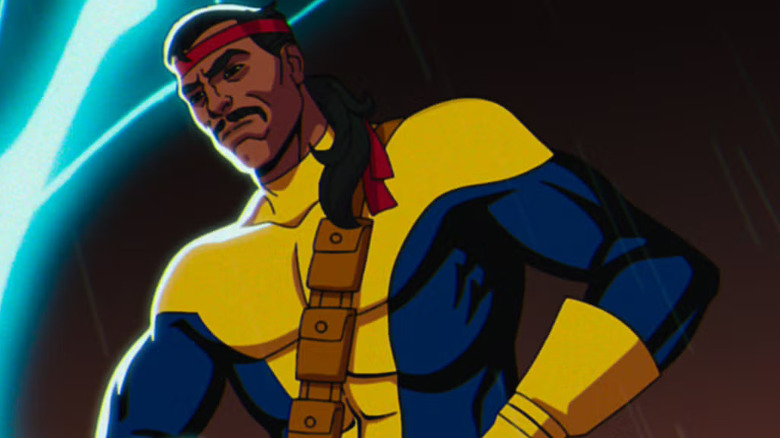
“X-Men ’97” Season 1 adapts “Lifedeath,” but unlike the original comic, it keeps Forge and Storm (Alison Sealy-Smith) together at the end. At the end of Season 1, most of the X-Men are scattered through time. So, Season 2 picks up with Forge and Bishop (Isaac Robinson-Smith) teaming up to get them back. Forge travels 2000 years into the future to rescue Storm and co. in the season premiere “Days of Past Future.” But after this reunion, Forge doesn’t get much to do. He does get a title card in the opening sequence during Season 2, acknowledging him as part of the X-Men, but besides that, he’s in the background.
This is assuredly a consequence of the jam-packed pacing of “X-Men ’97,” particularly in Season 2 which expanded the series’ ensemble but only had nine episodes. Forge, and Storm for that matter, had to settle for supporting roles. The two of them take over Xavier’s School for Gifted Youngsters after Professor X founds a new international nonprofit, X-Corp, but only Episode 6 “Danger.exe” shows Storm and Forge as school headmasters in any depth. Even then, the episode’s primary focus is on Polaris (Carolina Ravassa).
Hopefully the forthcoming “X-Men ’97” Seasons 3 and 4 can find a stronger niche for Forge. The Season 2 finale did suggest the return of Mystique (Randall Carpenter), who comic Forge has a history with. If not, there would also be much worse casting choices for a live-action MCU Forge than Gil Birmingham.

Leave a Reply