
There are many eclectic genres that have particularly resonated with anime fans, but mecha’s sci-fi exploits have always been one of the medium’s most essential modes of storytelling. Mecha series showcase giant robots that can participate in grandiose space wars, engage in battle against intimidating aliens, or even take on more grounded and realistic everyday applications. There’s no one way to tell a mecha story, which is exactly why the genre continues to be popular
There’s no shortage of mecha anime and each year introduces even more titles that embrace the genre’s traditions or try to push it to new places. There are certain mecha anime that are considered to be the genre’s pinnacle of entertainment, such as Neon Genesis Evangelion, Gurren Lagann, Patlabor, and Gunbuster. These are all anime that have earned their accolades and have lasted the test of time. Alternatively, there are other mecha titles that are extremely popular, but don’t hold up well when put under scrutiny.
Gundam SEED Destiny Regresses Into Repetitive Ideas & Recycled Visuals
Gundam SEED is still regarded as a modern Gundam triumph and a lot of its goodwill carries over to its sequel, Mobile Suit Gundam SEED Destiny. It’s easy to transfer a lot of SEED‘s magic to SEED Destiny, but it’s a considerably shoddier title that doesn’t deserve to be in the same conversation as its predecessor. Some anime fans’ reception of Mobile Suit Gundam SEED has even been tainted due to what SEED Destiny does with its characters and universe.
Set two years after peace was precariously achieved, SEED Destiny once again throws the Naturals and Coordinators into war when a renegade faction steals advanced mobile suits and uses them for nefarious purposes. This isn’t necessarily a bad premise, it’s just a highly derivative one that doesn’t bring anything new forward. Not only does it repeat many of the same ideas that were explored in Gundam SEED, but it’s also highly reminiscent of Mobile Suit Zeta Gundam‘s plot points, albeit without the same confidence or authority.
The biggest issue with SEED Destiny is that it feels like a mecha anime that’s at war with itself. A major shift happens part way through the anime where its protagonist, Shinn Asuka, gets sidelined in favor of putting Gundam SEED‘s Kira Yamato back in the spotlight.
To make matters worse, Kira’s characterization clashes with who he used to be, and he’s given a ridiculous amount of plot armor that reduces any sense of stakes. He survives impossible situations, which actively goes against SEED Destiny‘s staunch anti-war narrative. Mobile Suit Gundam SEED Destiny also suffered from production issues and a rushed deadline that leads to the recurring use of recycled footage and recap episodes, which drag down the storytelling and pacing.
Darling In The Franxx’s Character-Driven Drama Becomes Messy Space Mayhem

Darling in the Franxx caused quite a stir when it premiered in 2018, with many mecha fans praising it as one of the decade’s strongest titles. Darling in the Franxx certainly does a lot right and is full of incredible battle sequences and mecha and monster designs that deserve praise. Over time, it becomes increasingly clear that the anime lacks an identity of its own, and it comes across as more of an amalgamation of classic mecha from the past, like Neon Genesis Evangelion and Gurren Lagann.
An anime that’s deeply influenced by another isn’t inherently a lost cause. RahXephon, for instance, takes many of Evangelion‘s concepts and themes and pushes them to exciting original places. Darling in the Franxx unfortunately crumbles under its own ambition and devolves into an increasingly chaotic mess.
The anime begins with a strong survivalist aspect, with children who have been raised and conditioned to pilot mechs known as FranXX to take on deadly monsters called Klaxosaurs. Darling in the Franxx is at its best when it’s engaging in character-driven storytelling and the mental and emotional toll that its pilots face, particularly Hiro and Zero Two.
The anime’s final seven episodes shift from this more introspective storytelling to a bombastic space battle that controversially reinvents its villains. There’s still plenty to like in these final episodes, but they just feel so out of sync with the rest of the anime. The ending that’s reached ultimately feels unearned. Additionally, Darling in the Franxx‘s two-person pilot concept — while creative — feels like an excuse to engage in gratuitous fan service that’s also at odds with the rest of the anime.
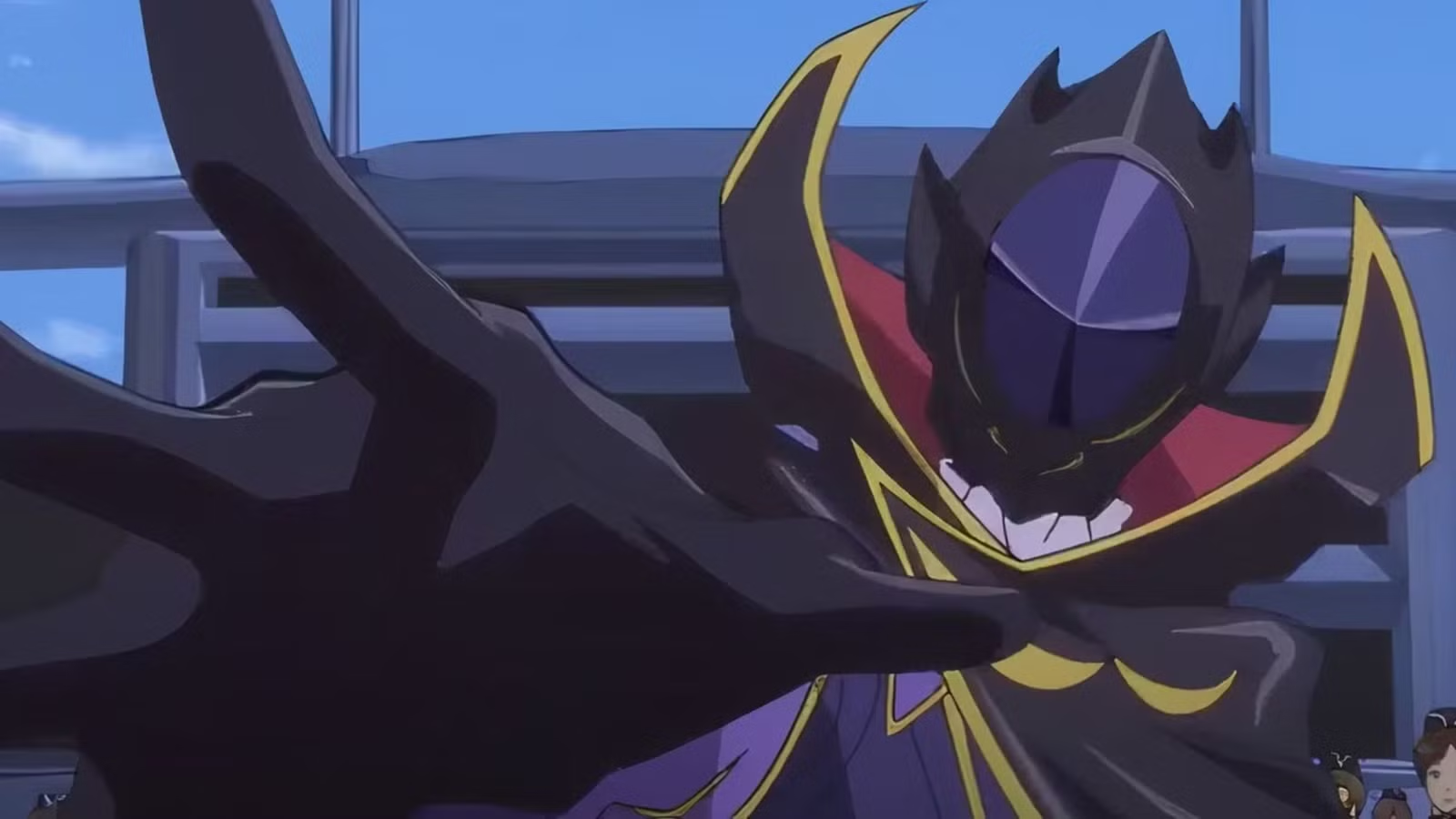
Code Geass Juggles Too Many Ideas & Grows Reliant On Plot Contrivances
To be clear, Code Geass: Lelouch of the Rebellion is still an exceptional accomplishment in mecha storytelling and one of the better titles of the past two decades. It also absolutely sticks the landing with its pitch-perfect ending, which has helped the anime achieve an evergreen reputation. It’s an anime that does much more right than it does wrong, but it’s easier to notice the anime’s many concessions during a rewatch.
There’s a lot to love about Lelouch vi Britannia’s quest to wage war against the Holy Britannian Empire in order to create a world that’s ultimately found peace. Code Geass‘ broad strokes are all excellent, but it loses its impact with the specifics and how much it tries to do. For instance, there’s a lot of frustration over Code Geass‘ more lighthearted material that’s set at high school. It’s not just an awkward tonal clash, but it gives the feeling of padding and filler.
Many of Code Geass‘ problems materialize in the anime’s second season, which becomes more reliant on trope-filled plot contrivances, like amnesia, that disregard the first season’s intricate world-building and political espionage. Plotting and motivations become sloppier and exist to service whatever is necessary for the plot, like how the rules behind the power of Geass become broader and more inconsistent.
Macross Delta Indulges Too Hard In One-Dimensional Magical Girl Tropes

Super Dimension Fortress Macross is a groundbreaking mecha franchise that helped the genre evolve through its creative combination of mechs and the power of music. This general framework has helped Macross broaden its horizons and tackle unique ideas over the course of its run. Macross 7 is frequently considered to be the franchise’s low point.
That being said, Macross Delta is just as reckless in many respects and doesn’t deserve the inflated reception that it receives from general audiences. Macross Delta is the fifth proper anime series in the franchise that chronicles a viral outbreak of the Var Syndrome that causes people to become violent and unstable.
In order to neutralize this growing threat, a team of magical pop idols use their songs to overpower the Var Syndrome’s effects, while they receive backup from Delta Flight’s team of mecha pilots. Macross Delta‘s use of music to overpower evil is par for the course with this franchise. It’s the amplified magical girl angle that rubs many fans the wrong way. It’s one of the franchise’s broader applications of music and leaves the iconic mecha franchise feeling more like a lazy rip-off of magical girl anime. Mecha combat as a whole is diminished in favor of more magical girl-based power-ups.
Macross Delta begins with compelling lore and politics that become less important as the anime continues. The anime’s second-half also feels like it’s rushing to the finish line and this egregious pacing leads to cumbersome plot holes and an unsatisfying ending. These types of issues can sometimes be overlooked if there’s a strong enough cast of characters. However, Macross Delta also falls short in this regard. None of its cast feel fleshed out, and it lacks the same emotional love triangle melodrama that helps the other Macross series thrive.
Guess the anime from the emojis.
🎌
Guess the
Anime
⭐
Guess the anime from the emojis.
Easy (120s)Medium (90s)Hard (60s)
Adnoah.Zero’s Wasted Characters & Cowardly Pivots Erase What Made It Interesting
Aldnoah.Zero is a popular mecha anime from the 2010s that details a vicious war between Earth and Mars’ human factions that’s triggered by a false-flag assassination attempt on Mars’ princess. Aldnoah.Zero features a prescient plot that juxtaposes the parallel pursuits of a high school student on Earth and a Martian soldier who are on opposite sides of this war. Aldnoah.Zero explores plenty of rich, prescient ideas and it’s an anime that’s frequently given the benefit of the doubt because it’s written by Puella Magi Madoka Magica‘s Gen Urobuchi.
Aldnoah.Zero features plenty of Urobuchi’s signature plot twists and melodramatic gut-punches. It just unfortunately becomes a case of style over substance as strong writing and character development fall second to chaotic action spectacles. There is an abundance of unnecessary characters in Aldnoah.Zero, not to mention a particularly static and emotionally inert protagonist on Earth.
All these issues are amplified in the anime’s second season, which doesn’t have the benefit of Urobuchi writing scripts, and seems to actively reverse course on some of the first season’s most interesting ideas. There’s just too much bloat and excess in Aldnoah.Zero to make it a proper classic.





Leave a Reply