
It was so shocking that censors demanded it be removed in its entirety. Its director later feared the footage had been destroyed.
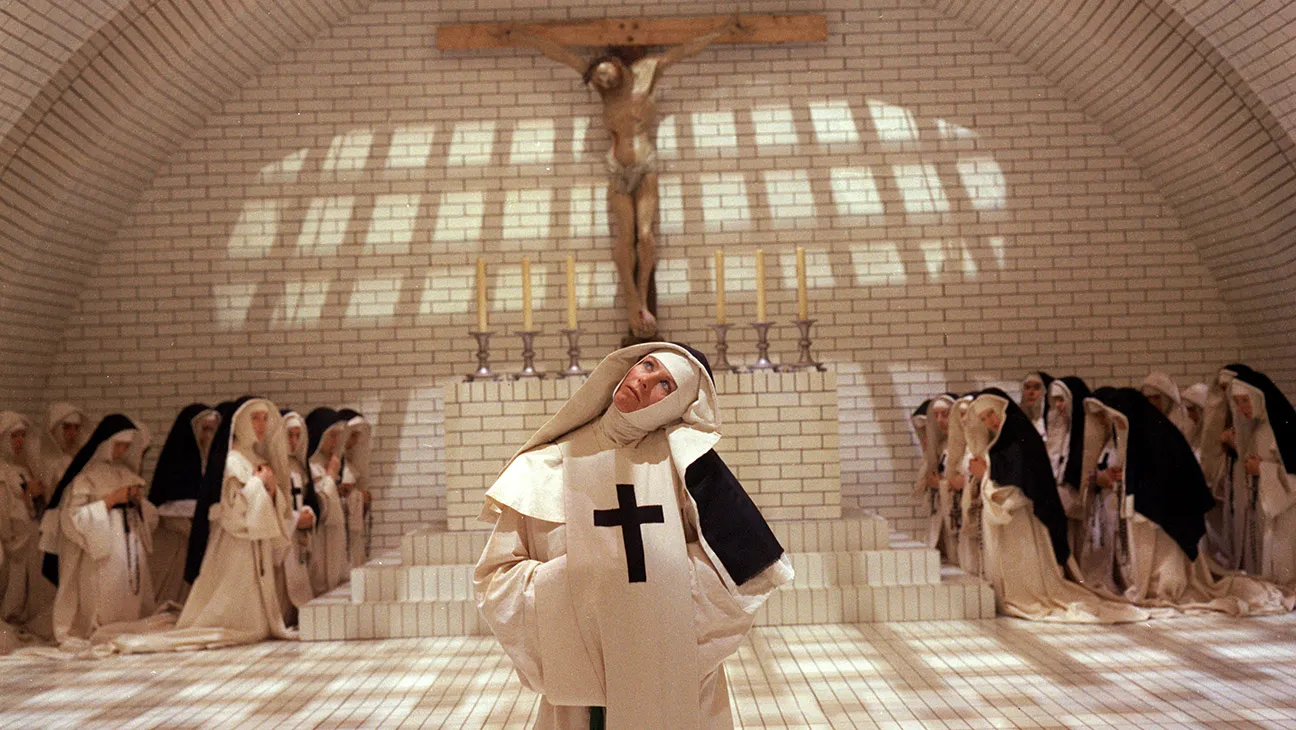
Now Warner Bros. has restored the notorious “Rape of Christ” sequence to Ken Russell’s The Devils: frenzied nuns pull down a huge crucifix and sexually defile its sculpted figure of Jesus.
More than half a century after the film’s release, the scene is back in all its outrageous glory.
Opening in U.S. theaters Oct. 16 for a one-week engagement through Clockwork, Warner Bros.’ new specialty film label led by former Neon marketing chief Christian Parkes, the restoration follows a cut reconstructed in 2004 under Russell’s supervision, now receiving its first official theatrical release. The label has survived Warner Bros.’ move into Skydance.
Released in 1971, The Devils draws on Aldous Huxley’s The Devils of Loudun and John Whiting’s play “The Devils.” Its origins lie in the real persecution of Urbain Grandier, a priest in 17th-century France accused of bewitching a convent of nuns.
Oliver Reed plays Grandier; Vanessa Redgrave is Sister Jeanne, the head nun whose fixation on him helps fuel the catastrophe. Redgrave declined to comment on the film.
Russell turned the story into an extravagant examination of religious hysteria and political power, with stark white sets by Derek Jarman and an avant-garde score by Peter Maxwell Davies.
British film critic Mark Kermode learned how much the censored sequence mattered to Russell when he interviewed the director for Sight and Sound in 1995. Kermode had loved The Devils since seeing it on a late-night double bill with The Exorcist in 1979. Hearing Russell describe the missing footage, he promised to find it.
“You won’t find it,” Russell told him. “Because it’s gone. It’s lost. It’s probably been destroyed.”
Kermode began contacting vaults and Warner Bros., examining shipping logs and asking what survived. Eventually, a cryptic entry caught his attention: “C Cut 89.” He persuaded a skeptical studio employee to retrieve the can. When it was opened, it smelled. The film inside was beginning to decompose.
It also contained the missing sequence.
Its recovery, reconstruction and eventual restoration would span decades. Russell lived to approve the reconstructed cut, but not to see the completed restoration.
Kermode spoke today with The Hollywood Reporter about the film’s long journey back to the screen.

Oliver Reed, Vanessa Redgrave in ‘The Devils’
Warner Bros.
What did Ken Russell tell you about the censorship of The Devils?
Ken described what happened: He’d made the film, and it had been seen by John Trevelyan, who was the head of the British Board of Film Censors, before it was officially submitted. He said to Ken, “You’re going to have problems with this. It’s an important film, but there’s stuff that’s going to have to come out.” There was a central sequence that was going to come out in its entirety. Ken said, “You can’t take that out.” And he said, “Yeah, we can, and that’s what we’re going to do.”
What happens in that sequence?
The French king comes in and says that he has a vial containing the blood of Jesus Christ, and the demons appear to leave the nuns. Then he opens the box and there is nothing inside, exposing their performance as a fraud, at which point all hell breaks loose.
In the released version, things begin to break loose, then it stops. In the film as we have it now, it goes on to depict this ridiculous pantomime of blasphemy in which the nuns attack the huge crucifix and pull it down.
The film shows how religion was used by the authorities as a weaponized tool to distract the people and maintain power. The story is about the unholy marriage of church and state. For Ken, the juxtaposition of these two things was crucial.
Where did you begin looking for this lost scene?
I’m not an archivist. I’m a journalist. I just started getting in touch with vaults and Warner’s and asking, “What have you got? What are the logs? Where are things?” Warner in the UK were very, very accommodating. I would go in all the time and they’d go, “Here comes Mark again asking about The Devils.”
When we started making the 2004 Devils documentary Hell on Earth, it was like, “OK, now I’ve really got a purpose for doing this because I’d love to use those sequences in the documentary.” I had made a documentary about The Exorcist in which we had included for the first time the spider walk and the conversation on the stairs between the priests.
But we just couldn’t find anything at all. I had got to the point of thinking, well, maybe Ken was right. I said to Ken, “When did you last see it?” He said, “There was a single roll of film, and I remember it sitting on the side by the Moviola.” And then it was gone.
Eventually, I was going through shipping logs. There was a list of cans of film, and one was listed “C Cut 89.” I have a very stupidly retentive mind, and I remembered that 89 seconds was what was officially cut from The Devils by the BBFC.
We called it in and opened it. It was two complete assemblies of that central sequence that John Trevelyan had said had to come out in its entirety. And a selection of other bits that had also been taken out.
Did you see the recovered footage before Russell? What was your reaction?
Yes. It was astonishing, but the most amazing thing was that it was exactly as he had described it. Ken could conjure pictures in the room. He wasn’t making any of this stuff up.
If I remember correctly, there was a little bit of high-fiving, but there was also just standing there in awe that this thing we’d been talking about for all these years was actually there.
We hoped that would serve as the basis for a restoration. And it didn’t for 22 years.
Why do you think it finally happened in 2026?
The film did not have the reputation then that it has now. People didn’t rave about The Devils 20 or 30 years ago.
In the years since, the reputation grew, with people like Guillermo del Toro talking about how much they loved it. When Christian Parkes and [Clockwork marketing chief] Spencer Collantes arrived to set up Warner Clockwork, they said The Devils was the thing they needed to do.
They’re young and sharp, they’ve done brilliant work elsewhere, and they clearly had their ear to the ground. Warner said, “Great, fine, go ahead and do it.”
How did the audience at the Cannes premiere respond?
At the beginning, they asked how many people had seen The Devils already. At least half the audience didn’t put their hands up. A lot of people were seeing it for the first time. There were a lot of young people, a whole new generation.
It looked amazing. It looks like it was made yesterday. But the really important thing was that when you put those sequences back in, the film makes coherent sense. It tells the story it’s meant to tell. There aren’t any devils here other than the human devils. It is about the unholy marriage of church and state and the weaponization of religion for political purposes.
Gemma Jones, Oliver Reed in ‘The Devils’
Warner Bros.
Did the original controversy translate into box office?
It didn’t bomb, but it didn’t do gangbuster business. It opened, people were talking about it on television and in newspapers, and there had been all these scandals.
But as David Cronenberg’s Crash demonstrated, just having a scandal isn’t enough to bring audiences in. There were places in the UK that banned it, councils that refused to allow it to be played. It came, there was a scandal, it went away, and Ken moved on. It became a disappeared film, one that was quite hard to see for a long time.
Del Toro has invoked The Devils while defending Digger. Do you see a comparison?
I’m not a huge fan of Digger. My wife is a huge fan. I reviewed it, then my wife went to see it and told me how wrong I am about it.
I think it’s good to have any movie that divides opinions. I would advise everyone to go and see it because if you’re interested in cinema, you need to see it and make up your own mind.
The difference is that Digger costs something north of $150 million, right? The Devils was a big production, but Ken didn’t have a limitless budget, and he didn’t have Tom Cruise.
It’s great that there are divisive films, that there are films people argue about. I think the achievement of The Devils is the greater achievement because Ken was fighting an uphill battle to get his vision on screen, and the version he was able to release was not the version he wanted.
What does it mean to you to see audiences discovering the film now?
You cannot believe how, after all this time, to hear people speaking of it as they do now, how gratifying it is.
My only regret is that Ken isn’t here to see it because he would’ve loved this.
Watch the trailer








Leave a Reply