

James Cameron changed expectations for the modern blockbuster in 2009 when Avatar became the highest-grossing movie ever made, a title it still holds today with a lifetime global haul near $2.9 billion. Thirteen years later, Avatar: The Way of Water expanded on that achievement, earning near-universal critical praise and proving that Pandora could sustain an entire saga rather than a single blockbuster, with a massive box office of $2.3 billion. That momentum carried Cameron into Avatar: Fire and Ash, the third chapter in his planned five-film cycle. The threequel, however, arrived with the most divided reviews of the franchise, with critics and longtime fans alike pointing to a story that leaned heavily on plot beats already covered in the previous film. Its box office totals followed the same pattern, landing well below both of its predecessors at $ 1.4 billion. Now, the future of Avatar 4 and Avatar 5 sits in a far more complicated place than fans expected.
“There’s been momentum in the Avatar universe for 21 years at this point because we started in 2005,” Cameron said during a legacy interview following his receipt of the 2026 Governor General’s Performing Arts Award. “It’s been kind of an unbroken continuum. So this is the point where I’m looking at the landscape and asking, ‘What are the other stories I want to tell? How many of them do I need to direct myself versus writing and/or producing with other filmmakers?’” While Cameron had discussed the possibility of not directing future installments in the Avatar saga, his recent interview sounds like the filmmaker is actively looking for other projects and his mind is made up about Avatar 4 and Avatar 5.
Can Avatar Survive Without James Cameron in the Director’s Chair?
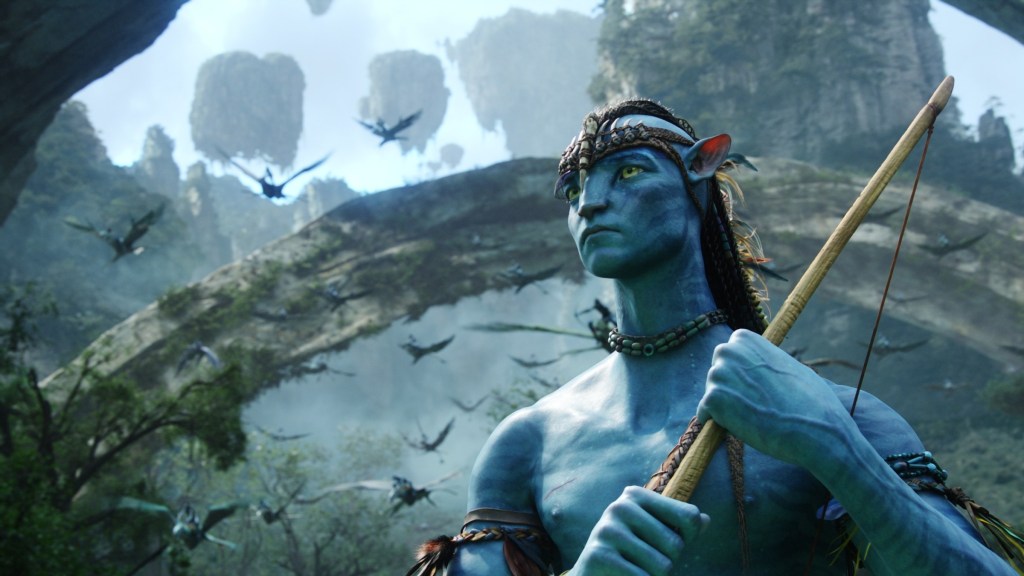
Cameron’s fingerprints are on every frame of the Avatar franchise in a way that is rare for a series of this scale. For example, he personally developed the underwater performance capture systems used throughout Avatar: The Way of Water and Avatar: Fire and Ash, spending years testing new camera rigs and motion capture technology to solve problems no other production had faced. That hands-on approach extended to casting, visual effects supervision, and the editing process, where Cameron has historically maintained final control over every choice shaping the finished film. If Cameron steps back from directing while remaining attached as a writer or producer, he could still guide the broader direction of Avatar 4 and Avatar 5 from a distance. However, the technical and creative precision that made the first three films visually unmatched has always depended on Cameron being willing to go the extra mile to match his vision with millimetrical precision, something a different filmmaker might not have the energy or even the resources to do.
Handing the director’s chair to someone else would also test whether the Avatar brand can survive on its world and mythology alone. Few modern franchises of this size have been built so completely around a single filmmaker, and replicating that formula without him carries real risk for Disney and 20th Century Studios. At the same time, Cameron has more than earned the right to step away from a franchise he has spent over two decades building. He revolutionized modern 3D filmmaking, produced two of the three highest-grossing movies ever released, and pushed visual effects technology forward with every entry in the series. That’s not even counting his contributions to cinema as a whole with movies such as Titanic, Terminator, and Aliens. If Cameron decides his remaining years are better spent developing new stories rather than committing another decade to Pandora, his choice is understandable.
Avatar 4 is currently scheduled for release on December 21, 2029, with Avatar 5 set to follow on December 19, 2031.









Leave a Reply